
How Much Does a Roof Replacement Cost in 2026?
By RoofPredict Research TeamUpdated 56 min readMethodology
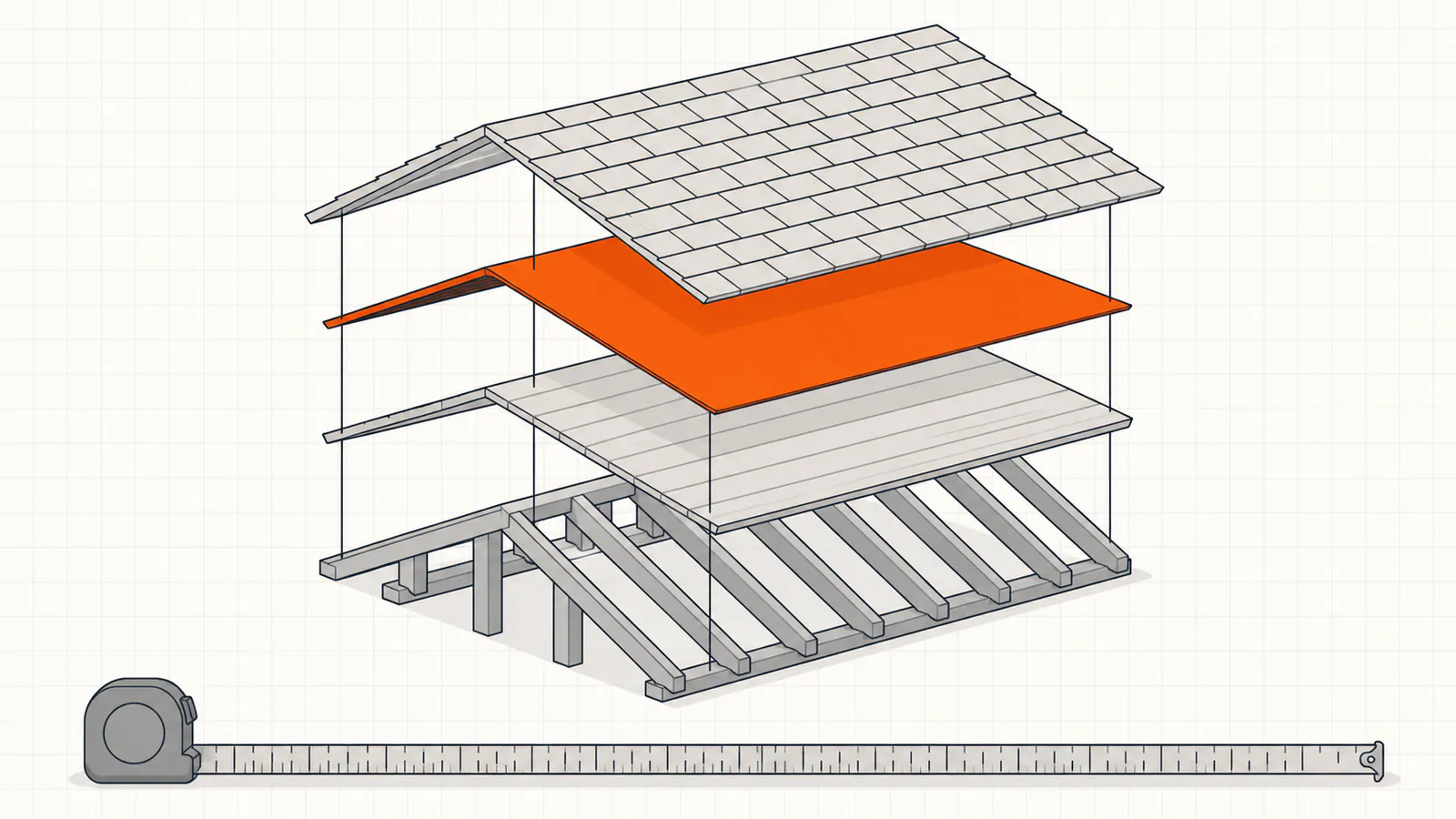
Most homeowners replacing an asphalt shingle roof in 2026 pay roughly $9,000 to $20,000, with national cost surveys clustering around $10,000 to $15,000. Metal, tile, and slate run two to four times more. Size, pitch, tear-off, decking repairs, and local labor move the price most — and an itemized bid is your best protection.
Key takeaways
- National cost surveys retrieved in August 2026 cluster around $10,000 to $15,000 for an asphalt shingle replacement, with most projects landing between roughly $9,000 and $20,000.
- Tear-off, decking repairs, ventilation, flashing scope, and local labor rates are the line items that most often separate a low bid from a high one.
- Compare bids with the 4-Layer Bid Audit (scope, materials, labor and warranty, paper trail), because a one-line price cannot be compared or enforced.
- Deposits of roughly 10 to 30 percent are the norm described in Angi's and HomeAdvisor's contractor-hiring guidance; never pay in full before the work is finished, inspected, and cleaned up.
- Judge premium materials with the Cost-Per-Year Test rather than sticker price: a metal or tile roof can cost less per year of service than asphalt if you will stay in the home long enough.
Want this answered for your property? Request a free Roof Report, then review the findings and open questions by phone with RoofPredict.
How much does a roof replacement cost in 2026?
For a typical single-family home with asphalt shingles (the material on roughly four out of five American houses), a full replacement in 2026 usually lands between $9,000 and $20,000, and the national cost surveys we track cluster their averages around $10,000 to $15,000. Metal roofs commonly run $20,000 to $45,000, tile $25,000 to $60,000, and natural slate can pass $75,000. Those are wide ranges because a roof is several purchases in one: a few days of skilled labor, a truckload of materials, a dumpster of debris, and a set of local code requirements, and every one of those moves with your house and your zip code.
The figures in this guide come from published national cost surveys (Angi's and HomeAdvisor's roof replacement cost guides and Fixr's cost guide, all retrieved August 2026), cross-checked against what contractors and insurers report seeing. Treat them as orientation, not a quote. Cost guides differ in what job they price, a small simple roof versus a large complex one, which is why one source's "average" can be $10,000 and another's $25,000 for what sounds like the same thing. And before you price a replacement at all, it is worth confirming you need one: our repair-versus-replace guide walks through when a $700 repair honestly buys you years and when it just delays the same bill.
$10,000–$15,000
Where national cost surveys cluster for a full asphalt shingle replacement on a typical single-family home in 2026
Angi, HomeAdvisor, and Fixr cost guides, retrieved August 2026
| Material | Installed cost per square foot (approx.) | Typical cost, 2,000 sq ft home (~25 squares) | Typical service life |
|---|---|---|---|
| Three-tab asphalt shingle | $3.50–$5.50 | $8,500–$14,000 | 15–20 years |
| Architectural asphalt shingle | $4.50–$8.00 | $11,000–$20,000 | 20–30 years |
| Impact-resistant (Class 4) asphalt | $5.50–$9.00 | $14,000–$22,000 | 20–30 years; may earn insurance credits |
| Standing-seam metal | $10–$18 | $25,000–$45,000 | 40–70 years |
| Metal shingle / stone-coated steel | $8–$15 | $20,000–$38,000 | 40–60 years |
| Concrete tile | $10–$20 | $25,000–$50,000 | 50+ years (underlayment sooner) |
| Clay tile | $12–$25 | $30,000–$60,000+ | 50+ years |
| Wood shake / shingle | $8–$14 | $20,000–$35,000 | 20–40 years |
| Natural slate | $15–$30+ | $38,000–$75,000+ | 75–150 years |
| Flat / low-slope membrane (EPDM, TPO) | $5–$10 | $12,000–$25,000 | 15–30 years |
The per-square-foot column is the one to memorize, because it is the number that lets you sanity-check any bid in thirty seconds. If you know your roof is about 25 squares (we will show you how to estimate that yourself in a moment) and a bid for architectural shingles comes in at $30,000, that is $12 per square foot, well above the usual range for that material. Either the itemization explains why (steep pitch, two layers to remove, extensive decking, a premium shingle line, a high-cost metro) or you keep shopping. Conversely, a bid at $3 per square foot for architectural shingles with tear-off included is almost certainly cutting something you will not see until it leaks.
One more framing note before the details: a roof replacement is one of the largest checks most homeowners ever write for their house, and the industry knows it. That is why this guide spends as much time on how to read a bid, how to compare three of them, and how people actually pay as it does on the prices themselves. The homeowners who overpay are rarely the ones who chose the wrong shingle. They are the ones who signed the only bid they got, under time pressure, without an itemized scope.
The roofing "square": the unit every bid is priced in
A square is 100 square feet of roof surface, and it is the unit the entire industry thinks in. Shingles are ordered by the square, crews are scheduled by the square, dumpsters are sized by the square, and bids are built by the square. A typical 2,000-square-foot single-story home with moderate pitch and overhangs has something like 22 to 28 squares of roof, not 20, because the roof is tilted and extends past the walls. When a roofer says "you've got a 24-square roof," they are describing about 2,400 square feet of actual sloped surface.
Shingles themselves ship in bundles: packages sized so one person can carry them up a ladder. Standard architectural shingles are commonly packaged three bundles to the square, so a 24-square roof means roughly 72 bundles plus extras for the waste that comes from trimming at edges, valleys, and hips. Estimators typically add 10 to 15 percent for waste on a simple roof and more on a complex one, which is why the material order is always larger than the measured roof.
The number you will hear most is the installed price per square, and it is a bundle of its own: materials, labor, tear-off and disposal, underlayment and accessories, flashing work, the permit, the company's insurance and overhead, and its profit, all divided across the roof. In most 2026 markets, installed architectural shingle prices fall roughly between $450 and $800 per square, per the cost guides named above. That single number is the fairest way to compare your quote against national data, and against your neighbor's, whose roof is almost certainly not the same size as yours.
Translating a bid is simple arithmetic: take the total price, divide by the square count on the estimate (every legitimate bid states one), and you have the per-square price; divide by 100 more and you have the per-square-foot price to check against the table above. If a bid does not state the square count, ask for it. A contractor who will not tell you how big your roof is has decided you should not be able to check the math, and that tells you most of what you need to know.
Why cost guides disagree with each other
Angi, HomeAdvisor, and Fixr can publish "average" roof costs thousands of dollars apart because each averages a different pool of jobs — different typical home sizes, materials, and markets. None of them is wrong; they are pricing different roofs. The per-square-foot ranges move far less than the headline averages, which is why this guide leans on them.
The Square-Count Shortcut: sizing your own roof in ten minutes
You can estimate your own roof's size in ten minutes with three numbers, and doing so before you call anyone changes the entire conversation: you will hear "you've got about 26 squares up there" and know whether to nod or ask questions. We call the method the Square-Count Shortcut, and it has three steps: footprint, overhang, pitch.
- Footprint. Measure your home's exterior length and width, including the attached garage and any wings, and multiply. Use the county assessor's site or your closing documents if you would rather not pace it off. A 30-by-60-foot ranch is 1,800 square feet of footprint.
- Overhang. Roofs extend past the walls at the eaves and gable ends. Add roughly 10 percent for modest overhangs and up to 15 percent for deep ones. Our 1,800-square-foot ranch becomes about 1,980 square feet.
- Pitch. A tilted surface has more area than the flat space beneath it. Multiply by the pitch factor from the table below, about 1.12 for a common 6:12 roof. That takes our example to roughly 2,215 square feet, or about 22 squares.
| Roof pitch | How it looks from the street | Pitch factor |
|---|---|---|
| 3:12 | Low slope — barely walkable-looking, common on ranches and additions | 1.03 |
| 4:12 | Gentle — the low end of standard shingle territory | 1.05 |
| 6:12 | Moderate — the most common pitch on postwar American homes | 1.12 |
| 8:12 | Steep — crews begin to need staging and move slower | 1.20 |
| 9:12 | Steep — surcharges are common from here up | 1.25 |
| 12:12 | A 45-degree roof — chalets, Tudors, many Victorians | 1.41 |
To judge pitch without climbing anything, stand across the street: if the roof rises about half as fast as it runs, that is 6:12; if it rises as fast as it runs, a 45-degree angle, that is 12:12. Between those two anchors you can interpolate well enough for an estimate. Remember that the pitch factor prices labor as well as area: a steep roof is slower, needs more safety equipment, and generates more cut waste, so the same square count costs more at 9:12 than at 4:12.
| Home footprint | Approx. roof area | Approx. cost, architectural asphalt |
|---|---|---|
| 1,200 sq ft (small ranch) | 1,450–1,700 sq ft (15–17 squares) | $6,500–$13,500 |
| 1,800 sq ft | 2,100–2,500 sq ft (21–25 squares) | $9,500–$20,000 |
| 2,500 sq ft (two-story, smaller roof per floor) | 1,800–2,600 sq ft (18–26 squares) | $8,000–$21,000 |
| 3,000 sq ft (one-story or sprawling) | 3,300–3,900 sq ft (33–39 squares) | $15,000–$31,000 |
Notice the two-story row: a 2,500-square-foot two-story home can have a smaller roof than an 1,800-square-foot ranch, because the second floor sits under the same roof as the first. Roof cost follows roof area, not living area, which is why your neighbor's quote is only a rough guide to yours. Measuring rooftops across image captures across US metros, we routinely see homes of identical living area whose roof surfaces differ by half again as much once pitch, wings, and dormers are counted; the footprint alone understates what the crew actually has to cover. (How we measure roofs across image captures is described in our methodology.)
The Shortcut's honest limits
The Square-Count Shortcut gets most simple roofs within a couple of squares, which is all you need to sanity-check a bid. It will run low on cut-up roofs with many dormers and intersecting planes. When a contractor's measured count is higher than your estimate on a complex roof, that is usually the geometry, not the salesman — but you are entitled to see the measurement report or satellite takeoff they used.
How much does an asphalt shingle roof cost?
Asphalt is where most decisions actually happen, so it deserves a closer look than one row in a table. There are three tiers, and the differences are real: three-tab shingles are a single flat layer cut to look like three tabs, the budget product; architectural (also called dimensional or laminated) shingles bond two layers for a thicker, longer-lived shingle with a shadowed look; and premium or "designer" lines add weight, style, and warranty. Impact-resistant versions, rated Class 4 on the UL 2218 test, which drops steel balls on the shingle to simulate hail, exist across the upper tiers.
| Tier | Installed cost per square foot | Typical service life | What you are buying |
|---|---|---|---|
| Three-tab | $3.50–$5.50 | 15–20 years | The lowest upfront price. Thinner, lower wind ratings, fading product availability as manufacturers phase it out. |
| Architectural | $4.50–$8.00 | 20–30 years | The default for good reason: modest price step, meaningfully longer life, better wind ratings, better looks. |
| Class 4 impact-resistant | $5.50–$9.00 | 20–30 years | Hail resilience and, with many carriers in hail states, an insurance premium credit that can repay the upcharge. |
| Premium / designer | $7.00–$12.00 | 25–40 years | Heavier construction, slate or shake styling, longer warranties. Priced against the look as much as the life. |
Within asphalt, the step from three-tab to architectural is almost always worth taking; the price difference is modest and the life difference is real. Three-tab increasingly survives only as a repair-matching product and on rental properties priced to the last dollar. The step from architectural to premium is an aesthetic decision more than a financial one; the step to Class 4 is a regional decision that turns on your hail exposure and your insurer's credit, which we cover in the regional section below.
Two cautions keep asphalt buyers out of trouble. First, warranty tiers: the "lifetime" on a shingle wrapper is prorated and conditional, and the enhanced warranties worth having (which cover labor, not just materials) generally require the contractor to be credentialed by the manufacturer and to install a full system of that maker's components. Ask the bidder exactly which warranty will be registered in your name. Second, ventilation: an underventilated attic cooks shingles from below and is a classic reason a 25-year product dies at 15. If a bid is silent on intake and exhaust ventilation, the price is not finished.
How much does a metal roof cost?
Metal roofing spans a wider price range than any other category because "metal" covers three quite different products. Standing-seam, meaning vertical panels joined by raised, concealed-fastener seams, is the premium option, commonly $10 to $18 per square foot installed, or roughly $25,000 to $45,000 on a typical home per the 2026 cost guides. Metal shingles and stone-coated steel, which mimic shake or tile, generally run $8 to $15. Exposed-fastener panels (the corrugated or ribbed sheets screwed down through the face) can be dramatically cheaper, sometimes rivaling architectural asphalt, but every one of those thousands of gasketed screws is a future maintenance point, which is why they are more common on barns and cabins than primary homes.
| Metal type | Installed cost per square foot | Typical service life | Notes |
|---|---|---|---|
| Standing-seam steel or aluminum | $10–$18 | 40–70 years | Concealed fasteners, best weather performance, the product most people mean by "metal roof." |
| Metal shingle / stone-coated steel | $8–$15 | 40–60 years | Looks like shake or tile from the street; lighter than real tile. |
| Exposed-fastener panel | $4–$8 | 20–40 years | Budget metal. Screws and gaskets need periodic attention; noisier reputation. |
| Copper or zinc | $20–$40+ | 60–100+ years | Specialty and accent work — bay windows, porches, historic homes — more than whole residential roofs. |
When does metal pencil out? Three situations recur. First, long tenure: if this is the house you intend to grow old in, a 50-year roof at twice the price of a 25-year roof is close to a wash on paper and better than a wash in practice, because it skips a whole future round of tear-off, disposal, and scheduling. Second, severe weather: metal sheds snow, shrugs off wind that would peel shingles, and in wildfire country a Class A metal assembly over solid decking is among the most ember-resistant roofs you can buy. Third, insurance: in some hail and hurricane markets, carriers credit metal the way they credit Class 4 shingles. That is worth a phone call before you decide.
The honest cautions: quality varies with gauge (thickness) and coating, so a bid should name both. A 24-gauge standing-seam panel with a PVDF finish is a different product from a thin 29-gauge panel with basic paint. Oil-canning, the visible waviness on flat panel faces, is cosmetic but real; ask to see an installed local roof, not just samples. And metal punishes inexperienced installers more than asphalt does, so the crew's metal-specific track record matters more than the brand on the panel.
How much do tile, slate, and wood roofs cost?
These are the heirloom materials: they cost the most upfront, last the longest, and carry structural and maintenance realities that asphalt buyers never think about. Concrete tile generally runs $10 to $20 per square foot installed and clay $12 to $25, per the 2026 cost guides, or $25,000 to $60,000 and up on a typical home. Natural slate starts around $15 and can pass $30 per square foot, putting whole-house jobs at $38,000 to $75,000 and beyond. Wood shakes and shingles land between, commonly $8 to $14 per square foot.
| Material | Installed cost per square foot | Typical service life | The catch |
|---|---|---|---|
| Concrete tile | $10–$20 | 50+ years | The tile outlives its underlayment; plan on a re-felt (lifting tiles, replacing the membrane) partway through its life. |
| Clay tile | $12–$25 | 50–100 years | Heavier and costlier than concrete; walking on it wrong breaks it, so every future trade visit needs care. |
| Natural slate | $15–$30+ | 75–150 years | Weight may require framing verification; few crews install it well; repairs need matching stone. |
| Synthetic slate / composite | $7–$12 | 40–50 years (claimed) | Lighter and cheaper than stone with long warranties, but the products are younger than their claims. |
| Wood shake / shingle | $8–$14 | 20–40 years | Wants maintenance, dislikes damp climates, and is restricted or insurance-penalized in wildfire zones. |
Two structural cautions before anyone falls in love with tile or slate. Weight first: concrete and clay tile commonly weigh several times what asphalt does, and natural slate more still, so switching from shingles to tile or slate is not a like-for-like swap. A structural engineer or qualified contractor should verify the framing can carry it, and any bid that skips that step is incomplete. Second, the underlayment problem: on a tile roof, the visible tile is the armor but the membrane beneath it is the actual waterproofing, and it ages on a normal schedule. A 50-year tile roof with a 25-year underlayment is, functionally, a 25-year roof with expensive decoration, which is why tile-country bids should always specify the underlayment product and its rating.
Wood deserves its own honest paragraph. A well-maintained cedar shake roof in a dry climate is beautiful and can serve 30 years or more; the same roof in a humid, shaded yard grows moss and rots early, and in wildfire-prone counties untreated wood roofing is increasingly restricted by code and penalized by insurers. If you want the look without the liability, the shake-profile architectural shingles and stone-coated steel products above exist precisely for that buyer.
How much does a flat or low-slope roof cost?
Millions of homes carry at least some low-slope roofing: over an addition, a porch, a garage, or the whole house in mid-century modern and Southwestern styles. Shingles do not work below about a 2:12 pitch (water moves too slowly to shed over the overlaps), so these areas take membrane systems such as EPDM rubber, TPO or PVC single-ply, or modified bitumen. Installed prices commonly run $5 to $10 per square foot per the 2026 cost guides. That is cheaper per foot than premium steep-slope materials, but with shorter lives of roughly 15 to 30 years.
| System | Installed cost per square foot | Typical service life | Notes |
|---|---|---|---|
| EPDM (rubber membrane) | $5–$9 | 15–25 years | The familiar black rubber roof; seams and flashings are the failure points. |
| TPO (thermoplastic) | $5–$10 | 15–25 years | White, reflective, heat-welded seams; quality varies by manufacturer more than buyers expect. |
| PVC | $7–$11 | 20–30 years | The premium single-ply; strong seams, good chemical and ponding resistance. |
| Modified bitumen | $4–$8 | 15–20 years | Asphalt-based rolls, often torch- or self-adhered; a workhorse on porches and small additions. |
If your home mixes a shingled main roof with a low-slope section, insist that the bid treats them as two systems with two specifications. The tie-in between them is one of the most leak-prone details in residential roofing, and "we'll roll something on the flat part" is not a specification. And if a bidder proposes shingles on a pitch below 2:12, that is not a creative solution; it is a leak with a schedule.
The eleven levers that move a roof bid
Two houses with the same square footage can get honest bids thousands of dollars apart. Here is every major lever, roughly in order of how much it typically moves the total. It is worth reading once so that nothing in your itemized bid is a mystery.
- Roof size and pitch. Area drives materials; pitch drives labor. Anything steeper than about 6:12 slows the crew and adds safety equipment, and roofs above 9:12 or so commonly carry a meaningful surcharge because production drops and staging goes up.
- Stories and access. A walkable one-story ranch is the cheapest roof to work on. A three-story Victorian with no driveway access for the dumpster, a fenced yard, and landscaping to protect adds hours to every task, and the bid reflects it.
- Complexity. Hips, valleys, dormers, skylights, and chimneys all add flashing work, cut waste, and slow detail labor. A simple gable is the cheapest shape to roof; a cut-up roof with eight planes, two skylights, and three chimneys is not, even at identical area.
- Tear-off and layers. Removing one layer of shingles is standard and included in most bids. A second layer adds labor and disposal weight. Building codes based on the International Residential Code generally cap roofs at two layers, so a twice-roofed house has no overlay option left. Everything comes off.
- Decking condition. Decking, the plywood or OSB sheathing the shingles are nailed to, is replaced by the sheet when it is rotted or delaminated, and nobody knows how many sheets until the old roof is off. Per-sheet replacement prices are commonly quoted in the $75-to-$150 installed range; a good bid states the unit price and an allowance so there is no argument later.
- Underlayment and accessories. Synthetic underlayment, ice-and-water shield (a self-adhering waterproof membrane applied at eaves and valleys, required by code in cold climates), plus drip edge, starter strip, and ridge cap are small lines individually. Together they can be a four-figure difference, and they are exactly where low bids quietly economize.
- Ventilation. Adding or rebalancing ridge vents, soffit intake, and baffles costs real money during a replacement and is the single most commonly skipped scope item. It is also a major determinant of whether the new roof reaches its rated life.
- Flashing scope. Replacing chimney, step, and valley flashing versus reusing the old metal is a classic hidden difference between two bids. New flashing costs more today; old flashing is where tomorrow's leak starts.
- Local labor, permits, and disposal. Roofing labor rates vary widely by metro, permits often run from around a hundred dollars to several hundred depending on jurisdiction, and dumpster and dump-fee costs move with local disposal markets and how heavy the debris is (tile and multi-layer tear-offs weigh far more than one layer of shingles).
- Code and climate requirements. Hurricane zones may require sealed roof decks, ring-shank nailing, and specific underlayments; wildfire zones require Class A assemblies; cold climates require ice barriers at the eaves. These are not upsells. They are the legal minimum, and they raise the baseline everywhere they apply.
- Timing. Roofing demand is seasonal and disaster-driven. The same job costs more in the weeks after a hailstorm, when every crew in the county is booked, than in the shoulder season when schedules have gaps.
Why decking is the classic surprise
The one cost that cannot be known in advance is how much sheathing is rotten under the old shingles. Ask every bidder for a per-sheet price for decking replacement and whether any sheets are included in the base bid. That single question prevents most mid-job disputes — and mid-job is the worst possible time to negotiate, because the roof is open and the leverage is all theirs.
A worked example: one house, priced end to end
Ranges are useful; a whole job priced end to end is better. Here is an illustrative bid for a common American house: an 1,800-square-foot single-story home, 6:12 pitch, one existing layer of architectural shingles, one chimney, two plumbing vents, and a ridge that can take a vent. The Square-Count Shortcut puts the roof at about 22 squares; the material order, with waste, comes to roughly 25 squares. The numbers below are mid-range figures consistent with the national cost guides cited above. This is not a quote, but it has the right shape and proportions for one.
| Line item | Illustrative price | What it covers |
|---|---|---|
| Tear-off and disposal | $1,800 | Stripping one layer of shingles and underlayment on 22 squares, dumpster, dump fees, magnetic nail sweep. |
| Shingles and ridge cap | $3,600 | 25 squares of architectural shingles with starter strip and matching ridge cap, delivered and loaded. |
| Underlayment and ice-and-water shield | $650 | Synthetic underlayment across the deck; self-adhering membrane at eaves and valleys. |
| Flashing and penetrations | $800 | New drip edge, valley metal, two pipe boots, chimney reflash with step and counter flashing. |
| Ventilation | $450 | Continuous ridge vent cut and installed; soffit intake verified and cleared. |
| Labor and installation | $5,200 | The crew: tear-off through final detail, typically one to two days on this roof. |
| Decking allowance | $300 | Three sheets of sheathing at $100 per sheet installed; additional sheets at the same stated unit price. |
| Permit and inspection | $250 | Pulled by the contractor, inspected by the jurisdiction. |
| Total | $13,050 | About $5.90 per square foot of roof — mid-range for architectural asphalt in 2026. |
Now stress-test it. The same house in a high-cost coastal metro might see labor and permits push the total toward $17,000 to $19,000; in a low-cost rural market, sharp bids near $10,500 would not be alarming. Make the roof 9:12 instead of 6:12 and the steep-slope surcharge plus extra area could add a few thousand dollars. Find a second shingle layer underneath and tear-off roughly doubles. Discover twelve bad sheets of decking instead of three and the allowance line grows by about $900, which is precisely why the per-sheet price was in the contract before anyone climbed a ladder.
Notice what the labor line tells you: on an asphalt job, the crew is commonly around half to two-thirds of the money once tear-off is folded in. That is why prices vary so much by metro (you are buying skilled local labor more than you are buying shingles) and why the cheapest bid so often turns out to be a cheaper crew rather than cheaper materials. Materials are the same price to everyone at the supply house; corners get cut where you cannot see them.
Materials are the same price to everyone at the supply house; corners get cut where you cannot see them.
A cost range becomes more useful when the likely scope is clearer. Start with a property-specific Roof Report and a phone walkthrough, with no bid attached.
The anatomy of a complete roofing bid
A bid is a scope of work with a price attached, and comparing bids is only possible if each one describes the same job in writing. Itemization is the entire basis of your legal and practical protection. At a minimum, every bid you take seriously should name all of the following explicitly.
- Shingle manufacturer, product line, and color, and the exact warranty tier that will be registered in your name.
- Tear-off of all existing layers, with the number of layers assumed stated. Disposal, dumpster, and a magnetic nail sweep of the yard and driveway included.
- Underlayment type (synthetic or felt) and where ice-and-water shield goes: eaves, valleys, around penetrations.
- Drip edge (the L-shaped metal at the roof's edges that keeps water off the fascia and out from under the shingles) included on eaves and rakes, with the metal and color named.
- Flashing: which flashings are replaced versus reused, and the metal being used. Chimney, sidewall, step, and valley details spelled out; "reuse existing where serviceable" is a phrase to question.
- Ventilation: what is being installed or changed, and whether intake (soffit) and exhaust (ridge or vents) will be balanced when the crew leaves.
- Decking: the per-sheet replacement price and how many sheets, if any, are included in the base price.
- Permit pulled by the contractor, not by you, and the jurisdiction's inspection scheduled.
- Site protection: landscaping, AC condenser, siding, and driveway protection described, and gutters cleaned of debris at the end.
- Workmanship warranty length and what it covers, stated separately from the manufacturer's material warranty.
- Payment schedule, start and completion windows, and who the on-site supervisor will be.
- The contractor's legal business name, license number where licensing applies, and certificates of general liability and workers' compensation insurance that you can verify with the insurer, not just view as paper.
If a bid is missing several of these, you do not necessarily have a bad contractor (some excellent small outfits write thin paperwork), but you do have an incomplete agreement, and every gap is a place where a misunderstanding costs money. Ask for the missing lines in writing before signing. A professional will add them without friction; the reaction to that request is itself useful information, and our contractor-vetting guide covers the rest of what to check before you hand anyone a deposit.
Two warranties, two different promises
Every roofing project carries two separate warranties, and confusing them costs homeowners real money. The manufacturer's warranty covers the shingles as a product (defects in the material itself), and it is the number printed on the wrapper. The workmanship warranty covers the installation, comes from the contractor, and is the one that actually pays for the most common failures, because most early roof problems are installation problems. A "lifetime" shingle installed by a company with a one-year workmanship warranty is well protected against the rare failure and barely protected against the common one. Ask every bidder two questions: which manufacturer warranty tier will be registered in your name, and how many years of workmanship coverage back the labor. The answers belong in the contract, not in conversation.
The 4-Layer Bid Audit: comparing bids apples to apples
Three bids is the standard advice, and it is good advice, but only if you can actually compare them, and most homeowners compare only the bottom line. The 4-Layer Bid Audit is a fifteen-minute exercise: lay the three bids side by side and score each one on four layers (scope, materials, labor and warranty, and paper trail). The cheapest bid that passes all four layers wins. A bid that fails a layer is not automatically out, but the failure has to be explained and fixed in writing before its price means anything.
| Layer | What you are checking | Passing looks like | Failing looks like |
|---|---|---|---|
| 1. Scope | Is every bid pricing the same physical job? | Same square count (within one), same tear-off layers, same flashing replacement, same ventilation work, a decking unit price and allowance. | One bid reuses flashing, skips ventilation, or omits a decking price. Its total is now meaningless against the others. |
| 2. Materials | Are the products named, not just described? | Manufacturer and product line for the shingle; underlayment type; ice-and-water locations; drip edge metal named. | "30-year dimensional shingle" with no brand, "felt or equivalent," accessories unmentioned. Generic words hide downgrades. |
| 3. Labor & warranty | Who does the work, and who stands behind it? | Own crew or a named sub, a site supervisor, a written workmanship warranty of meaningful length, the manufacturer warranty tier identified. | Unknown subcrew, a verbal "we guarantee our work," no registered manufacturer warranty, no one accountable on site. |
| 4. Paper trail | Can you verify and enforce everything above? | License number, verifiable insurance certificates, contractor-pulled permit, a written payment schedule, lien releases at final payment. | No license shown, insurance "available on request," you pull the permit, cash preferred, terms live in text messages. |
The audit changes negotiations, too. Instead of asking a high bidder to "sharpen the pencil," which invites them to quietly cut scope, you can say something precise: "Your bid is $2,400 above this one, and the only scope differences I can find are the chimney reflash and the ridge vent. Is that where the difference is?" Now you are negotiating a known gap between defined jobs, and the answer teaches you which contractor actually understands your roof. Contractors respect this conversation, and the good ones win it more often than the cheap ones.
One warning about false precision: bids will never match perfectly, because estimators measure differently and package differently. The audit's job is to make every difference visible so that you, not the salesperson, decide which differences are worth paying for. Three bids that land within 10 to 15 percent of each other with matching scopes are telling you the true market price of your roof. Write that number down; it is the most valuable output of the whole exercise.
When is a low bid a bad bid?
Not always. Sometimes a crew has a schedule gap, a supplier relationship, or lower overhead, and the savings are real. But a bid far below the cluster deserves an autopsy before a signature, because materials cost roughly the same to every contractor at the supply house. When one bid is thousands lower for "the same job," the difference is coming from somewhere, and the usual somewheres are invisible from the ground.
- Underlayment and accessories downgraded: felt instead of synthetic, no ice-and-water shield, no starter strip (cut three-tabs instead), painted steel drip edge or none at all.
- Old flashing reused: the chimney and sidewall metal stays, which saves hundreds today and causes the leak that shows up in year three, conveniently outside a short workmanship warranty.
- No decking allowance: rot is "handled" with a change order priced mid-job, when the roof is open and you have no negotiating position.
- Ventilation skipped: the old vents go back on, the attic keeps cooking the shingles, and the 30-year product quietly becomes an 18-year product.
- Uninsured labor: the crew is a subcontractor without workers' compensation coverage. If someone is hurt on your property, the question of who pays can reach you.
- No permit: the job is invisible to the jurisdiction, which means no inspection, which matters at sale time and after a storm claim.
- Nailing shortcuts: fewer nails per shingle, high nailing above the strip, or staple guns. Invisible on day one, decisive in the first real windstorm.
Here is a realistic pair to make it concrete. Bid A: $9,800. Bid B: $14,200. Same house, same shingle name. Run the audit and the differences surface: Bid A reuses all flashing, includes no ice-and-water shield, names no underlayment brand, includes no decking allowance, carries a one-year workmanship warranty, and asks you to pull the permit. Bid B replaces all flashing, itemizes ice-and-water at eaves and valleys, includes three sheets of decking with a unit price, carries a ten-year workmanship warranty, and pulls the permit. Bid A is not $4,400 cheaper — it is a different, smaller job that borrows the same shingle name. Whether that smaller job is acceptable is your call, but it should be a call you make with the differences in front of you.
Three bids that land within 10 to 15 percent of each other are telling you the real price of your roof.
On the lowest bid
Three bids that land within 10 to 15 percent of each other, with similar scopes, are telling you the real price. One outlier far below is not a bargain until someone explains, line by line, what was left out. "We just do it cheaper" is not a line item.
Red flags in a roofing bid or contractor
Most roofers are honest tradespeople running hard, thin-margin businesses. The bad actors, though, use a consistent playbook, consistent enough that the Federal Trade Commission and state attorneys general publish warnings about the same handful of tactics year after year. Recognizing them saves more money than any negotiating trick.
- A one-line price with no scope. You cannot compare it, and you cannot hold anyone to it.
- A large deposit demanded upfront. Reasonable deposits exist (we cover them next), but a roofer asking for half the job before a shingle is delivered has a financing problem on their side, not yours.
- "This price is good today only." Legitimate bids are good for weeks. Pressure is the tactic, not the price.
- An offer to waive, "eat," or rebate your insurance deductible, or to inflate the estimate to cover it. This is insurance fraud in many states, and it exposes you, not just the roofer. Our storm damage claims guide covers the full post-storm playbook.
- A door-knock the day after a storm from a company with out-of-state plates and no local address. Storm chasers can do fine work, but you will not find them when the warranty matters.
- A request to sign a contingency agreement or an assignment of benefits (paperwork that hands your insurance claim's rights and payments to the contractor) before you have decided to hire them. Read anything with the word "assignment" in it twice; several states have restricted these arrangements for good reason.
- No permit, or a suggestion that you pull it as the homeowner. The permit and its inspection protect you; a contractor who avoids one has a reason.
- Cash-only, no written contract, or a contract missing the company's legal name and license number where licensing applies.
- A significantly below-market price. As the previous section shows, somebody is paying for that difference. Usually you, later.
- Refusal to provide verifiable insurance certificates. "We're fully insured" is a sentence; a certificate you can confirm with the carrier is a fact.
None of these flags means you are dealing with a criminal; each means you are dealing with elevated risk, and roofing is not a purchase where you want to carry avoidable risk. There will always be another contractor. The entire economics of high-pressure sales depends on convincing you there will not be.
How much should you pay upfront? Deposits and payment schedules
Deposits of roughly 10 to 30 percent of the contract price are the range consumer guides such as Angi's and HomeAdvisor's contractor-hiring guidance describe as normal: enough to cover the material order and commit your slot on the schedule, and no more. Some states go further and cap deposits by law. California, for example, limits down payments on home-improvement contracts to 10 percent of the price or $1,000, whichever is less. Check your own state's contractor-licensing board before assuming a big deposit request is standard, because in some places it is actually illegal.
A clean payment schedule for a typical asphalt job has two or three events: a deposit at signing, sometimes a progress payment when materials are delivered or tear-off is complete, and the balance on completion, after the final inspection, the nail sweep, and your own walk-around. Never pay in full before the work is done, and never let the final payment happen before you have seen the finished roof, the cleaned gutters, and the permit inspection signed off. That last check is the only leverage you have left; professionals do not resent it, because they plan to earn it.
- Pay by check or card, never cash. The paper trail is part of the product you are buying.
- Match every payment to a milestone written in the contract, not to a phone call about the crew's cash flow.
- At final payment on a larger job, ask for a lien release or waiver: the document confirming the contractor and their suppliers have been paid and cannot place a claim against your home for these materials or labor.
- If a lender or insurer is involved, understand who the checks are payable to before work starts; two-party checks are common with insurance proceeds and take a few extra days to negotiate.
The "materials on the driveway" trick
A classic scam collects a large deposit, drops a pallet of shingles on the driveway to look committed, and disappears. Delivered materials are not progress. Tie payments to completed work — tear-off done, dry-in done, job complete — not to deliveries.
Overlay vs tear-off: is it cheaper to roof over the old shingles?
An overlay (also called a layover, roof-over, or nesting) installs new shingles directly over the old ones, skipping tear-off and disposal. It is genuinely cheaper upfront: the savings usually amount to the tear-off and disposal lines, often in the range of $1 to $2 per square foot, which on a 22-square roof is a few thousand dollars. Building codes based on the International Residential Code generally allow a second layer over one existing layer in decent condition, and never a third. So the option is real. It is also, in most cases, the wrong call, and it is worth seeing exactly why before a lower bid makes the decision for you.
| Factor | Overlay (second layer) | Full tear-off |
|---|---|---|
| Upfront cost | Lower — skips tear-off and disposal, often $1–$2 per square foot less. | Higher — the full job, priced in every range above. |
| Deck inspection | Impossible. Rot, delamination, and past leak damage stay hidden under two layers. | The deck is exposed, inspected, and repaired at a known unit price. |
| Ice-and-water shield & drip edge | Cannot be properly installed — the membrane belongs on the bare deck. | Installed to current code. |
| Service life | Shorter — the new shingles sit on an uneven, heat-holding layer and commonly age faster. | Full rated life, given ventilation and proper nailing. |
| Warranty | Many manufacturers limit or void coverage over an existing layer. | Full manufacturer warranty available, including enhanced tiers. |
| Weight | Roughly doubles the roof covering's load on the framing. | One layer, as designed. |
| Next replacement | Costs more — two layers must come off, and codes require it. | Standard single-layer tear-off. |
| Sale and insurance | Inspectors and insurers flag double layers; some carriers decline or surcharge them. | Clean disclosure, clean underwriting. |
Is an overlay ever defensible? Occasionally: a single flat-lying layer in good condition, a simple roof, a dry attic with no leak history, an owner who needs to bridge a few years before a planned sale or remodel, and a contractor willing to warrant the work over an existing layer. That is a narrow gate, and honest roofers will tell you most roofs do not pass through it. If your bid meeting starts with an overlay pitch and no one has looked in the attic or measured the existing layers, the recommendation is about the bid, not the roof.
The arithmetic that settles it for most people: an overlay saves perhaps 15 to 20 percent today, gives up deck inspection and code-required membranes entirely, commonly shortens the new roof's life, and makes the next replacement more expensive. Spread over the roof's actual service years, the "cheap" option usually costs more per year. That is the same logic the Cost-Per-Year Test applies to premium materials later on, just running in reverse.
Paying for a new roof: the real-world options
A roof is a five-figure purchase that often arrives on someone else's schedule — a storm's, an inspector's, an insurer's. There is no single right way to pay for it, but there are several common ways, each with a trade-off worth knowing before a contractor hands you a financing tablet at your kitchen table.
| Option | How it works | Watch for |
|---|---|---|
| Cash or savings | Simplest and cheapest. Many roofers discount modestly for cash or check because they avoid card and lender fees. | Do not drain an emergency fund completely; the decking surprise is real. Always ask for the cash price even if you may finance. |
| Home equity loan or HELOC | Borrow against your equity at rates generally lower than unsecured credit. A loan gives a fixed payment; a HELOC gives a draw you repay flexibly. | Your home is collateral. Closing takes weeks, so start early, not after the leak. |
| Cash-out refinance | Replace your mortgage with a larger one and take the difference. Makes sense only if the new rate is acceptable. | Resetting a low-rate mortgage to pay for a roof is rarely a good trade in a higher-rate environment. |
| Contractor-arranged financing | The roofer partners with a third-party lender; approval is fast and often at the table. Promotional zero-interest periods are common. | Read the deferred-interest terms: if the balance is not cleared by the end of the promo period, interest can apply retroactively from day one. Dealer fees are sometimes built into the bid — compare against the cash price. |
| Unsecured personal loan | Fixed term, no collateral, fast funding. | Rates are higher than home-equity borrowing; fine for a small job, expensive for a large one. |
| FHA Title I property improvement loan | A HUD-insured loan for home improvements, made through participating private lenders, that does not require built-up home equity. | Loan caps and lender participation vary — confirm current limits and terms with HUD or a participating lender before counting on it. |
| PACE financing (available in some states) | Repaid through an assessment on your property tax bill, tied to the property rather than to you. | Has drawn consumer-protection scrutiny; the assessment can complicate a sale or refinance. Read everything before signing. |
| Insurance proceeds | If the roof was damaged by a covered peril such as wind or hail, the policy pays toward replacement, minus your deductible. | Age and wear are not covered perils, and you still owe your deductible — a contractor offering to absorb it is proposing fraud. |
The decision usually comes down to time. If the roof can wait a few months, the home-equity route generally costs the least over the life of the loan, and starting the paperwork before you collect bids means the money and the contractor arrive together. If the roof cannot wait, contractor financing is a legitimate bridge; the products are real and often genuinely zero-cost when paid inside the promotional window. Just read the terms as carefully as the bid, confirm the financed price equals the cash price, and set the payoff on autopay with margin to spare.
One financing myth worth retiring at the kitchen table: sales pitches sometimes imply a federal energy tax credit for a new roof. Under current federal rules, ordinary residential roofing does not qualify for an energy-efficiency credit. Verify any tax claim with a tax professional before it influences a five-figure decision. Utility rebates for reflective "cool roof" products exist in some hot-climate territories, but they are utility-specific and modest; treat any promised rebate as real only when you can find it on the utility's own site.
Will homeowners insurance pay for your roof?
Only under specific conditions, and the industry's marketing does homeowners no favors here. Homeowners insurance covers sudden, accidental damage from covered perils (wind, hail, fallen trees, fire), not the gradual wearing out of a roof that has simply reached the end of its life. "Insurance will buy you a new roof" is true after a hailstorm shreds a ten-year-old roof; it is false, and sometimes fraud-adjacent, when a salesperson says it about a 24-year-old roof with worn shingles and no storm event.
When a claim is legitimate, three cost concepts govern what you actually receive. First, your deductible comes off the top, and in many hail and wind states, roof or wind/hail deductibles are now percentage-based (1 to 2 percent of the home's insured value or more), which on a $400,000 home means the first $4,000 to $8,000 is yours. Second, older roofs may be paid at depreciated "actual cash value" rather than full replacement cost. That single sentence is all we will say here, because the schedules, the roof-age rules, and what to do about them fill our roof age and insurance guide. Third, supplements: a supplement is the paperwork a contractor files with your insurer when the open roof reveals damage the original estimate missed (decking, flashing, code-required upgrades), and experienced storm contractors handle this routinely.
Practical sequence if you suspect storm damage: document first (dated photos from the ground and of any interior stains), call your insurer to understand your deductible and coverage before committing to anyone, get your own independent bids rather than signing with the first door-knocker, and never sign an assignment of benefits before you have chosen a contractor deliberately. The full sequence of inspections, adjusters, disputes, and deadlines lives in our storm damage claims guide, linked above. For this guide's purposes, the money lesson is simple: insurance proceeds are a payment method with rules, not a discount, and the homeowners who fare worst are the ones who let a stranger's urgency replace their own process.
Regional price differences, from hail alley to the coasts
Roof costs vary by region more than almost any other line in your homeownership budget. The same architectural-shingle job can land near the bottom of the national range in parts of the Midwest and South and far above the top of it in the Northeast corridor, coastal California, or Hawaii. Labor is most of the difference (you are hiring local crews at local wages), with permits, disposal fees, insurance costs, and building-code requirements making up the rest. Contractors and homeowners in high-cost coastal metros commonly report totals 30 to 50 percent above the national ranges, though we have not found a rigorous national survey that pins that premium down precisely. Treat it as a direction, not a number. And climate shapes more than the price: how each region's weather wears roofs out is mapped in our regional roof lifespan atlas.
- Hail alley (Texas, Oklahoma, Kansas, Nebraska, Colorado): impact-resistant Class 4 shingles are common and frequently earn insurance premium credits, which changes the math on the upcharge. After a major hail event, demand spikes and so do prices and wait times. If you can, avoid bidding your roof in the same month the whole county is bidding theirs.
- Hurricane coast (Florida, the Gulf, the Carolinas): code requirements for nailing patterns, sealed roof decks, and underlayment raise the baseline cost of every job. Florida's insurance market has made roof age and construction method central to what coverage costs, which changes how much a new roof is worth beyond the shingles themselves.
- Snow and ice-dam north (Upper Midwest, New England): ice-and-water shield is required at eaves and valleys, and short working seasons compress schedules. Book early, because the good crews' calendars fill by midsummer. Metal is more common here for snow shedding.
- UV and heat Southwest (Arizona, Nevada, inland California): tile dominates, and its long-run cost is set by underlayment replacement as much as by the tile itself. Reflective cool-roof products are encouraged and, in some jurisdictions, required by code.
- Wildfire-exposed West: Class A fire-rated assemblies are required in designated zones, wood roofing is restricted or uninsurable, and ember-resistant detailing (bird stops, valley metal, gutter guards) adds modest, worthwhile cost.
- Pacific Northwest: moss and moisture management add maintenance more than install cost, but labor rates in the Seattle and Portland metros run well above the national median.
Two regional effects surprise homeowners most. The first is disaster pricing: in the months after a major hail or hurricane event, materials tighten, out-of-area crews flood in, and prices rise. That is legitimate demand economics, but also prime season for the storm-chaser red flags covered earlier. The second is code drift: if your roof was last replaced 20 years ago, your jurisdiction's requirements have almost certainly grown (ice barriers, drip edge, nailing, sealed decks in wind zones), and the delta between "what was there" and "what code now requires" belongs in the bid, not in a mid-job change order. A bidder who knows your local code by heart is showing you competence you cannot see from the shingle brochure.
The Cost-Per-Year Test: when a more expensive roof is worth it
Sticker price is the wrong number to compare materials with, because the products deliver wildly different amounts of the thing you are actually buying: years of dry house. The honest comparison is the Cost-Per-Year Test. Divide the installed cost by the years the material will realistically serve in your climate — not the brochure maximum, the realistic middle, which our roof lifespan guide lays out material by material. Then adjust for two things money can measure: insurance credits, and how many of those years you will actually be there to use.
| Material | Illustrative installed cost | Realistic service life | Cost per year |
|---|---|---|---|
| Three-tab asphalt | $11,000 | 17 years | ~$650 |
| Architectural asphalt | $15,000 | 25 years | ~$600 |
| Class 4 impact-resistant asphalt | $18,000 | 25 years | ~$720 before insurance credits, which can close most of the gap in hail states |
| Standing-seam metal | $35,000 | 50 years | ~$700 |
| Concrete tile | $37,000 | 50 years | ~$740, plus a mid-life underlayment renewal |
| Natural slate | $55,000 | 100 years | ~$550 — cheapest per year, most expensive per check |
Read the last column and the market suddenly makes sense: per year of service, well-installed materials cost surprisingly similar amounts, clustered within about 25 percent of each other. What differs is the shape of the spending (asphalt asks for a moderate check every couple of decades, slate asks for an enormous check once a century) and who captures the value. A slate roof's second fifty years belongs to a future owner. Remodeling cost-versus-value studies have generally found roof replacement recoups only half to two-thirds of its cost at sale, so buyers will not hand the difference back at closing. That is why tenure is the deciding variable: the premium roof wins when you stay, and loses when you leave.
Three adjustments complete the test. First, insurance: a Class 4 or metal roof that earns a meaningful annual premium credit in a hail state is quietly paying you back every year. Get the actual credit from your carrier in writing and fold it in. Second, avoided disruption: every replacement you skip is a tear-off, a dumpster, weeks of scheduling, and a five-figure check you did not have to plan. That is real value even though no spreadsheet cell holds it. Third, install quality: the entire table assumes correct nailing, flashing, and ventilation. A premium material badly installed delivers budget-material years at premium prices, which is why the best money on any roof is often spent on the crew, not the product.
An old roof has earned a look, not a funeral
If you are reading this because your roof is 18 or 22 years old, remember that age alone means the roof has earned an honest look, not that it has failed. Many roofs deliver quiet years past their averages — a proper inspection costs a rounding error compared with replacing a roof that had life left, and our 2026 national roof age report shows how common older-but-sound roofs actually are.
How can you save money without buying a worse roof?
There is real money to save on a roof replacement, often thousands, but it lives in timing, competition, and scope discipline, not in cheaper materials or thinner labor. Here is where savings are legitimate, followed by where they never are.
- Get three real bids and run the audit. Competition is the single largest saver — homeowners who sign the only bid they collected routinely pay a four-figure premium for the convenience.
- Be flexible on schedule. A contractor filling a shoulder-season gap or a rain-delayed week will often sharpen a price for a homeowner who can say "whenever works for you this quarter."
- Ask for the cash price. Financing sometimes carries dealer fees built into the bid; knowing both numbers is free.
- Stay in the architectural tier but shop the line. Within one manufacturer, the difference between a base architectural shingle and a designer line is largely aesthetic; the base product carries the same engineering.
- Bundle sensibly. If skylights are near end-of-life, replacing them during the reroof avoids paying twice for flashing work. Same logic for gutters, but only if they actually need it; bundling is a savings tactic and an upsell tactic, and the difference is whether you initiated it.
- Check your insurer before choosing. A Class 4 credit in hail country or a FORTIFIED Roof discount in some coastal states (IBHS's FORTIFIED standard; a few states run grant or discount programs around it) can change which material is actually cheapest over ten years.
- Time around disasters, not just seasons. If the region just took a major storm and your roof is not urgent, waiting a few months for the demand spike to pass can matter more than any negotiation.
And the false economies, one last time in one place: skipping tear-off to overlay, reusing old flashing, dropping ice-and-water shield, skipping ventilation, letting the homeowner pull the permit, and hiring the uninsured crew. Every one of those "savings" converts visible dollars today into larger invisible costs later: a shortened roof life, a denied warranty claim, a leak repair, a problem at sale. The pattern is worth naming. Legitimate savings come from when and from whom you buy; false savings come from what gets left out of the roof.
A last honest word about urgency, because it is the most expensive force in this market. Almost no roof decision needs to be made today. Not after a storm, not after an inspection report, not after a salesperson's tablet shows a price that expires at dinner. The homeowners who do best give themselves two or three weeks, collect three bids, audit them, check the insurance angle, and then sign with confidence. If you are unsure whether your roof's clock is even running, start with its age and condition rather than with a sales appointment. That is the entire reason we built a free way to check.
Glossary: the terms you will see in a roofing bid
Bids are written in trade shorthand, and every term below has appeared in the sections above or will appear in your paperwork. Skim it now, keep it open when the bids arrive, and never hesitate to ask a bidder to define a term. The quality of the explanation is a preview of the quality of the communication you will get mid-job.
| Term | What it means |
|---|---|
| Square | 100 square feet of roof surface. The industry's pricing unit — a "24-square roof" has about 2,400 square feet of sloped area. |
| Bundle | A carryable package of shingles; standard architectural products commonly run three bundles per square. |
| Decking / sheathing | The plywood or OSB panels nailed to the rafters that everything else attaches to. Replaced by the sheet when rotted; priced per sheet in good bids. |
| Underlayment | The water-resistant layer (synthetic sheet or asphalt felt) between decking and shingles — the roof's backup defense. |
| Ice-and-water shield | A self-adhering waterproof membrane applied at eaves, valleys, and penetrations; required by code in cold climates against ice dams. |
| Drip edge | L-shaped metal at eaves and rakes that guides water off the roof edge into the gutter instead of behind it. |
| Starter strip | The first course of shingle material at the eave, sealing the edge under the visible shingles' joints. |
| Ridge cap | The shaped shingles finishing the roof's peak, often covering a ridge vent. |
| Flashing (step, counter) | Metal that waterproofs joints — where the roof meets chimneys, walls, and valleys. Step flashing interleaves with shingles; counter flashing covers it from above. |
| Pipe boot | The gasketed flashing around a plumbing vent pipe; a top cause of small leaks as gaskets age. |
| Valley (open / closed) | Where two roof planes meet and water concentrates. Open valleys show a metal channel; closed valleys weave or overlap shingles across it. |
| Overlay / layover / nesting | Installing new shingles over an existing layer instead of tearing off. Cheaper now, costlier later; codes cap total layers at two. |
| Allowance | A stated quantity included in the base price ("includes 3 sheets of decking"), with a unit price for anything beyond it. |
| Scope of work | The written description of everything the contractor will do. The document the whole bid comparison rests on. |
| Supplement | In an insurance job, the request a contractor files with your insurer for costs the original claim estimate missed — hidden damage, code-required items. |
| ACV / RCV | Actual cash value (depreciated payout) versus replacement cost value (full cost to replace). Which one your policy pays for an older roof is a five-figure question — see our insurance guide. |
| Assignment of benefits (AOB) | A document transferring your insurance claim's rights and payments to the contractor. Restricted in several states; never sign one casually. |
| Lien waiver / release | The document, collected at payment, confirming the contractor and suppliers give up any claim against your property for the work and materials. |
| Change order | A written, signed amendment to the contract for added work or cost. If it is not written, it is not agreed. |
| Dry-in | The stage when underlayment and flashings make the roof watertight before (or as) the finish material goes on — a common progress-payment milestone. |
That covers what roofs cost in 2026, why they cost it, how the money should flow, and how to read every page a contractor puts in front of you. The single best next step costs nothing: know your own roof's age and squares before the first bid arrives, so every number you hear lands on prepared ground.
Frequently asked questions
- What is the average cost to replace a roof in 2026?
- National cost surveys from Angi, HomeAdvisor, and Fixr (retrieved August 2026) cluster around $10,000 to $15,000 for an asphalt shingle replacement on a typical single-family home, with most projects landing between roughly $9,000 and $20,000 depending on size, pitch, and region. Metal, tile, and slate roofs commonly run $25,000 to $60,000 or more. Your own number depends mostly on roof area, steepness, and local labor rates.
- How much does a roof cost per square?
- For architectural asphalt shingles, installed prices in most markets fall roughly between $450 and $800 per square (100 square feet), including tear-off. Three-tab runs somewhat less, impact-resistant somewhat more, and metal and tile typically $1,000 to $2,500 per square.
- How much does it cost to replace the roof on a 1,500-square-foot house?
- A 1,500-square-foot single-story home typically carries roughly 17 to 20 squares of roof once pitch and overhangs are counted. At common 2026 architectural-shingle rates of about $4.50 to $8.00 per square foot installed, most projects land between roughly $8,000 and $16,000, with steep or cut-up roofs and high-cost metros pushing above that.
- How much does a new roof cost on a 2,500 to 3,000-square-foot house?
- Living area is a loose guide, because a two-story home stacks floors under one roof. A sprawling one-story 2,800-square-foot home may carry 35 or more squares and cost $16,000 to $30,000 in asphalt, while a two-story home with the same living area can have a much smaller roof and cost far less. Measure the footprint, not the square footage on the listing.
- What is the cheapest time of year to replace a roof?
- Demand, not materials, sets the calendar. Roofers in most of the country are busiest from late spring through fall, so late-fall and winter scheduling (where climate allows) often brings modestly better pricing and faster starts. Avoid the weeks right after a major hailstorm or hurricane, and never delay an active leak to chase a season.
- Is it cheaper to put new shingles over old ones?
- Upfront, yes: a layover skips tear-off and disposal, often saving $1 to $2 per square foot. Over the roof's life it usually costs more, because it hides the deck, shortens the new shingles' life, can void warranties, and doubles the next tear-off.
- How much should I pay upfront for a roof?
- Deposits of roughly 10 to 30 percent of the contract price are the range consumer guides like Angi's and HomeAdvisor's describe: enough to cover materials and hold the schedule. Some states cap deposits by law (California limits home-improvement down payments to 10 percent or $1,000, whichever is less). Never pay in full before the job is complete, inspected, and cleaned up.
- Does homeowners insurance pay for a roof replacement?
- Only if the damage came from a covered peril such as wind, hail, or a fallen tree, and only after your deductible. Wear, age, and neglect are not covered, and older roofs may be paid at depreciated actual cash value rather than full replacement cost.
- How long does a roof replacement take?
- Most asphalt replacements finish in one to three days once materials arrive. Steep, complex, or large roofs, tile and slate work, and major decking repairs can stretch to a week or more.
- Does a new roof increase home value?
- It helps a sale more than it profits one. Remodeling cost-versus-value studies have generally found asphalt roof replacement recoups roughly half to two-thirds of its cost at resale. The bigger effect is transactional: an aging roof invites inspection objections, insurance complications, and price cuts, while a new roof removes the most expensive question a buyer can ask. Replace for your own tenure in the house first, and treat any resale premium as a bonus rather than the reason.
- Are Class 4 impact-resistant shingles worth the extra cost?
- In hail-prone regions, often yes, but run the numbers rather than assuming. Class 4 shingles (the top rating on the UL 2218 impact test, which drops a 2-inch steel ball on the shingle) typically cost 10 to 25 percent more than the same grade without the rating. In exchange, they tend to survive moderate hail that would bruise standard shingles, which means fewer claims, fewer deductibles paid, and less chance of a mid-life forced replacement. Many carriers in hail states also offer annual premium credits for a rated roof. Get the specific credit from your insurer in writing before choosing, confirm the installed product is actually rated, and remember that the credit plus one avoided deductible often repays the entire upcharge.
- Can you negotiate a roofing bid?
- Yes, but negotiate scope and terms, not just price. Ask whether the bid changes with flexible scheduling, ask a higher bidder to match a competitor's included upgrades, and ask for the cash price versus the financed price. Be wary of a contractor who instantly drops thousands (the first number was padded), and never accept a discount that removes underlayment, flashing, or ventilation.
Sources
- Roof Replacement Cost Guide, Angi, retrieved August 2026 (angi.com)
- HomeAdvisor True Cost Guide: roof replacement, retrieved August 2026
- Fixr roof replacement cost data, retrieved August 2026 (fixr.com)
- National Roofing Contractors Association consumer guidance on roof systems (nrca.net)
- Insurance Information Institute explainers on homeowners coverage (iii.org)
- Roof performance, wind, and hail research from the Insurance Institute for Business & Home Safety
- FHA Title I Property Improvement Loan program, U.S. Department of Housing and Urban Development (locate on hud.gov)
- Hiring a contractor: consumer guidance from the Federal Trade Commission
- Improving America's Housing report series, Harvard Joint Center for Housing Studies
Figures reflect general industry guidance and public data, not a prediction about any specific roof. See our methodology and editorial standards.
Want a clearer plan for your roof?
Request a free, property-specific Roof Report. We call to confirm the home, explain what the findings mean, and help you sort what matters now, what can wait, and what still needs an on-site look.
Keep reading
The 2026 National Roof Age Report: How Old Are America's Roofs?
The median U.S. owner-occupied home is in its early forties. What an aging housing stock means for roof age, insurance terms, and replacement timing.
The Regional Roof Lifespan Atlas: How Climate Changes How Long a Roof Lasts
How hail, hurricanes, ice dams, desert heat, Northwest moisture, and wildfire each age a roof, plus what to inspect and when in every region.
How to Choose a Roofing Contractor (Without Getting Burned)
The five checks every roofer must pass, a one-hour verification workflow, contract must-haves, deposit rules, and the red flags that mean walk away.