
Storm Damage and Roof Insurance Claims: A Homeowner's Guide
By RoofPredict Research TeamUpdated 63 min readMethodology
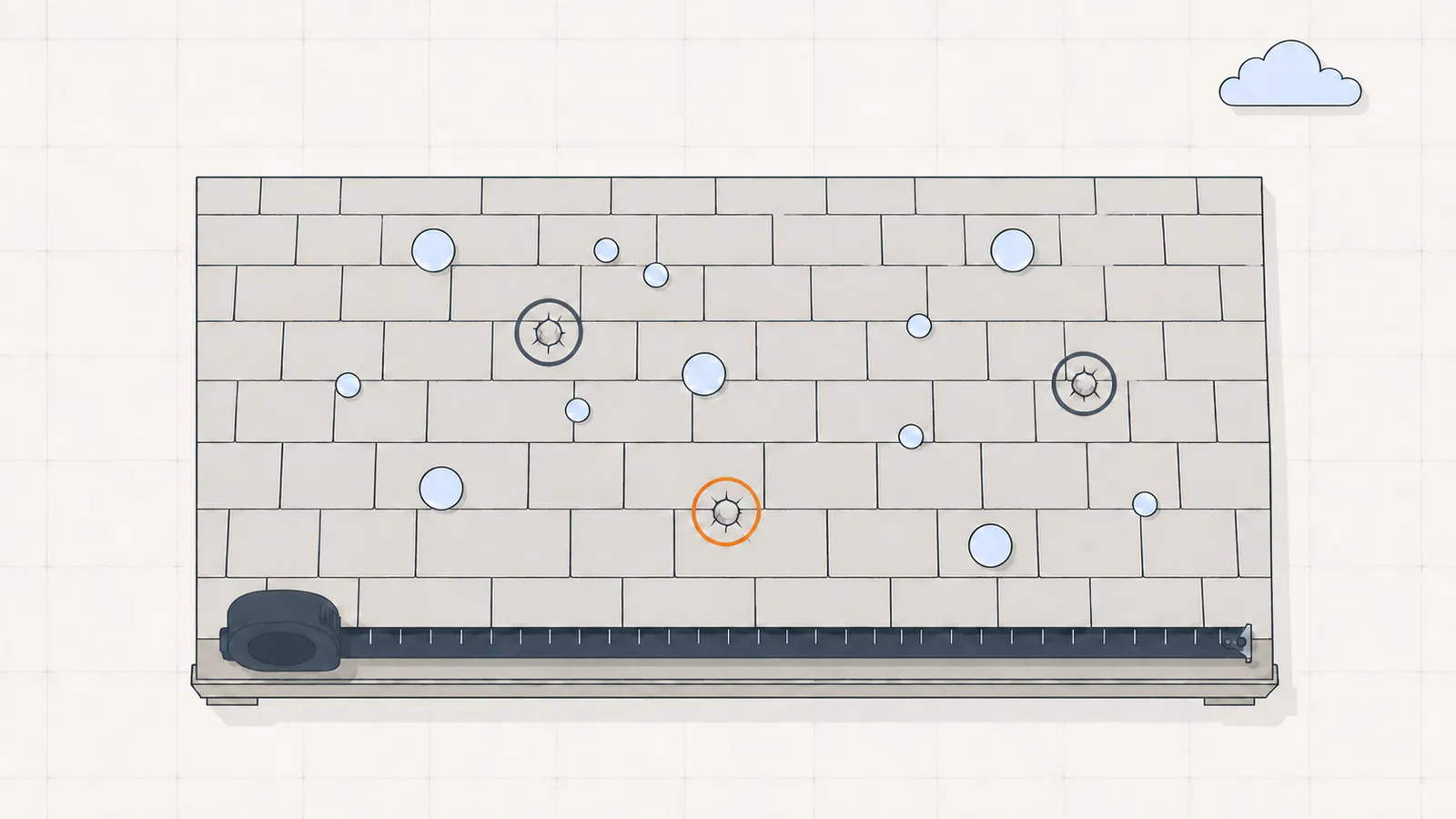
After hail or wind, the order is: stay safe, photograph everything before touching it, tarp and keep the receipts, read your policy's deductible and roof terms, notify your insurer, then get an inspection from someone you chose. Never sign anything at the door, and never accept an offer to "cover" your deductible.
Key takeaways
- Document before you clean up: dated photos and video of the roof from the ground, the yard, gutters, soft metals, and every interior stain are the foundation of a fair claim. Keep it all in one place; that folder is your Storm File.
- Your policy requires you to prevent further damage. Tarping and drying out are expected, are usually reimbursable, and are not the same as making permanent repairs. Keep every receipt.
- Follow the Two-Lane Rule: you and your insurer settle what is covered and for how much; you and your contractor settle who does the work and how well. In many states, a roofer who negotiates your claim is breaking the law.
- Follow the Kitchen Table Rule: nothing gets signed at the door, in the driveway, or on the day of the pitch. Deductible-waiving offers are insurance fraud in many states, and assignment-of-benefits forms hand your claim to a stranger.
- Recoverable depreciation is real money. On a replacement cost policy, the insurer holds back depreciation until the work is finished and invoiced. Homeowners who never submit the final paperwork leave thousands on the table.
- A storm-funded replacement is the cheapest moment you will ever have to upgrade to Class 4 impact-resistant shingles or a FORTIFIED roof, because you pay only the difference. Confirm any insurance credit in writing first.
- RoofPredict is not a public adjuster, attorney, or insurance company; this guide is general education, and your policy and state rules control.
Want this answered for your property? Request a free Roof Report, then review the findings and open questions by phone with RoofPredict.
What should you do in the first 24 to 48 hours after a storm?
Here is the short answer: make sure everyone is safe, photograph and video everything before you touch it, stop further damage with tarps and buckets and keep the receipts, read your policy's deductible and roof terms, notify your insurer promptly, and arrange an inspection by someone you chose, not by whoever knocks first. Do those six things in that order and you will have protected almost everything that matters, no matter how the claim unfolds. The hours after a hailstorm or wind event are when homeowners make the decisions that determine whether a claim goes smoothly or badly, usually while tired, sometimes with water coming in, and often with a stranger at the door offering to take care of everything. The sequence below is deliberately boring. It works because it puts documentation and your own judgment ahead of anyone else's urgency.
A note on who we are
RoofPredict is a research and referral service. We are not public adjusters, attorneys, or an insurance company, and nothing here is legal or claims advice for your specific situation. Your policy, your carrier, and your state's insurance regulator govern your claim. If you need representation, the people licensed to provide it are public adjusters and attorneys.
- Make sure everyone is safe. Stay away from downed power lines, sagging ceilings, broken glass, hanging limbs, and standing water near outlets. If a tree is on the roof or the structure looks compromised, get out and call for help. Nothing on this list is worth an injury, and nothing on this list has to happen in the first hour.
- Document before you touch anything. Walk the property with your phone. Photograph and video each side of the roof from the ground, the yard and driveway (hailstones next to a ruler or a coin, with the timestamp on), gutters and downspouts, the AC unit, window screens, siding, fences, vehicles, and every interior stain or drip. Save the weather alert or local news report for the date. Do not climb the roof; everything you need in the first 48 hours can be captured from the ground and from windows.
- Stop further damage. Tarp openings, move belongings and catch water, then dry the wet areas. Your policy requires reasonable steps to prevent further loss, the cost is usually reimbursable, and skipping this step can reduce what the insurer pays. Keep every receipt. Do not make permanent repairs before the carrier has documented the damage, and do not throw damaged materials away yet.
- Read your policy before you call. Find your deductible (flat dollar or a percentage of your dwelling coverage) and whether the roof is covered at replacement cost or actual cash value, a payout depreciated for the roof's age; the money section below explains both terms. Look for a roof payment schedule, a separate wind-hail or hurricane deductible, and the deadline for giving notice. Ten minutes with the declarations page tells you whether the damage is likely to clear your deductible, which decides whether filing makes sense at all.
- Notify your insurer. Most policies require prompt notice of a loss, and some states have shortened the legal window for storm claims. Call the claims line or use the app, get a claim number, and ask two questions: what happens next, and how long should each step take.
- Get your own inspection. Before any contractor who knocked on your door, have someone you chose look at the roof and produce a written report with photos; what a real inspection covers is worth knowing first. Your own documentation is the baseline you will compare the adjuster's findings against, and it is your defense against anyone who invents damage later.
This guide keeps returning to three simple rules, and it helps to meet them now. The first is the Storm File: one folder (digital is fine) that holds every photo, receipt, letter, and phone note from the storm to the final check. The second is the Two-Lane Rule: your claim runs in two lanes, an insurance lane between you and your carrier and a construction lane between you and your contractor, and trouble almost always starts when somebody crosses lanes. The third is the Kitchen Table Rule: no document gets signed at the door, in the driveway, or on the roof; everything sleeps overnight and gets read at your kitchen table. Each rule gets its own section below.
Stay off the roof
Wet shingles and hidden hail bruising make a post-storm roof more dangerous than it looks, and loosened decking adds a hazard you cannot see from above. Falls from ladders and roofs are consistently among the most common serious home injuries. Zoom lenses, upstairs windows, binoculars, and a professional inspection will find everything that matters. Nothing in the claims process requires you to climb.
Building a Storm File that protects your claim
Adjusters, contractors, appraisers, and, if it ever comes to that, regulators and courts all work from evidence, and the best evidence is gathered before anything is moved. The Storm File is simply a disciplined version of what good claimants have always done: one folder, started the day of the storm, holding everything a stranger would need to understand your loss a year from now. A shared cloud folder works well because it is timestamped, backed up, and easy to hand to an adjuster or inspector as a link.
Disputes are won on paper.
| Storm File section | What goes in it | Why it matters |
|---|---|---|
| The storm itself | Screenshots of weather alerts and local news; the NOAA Storm Events Database entry for your county and date; photos of hailstones next to a coin or ruler | Establishes that a damaging event happened at your address on a specific date, the fact every other document stands on |
| Exterior damage | Wide shots of each roof slope from the ground; close-ups with a landmark in frame; dents on gutters, downspouts, AC fins, vents, screens, fences, and vehicles | Collateral dents on soft metals are standard evidence that damaging hail fell at your address, even when shingle damage is invisible from the ground |
| Interior damage | Every stain, drip, bubble, and wet spot, photographed with a date; light pencil marks at the edge of ceiling stains so you can show later whether they spread | Ties interior loss to the storm date and shows the damage is new and active rather than an old problem |
| Mitigation | Photos of tarps and temporary fixes; receipts for materials; invoices for any emergency service | Your policy requires reasonable steps to prevent further loss, and documented mitigation costs are usually reimbursable |
| Policy and correspondence | The declarations page and full policy; the claim number; adjuster names and contacts; every letter and email; a phone log with date, name, and a one-line summary of each call | Disputes are won on paper: a dated phone log regularly settles arguments about who said what and when |
| Money | The carrier's estimate and scope of loss; contractor bids and the signed contract; checks received; the final invoice; your deductible receipt | The depreciation holdback is released against final paperwork; missing documents in this section are money left behind |
The storm-verification step deserves a minute of your time, because it is free and surprisingly powerful. The NOAA Storm Events Database, run by the National Centers for Environmental Information, records reported hail sizes and wind gusts by county and date, going back decades. Search your county for the date of the storm and save the entry. If a dispute ever arises about whether hail of damaging size fell in your area, a federal weather record is a better exhibit than anyone's memory. Local news coverage and neighbors' timestamped photos round out the picture.
Photo technique matters more than photo volume. Shoot wide first, then close: each slope of the roof from the ground, then specific damage with a landmark — a chimney, a vent, a corner of the house — in the frame so the location is unambiguous. Photograph hailstones next to a coin or tape measure quickly; they melt, and stone size is one of the first things an adjuster will ask about. For the roof surface itself, a phone camera at full zoom from a ladder's bottom rungs, an upstairs window, or across the street captures more than most people expect. If a neighbor has a drone or your inspector uses one, overhead photos are excellent, but they are a convenience, not a requirement.
Finally, start the written timeline the same day: when the storm hit, when you noticed damage, when you called the carrier, who you spoke to, what they said, when they said it, and every visit anyone makes to the property. Keep it in one running note. If your claim is ever disputed, the homeowner with a dated timeline and two hundred photos is in a very different position than the one with memories.
Emergency repairs and tarping, done right
Every standard homeowners policy places a duty on you to take reasonable steps to protect the property from further damage after a loss. In practice that means tarping openings, boarding broken windows, moving furniture, catching and drying water, and shutting off water or power to damaged areas if needed. Two things follow from that duty. First, the reasonable cost of emergency measures is generally reimbursable as part of the claim, so keep receipts for every tarp, furring strip, box fan, and service call. Second, failing to mitigate can reduce what the insurer pays: a carrier can decline the part of the loss that happened because a hole sat open for three weeks.
The line to respect is temporary versus permanent. A tarp over a damaged slope, plywood over a hole, a plastic sheet stapled inside the attic. All fine, and expected. Replacing shingles, re-flashing a chimney, or re-roofing a slope before the adjuster has documented the damage is a different matter: you may have repaired away the evidence, and the carrier may decline to pay for work it never saw the need for. If water intrusion is severe enough that real repairs cannot wait, photograph everything exhaustively first, save the removed materials, and tell the carrier what you are doing and why, in writing, in the Storm File.
- Keep the debris. Removed shingles, a sample of the hail-bruised material, the broken vent cap: set them aside in the garage until the claim is fully resolved. Physical evidence has ended more than one dispute.
- Hire the tarping if the roof is steep or high. Cost guides such as Angi (retrieved August 2026) generally put professional emergency tarping in the range of a few hundred dollars to around a thousand, more for steep or complex roofs, reimbursable, and far cheaper than a fall.
- Watch for post-storm price gouging. Emergency crews demanding cash, quoting several times the going rate, or requiring a roof-replacement contract as a condition of tarping are exploiting the moment. A tarp is a tarp; it commits you to nothing.
- Photograph the mitigation itself. The tarp on the roof, the fans running, the receipts on the counter. You are documenting that you met your duty.
- Do not sign anything to get a tarp. If a crew ties emergency service to a repair contract or an assignment of your claim, decline and call someone else; this is the Kitchen Table Rule's first test.
Mitigation is not an admission
Some homeowners hesitate to tarp because they worry it hides the damage from the adjuster or somehow weakens the claim. The opposite is true: carriers expect mitigation, reimburse it, and view a well-documented tarp as evidence of a careful policyholder. Photograph the damage first, then cover it without hesitation.
What does hail damage actually look like, and what gets mistaken for it?
Hail damage to asphalt shingles is mostly a bruising injury, and like a bruise it is often easier to feel than to see. A hailstone strikes the shingle, knocks granules loose at the point of impact, and crushes or fractures the fiberglass mat underneath. From the ground the roof can look untouched. Up close, an inspector finds soft, dark, roughly circular spots scattered at random across the slope — random, because hail does not fall in patterns. The Insurance Institute for Business & Home Safety, which studies hail impacts in its research lab, estimates hail causes on the order of ten billion dollars in damage in the United States in a typical year, and roofs absorb much of it. Knowing what real hail damage looks like protects you twice: it helps you recognize damage the adjuster should count, and it helps you recognize when someone is pointing at ordinary aging, or at marks they made themselves, and calling it a storm. Our guide to the signs of a failing roof covers the aging side in depth.
| Hail size | Common comparison | What it typically does to asphalt shingles |
|---|---|---|
| Under 1 inch | Pea to nickel | Granule scuffing at most on healthy shingles; can bruise old, brittle, or already-worn roofs and dent soft aluminum like gutters and AC fins |
| 1 inch | Quarter | The size where field guidance generally treats shingle bruising as plausible; window screens and gutters usually show hits at this size |
| 1.25 to 1.5 inches | Half dollar to ping-pong ball | Bruising and mat fractures become common, especially on aged shingles; vents, flashings, and ridge caps dent |
| 1.75 inches | Golf ball | Widespread bruising likely on most asphalt roofs regardless of age; siding, screens, and painted surfaces often damaged |
| 2 inches and up | Hen egg to tennis ball and larger | Fractures and punctures, sometimes cracked decking; at this size the existence of damage is rarely the dispute; the scope is |
Collateral damage is the corroborating witness. Hail large enough to bruise shingles almost always leaves a trail on the soft metals and brittle plastics around the house: dents in gutters, downspouts, window wraps, and metal vent caps; flattened fins on the AC condenser; torn window screens; dings in the mailbox and the grill lid; chipped paint on decks and railings. Adjusters look for this pattern deliberately, because a roof with claimed hail damage but pristine soft metals raises questions in both directions. Photograph the collateral trail even if it seems trivial: it is some of the strongest evidence in your Storm File.
| Mark on the shingle | If it is hail | If it is something else |
|---|---|---|
| Dark round spots | Random pattern across the slope; the mat under the spot feels soft or shows a fracture when pressed gently; granule loss looks fresh; nearby soft metals have matching dents | Blistering from manufacturing or trapped moisture shows a more regular pattern, popped blisters have weathered rims, and there is no collateral trail on the metals |
| Granule loss | Concentrated at impact points with black asphalt freshly exposed; gutters suddenly heavy with granules right after the storm | Uniform thinning that built up over years, worst on south- and west-facing slopes: normal aging, covered in our signs guide |
| Creases and tears | That is wind, not hail: creased tabs and torn shingles are wind signatures, covered in the next section | Age-failed sealant lets tabs lift and flutter without a sharp crease line; look at whether surrounding shingles are still bonded |
| Scuffs and scrapes | Hail does not scuff in straight lines | Foot traffic, dragged equipment, or manufactured "damage": linear marks, evenly spaced clusters, or marks only where a person could stand or swing a tool |
One inspection convention is worth knowing before the adjuster arrives. Inspectors typically chalk a ten-foot-by-ten-foot test square on each slope and count the qualifying hail hits inside it, impacts with granule displacement and mat damage, not just cosmetic scuffs. A common industry convention treats roughly eight or more qualifying hits per test square as the threshold for replacing that slope, but the number varies by carrier and region. Ask the adjuster what standard they applied and how many hits they counted per square, and ask your own inspector to document the same way. When both sides use the same method, disagreements shrink to something checkable.
What does wind and hurricane damage look like?
Wind damages roofs at the edges first. Research by IBHS and others shows wind pressure concentrates at the perimeter of the roof (eaves, rakes, ridges, and corners), which is why the first shingles to go are almost always along an edge or a ridgeline rather than mid-slope. The classic signatures: shingle tabs folded back hard enough to leave a horizontal crease line, tabs torn away entirely, shingles lifted with the sealant strip broken, exposed nail heads, torn tabs, and creased or detached ridge caps. A creased shingle is functionally broken even if it lies back down flat afterward — the mat is fractured at the fold — which is why creases count as damage even when the roof looks intact from the street.
| Wind speed, roughly | What it commonly does to a roof |
|---|---|
| 40–60 mph | Small limbs down; lifts unsealed, aged, or poorly bonded tabs; loose ridge caps and already-compromised shingles may crease or detach |
| 60–80 mph | Shingle creasing and loss on edges and corners even on sound roofs; larger branches fall; siding, screens, and gutters take damage |
| 80–100 mph | Widespread shingle and underlayment loss; areas of exposed decking; weak or aged roof structures begin to see real structural damage |
| 100+ mph | Major damage possible regardless of the roof's age or condition: hurricane and violent-thunderstorm territory, where the sealed deck and edge details discussed further on earn their keep |
The honest complication with wind claims is separating storm damage from age. Shingles carry wind ratings: under the common ASTM D7158 standard, Class D, G, and H correspond to 90, 120, and 150 mph design speeds, but those ratings assume the sealant strips are bonded. On an older roof, or one installed in cold weather where the strips never sealed, moderate wind can strip tabs that a healthy roof would have held. Carriers know this, which is why an adjuster examines whether surrounding shingles are still bonded and whether the failures show fresh creases or old, weathered edges. If your roof is older, this is exactly the conversation where your own inspector's report matters most.
Hurricanes add three complications beyond wind speed. First, wind-driven rain: hurricane-force wind pushes water under shingles and into soffits, so significant interior water damage can accompany fairly modest visible roof damage, so document every interior stain immediately. Second, the deductible usually changes: most coastal policies carry a separate hurricane or named-storm deductible, typically a percentage of your dwelling coverage, which triggers under conditions defined in the policy; more on the math in the money section below. Third, flood is excluded: water that rises from below (storm surge, overflowing drainage) is not covered by homeowners insurance at all, only by flood insurance such as the National Flood Insurance Program. After a hurricane, carriers routinely sort damage into wind versus flood, and the distinction can be worth a great deal; if your loss involves both, document the timeline of what happened when as carefully as you can.
Falling debris is the simplest case. A branch puncture, a gouge from wind-thrown material, or a tree limb through the decking is obvious impact damage, and standard policies cover it, including, generally, reasonable removal of a tree that has damaged a covered structure. Photograph the debris where it lies before anyone removes it, and get the removal on a dated invoice into the Storm File.
How does the roof insurance claim process work, step by step?
Once you notify the carrier, the process follows a fairly standard path in every state: notice, assignment, inspection, a written scope of loss, a coverage decision, payment in one or two stages, the work itself, and a final paperwork step that releases the held-back depreciation. Knowing the steps in advance makes the timeline less mysterious and makes it obvious when something has stalled. Here is the whole arc, then each step in detail.
| Stage | What happens | Realistic timing | Your move |
|---|---|---|---|
| Notice | You report the loss by phone or app and receive a claim number | Same day | Have your policy number and date of loss ready; log the call in the Storm File |
| Assignment | An adjuster is assigned to your claim | Days; longer after a regional storm | Get the adjuster's name and direct contact; ask for a realistic schedule |
| Inspection | The adjuster examines the roof, interior damage, and collateral evidence | One to three weeks after assignment; catastrophe events add weeks | Be present, with your own inspector or contractor if possible; share your documentation |
| Scope and decision | The carrier issues a written scope of loss and a coverage decision | Days to a few weeks after inspection; many states set decision deadlines | Read every line; compare against your inspector's report before agreeing to anything |
| First payment | On a replacement cost policy: actual cash value minus deductible; on an ACV policy this is the only payment | With or shortly after the decision | Confirm whether your mortgage lender must co-sign the check |
| The work | Your chosen contractor performs the repair or replacement | Your schedule plus contractor backlog; weeks to months after big storms | Sign a scope that matches the approved estimate; keep photos and the invoice |
| Depreciation release | You submit the final invoice; the carrier releases recoverable depreciation | Days to weeks after you submit | Do not skip this step; it is often thousands of dollars |
| Supplements | Documented requests for items discovered during work: decking rot, code upgrades | As discovered; approval takes days to weeks each | Expect some on older roofs; insist they be documented with photos |
- File promptly and completely. Policies require prompt notice, and delay is one of the few unforced errors that can genuinely damage an otherwise good claim. You do not need a contractor's estimate to file. You need the date of loss and a plain description of what you have observed so far.
- Prepare for the adjuster's visit like a meeting, because it is one. Have the Storm File ready: the NOAA entry, your photo set, your inspector's report if you have it. You are entitled to be present, and it is reasonable to have your own contractor or inspector attend, to point out documented damage and make sure every slope gets walked, not to argue coverage. Ask the adjuster to note the test-square counts and to send you their photos.
- Read the scope of loss line by line. The scope is the carrier's itemized description of the damage and the repair it will pay for: measurements, materials, tear-off, underlayment, flashing, vents, disposal, and any code-required items. Check the measured roof area against your contractor's measurement, check that the shingle grade matches what is on your roof, and check for missing line items. Errors here are common and fixable, but only if someone reads the document. Our guide to replacement costs explains what each of those line items should roughly cost, which makes a thin scope easier to spot.
- Understand the payment structure before the first check arrives. On a replacement cost policy the first check is typically the actual cash value of the roof minus your deductible, with the depreciation held back until the work is done; the full math is in the money section below. If you have a mortgage, the lender is usually a co-payee on larger checks and has its own endorsement process; call the mortgage servicer's loss draft department early so their paperwork does not add surprise weeks.
- Choose your contractor on your own schedule; our vetting checklist covers how, and sign a contract whose scope matches the approved estimate plus anything you are choosing to pay for yourself. The contract should say what happens if the carrier approves supplements: the honest arrangement is that approved supplement money flows to the work, not to a windfall on either side.
- Close the loop. When the work is finished, send the carrier the final invoice and completion photos and request the recoverable depreciation. Then file the invoice, the depreciation check stub, and your deductible receipt in the Storm File, where they also become the permanent record of your new roof's install date, the single fact that matters most in future insurance conversations.
Deadlines are real
Policies require prompt notice, and some states have shortened the legal window for storm claims: Florida, for example, now generally requires notice of a new claim within about a year of the date of loss. Separately, carriers can require a sworn proof of loss within a set period after they request one, often sixty days. Check your policy and your state's rules, and do not wait for a leak to appear before filing.
Claim vocabulary: supplement, depreciation, and the rest
Claims run on a vocabulary nobody teaches homeowners, and misunderstanding two or three of these terms is where most avoidable losses happen. Here is the plain-English glossary this guide's other sections lean on. Skim it now, and come back when a letter from the carrier uses a term you do not recognize.
| Term | Plain-English meaning | Why it matters to you |
|---|---|---|
| Scope of loss | The carrier's itemized, priced description of the damage and the repairs it has agreed to pay for | It is the claim, in document form. Every dispute is ultimately about what is or is not in the scope |
| Supplement | A documented request to add items to the scope: damage found during tear-off, code-required upgrades, missed line items | Normal and legitimate when documented with photos; a red flag when a contractor treats supplements as a profit strategy |
| Depreciation | The value the roof lost to age and wear, calculated from its expected lifespan | It is the difference between what your roof was worth and what a new one costs; and who bears it depends on your policy type |
| Recoverable depreciation (the holdback) | On a replacement cost policy, the depreciation the carrier withholds from the first check and pays after the work is completed and invoiced | It is your money, but only if you finish the process; homeowners who never submit the final invoice forfeit it |
| Actual cash value (ACV) | Replacement cost minus depreciation: what the aged roof was worth, not what a new one costs | If your policy pays ACV on the roof, the depreciation is never reimbursed and comes out of your pocket |
| Replacement cost value (RCV) | What it costs to replace the roof with like kind and quality today | The policy type worth having; the full ACV-versus-RCV story lives in our roof age and insurance guide |
| Appraisal clause | A policy provision for resolving disputes about the amount of a loss: each side hires an appraiser, the appraisers pick an umpire, and the panel's decision sets the amount | A structured alternative to suing over how much; it does not decide whether something is covered |
| Assignment of benefits (AOB) | A contract transferring your rights under the claim — often the right to be paid and to deal with the insurer — to a contractor | Signing one hands control of your claim to someone else; several states restrict or have effectively banned them |
| Proof of loss | A sworn, signed statement of the amount and details of your loss, submitted on the carrier's form | Often required within a set window after the carrier requests it; missing the deadline can jeopardize the claim |
| Matching | Whether the carrier must pay to replace undamaged materials so the repaired section matches the rest | Rules vary widely by state and policy: some require reasonable matching, others pay only for the damaged slope |
| Overhead and profit (O&P) | A percentage added to estimates when a general contractor must coordinate multiple trades | Commonly appears on complex claims; whether it applies to a roof-only job varies by carrier and situation |
Two of these terms deserve a second pass because they drive so many disputes. Supplements first: on an older roof, it is genuinely common for a crew to open the roof and find rotted decking that nobody could see from above, or for the building department to require an upgrade (ice barrier, drip edge, re-decking over plank sheathing) that the original scope did not include. A documented supplement with photos is the system working as designed. What is not the system working: a contractor who promises up front to "find" supplements, treats the initial scope as an opening bid, or submits supplements the crew cannot photograph. That behavior invites special-investigation scrutiny of your claim, yours, not just theirs.
Recoverable depreciation second, because it is the money most often left behind. The holdback exists to make sure replacement cost policies fund actual replacements rather than cash settlements at new-roof prices. The carrier is following the policy when it withholds depreciation from the first check, not dragging its feet. But the release is not automatic: it happens when you submit the completion paperwork. Industry consumer guides and state insurance departments have long warned that some policyholders simply never claim it. Put a reminder on your calendar the day the contract is signed: when the roof is done, send the invoice and ask for the depreciation.
If a storm already reached your area, documentation beats memory. A Roof Report organizes recorded weather context, visible signals, and the items that still need physical confirmation.
How does the money actually flow: deductibles, depreciation, and the checks?
The single most useful thing you can know before the first check arrives is what the numbers will look like and why. Whether your roof is insured at replacement cost or actual cash value is the fork in the road: one line each, since our roof age and insurance guide owns the full explanation: a replacement cost (RCV) policy ultimately pays what a new roof costs, in two stages; an actual cash value (ACV) policy pays what your aged roof was worth, once, and the depreciation is yours to absorb. Increasingly, carriers move older roofs from RCV to ACV through endorsements or roof payment schedules, so check the declarations page rather than assuming. Here is how a typical RCV claim actually pays out.
| Line | Amount | What it means |
|---|---|---|
| Approved scope of loss (RCV) | $20,000 | What the carrier agrees a like-for-like replacement costs today |
| Depreciation withheld | − $6,000 | The age-and-wear value held back until the work is real; recoverable, on this policy type |
| Deductible | − $2,000 | Your share, subtracted from the payment. You never send the insurer a check; you pay it to the contractor as part of the job |
| First check (ACV payment) | $12,000 | Arrives with or shortly after the decision; your mortgage lender may be a co-payee |
| Work completed, invoiced at $20,000 | — | You submit the final invoice and completion photos |
| Recoverable depreciation released | + $6,000 | The second check, paid because the replacement actually happened |
| Totals | $18,000 insurer / $2,000 you | The insurer has paid replacement cost minus the deductible; your out-of-pocket is exactly the deductible |
Two wrinkles on that clean picture. First, if the actual invoice comes in below the approved scope (your contractor charges $17,000 against a $20,000 scope), the carrier releases depreciation against what was actually spent, not the paper number; the holdback is reimbursement, not a bonus. Second, if your policy is ACV, the example collapses to a single check for $12,000, and the $6,000 of depreciation plus the $2,000 deductible are both yours to fund. On an older roof, that math can approach the cost of the roof itself, which is why the should-you-even-file section further on exists.
Deductibles deserve their own paragraph, because storm deductibles are often not the number you remember. Many policies in hail- and wind-prone states carry a separate wind-hail deductible calculated as a percentage of your dwelling coverage, typically one to five percent, per the Insurance Information Institute, and coastal policies carry hurricane or named-storm deductibles that can run higher. The arithmetic surprises people: on a home insured for $400,000, a two percent wind-hail deductible is $8,000, regardless of what the repair costs. A $10,000 hail claim against that deductible nets $2,000. Read the declarations page today, before any storm, so the number is never a surprise, and so you can decide with a clear head whether a given loss is worth filing.
The deductible is not optional
Your deductible is your contractual share of the loss, and you should expect to actually pay it, by check, to your contractor, with a receipt that goes in the Storm File. Any arrangement where you do not really pay it is built on a false invoice to your insurer. The next section explains why that is fraud and whose name ends up on it.
Why is a "waived deductible" insurance fraud?
The pitch sounds like a favor: "We'll take care of your deductible. You pay nothing out of pocket." Here is what it actually is. Your insurer calculates its payment on the premise that the full scope costs what the invoice says and that you are paying your share. A contractor who "waives" a $2,000 deductible on a $20,000 job is really doing one of two things: inflating the invoice to $22,000 so the carrier unknowingly funds your deductible, or billing $20,000 for what will quietly be $18,000 of work. The first is a false statement to an insurance company. The second is the same thing with extra steps, and either way the document with the false number on it is submitted under your claim, on your property, tied to your name.
- It is illegal in many states, explicitly. Texas, for example, passed a law in 2019 making it a criminal offense for a contractor to pay, waive, absorb, or rebate an insurance deductible, and requiring contractors to be able to show the deductible was actually paid. Other states treat the practice as insurance fraud under general statutes.
- It exposes you, not just the contractor. Knowingly benefiting from an inflated claim can implicate the policyholder, and carriers can deny claims and cancel policies over material misrepresentation. The contractor leaves town; the policy record is yours.
- It tells you the estimate was padded. A contractor with room to absorb thousands of dollars was never pricing the job honestly, and the padding usually comes back out of the quality of your roof: thinner labor, skipped underlayment, no permits.
- It is a storm-chaser signature. Established local contractors do not lead with deductible games, because they are still in town when the fraud investigations start.
The honest versions of "help with the deductible" do exist, and they look different: a contractor offering a legitimate financing plan for your share, a written discount that appears on the invoice the insurer sees, or you choosing a smaller scope and paying the difference transparently. The test is simple: does the insurer see the same numbers you do? If the answer is no, walk away. Pay the deductible, get a receipt, and keep it in the Storm File; some carriers ask for exactly that document before releasing final payment.
The storm-chaser playbook
Within days of a damaging storm, roofing crews arrive from elsewhere. Some are honest contractors following real demand. Storm surges genuinely outstrip local capacity, and an out-of-town company is not automatically a bad actor. But a specific subset, the ones the industry calls storm chasers, run a repeatable business model that depends on speed, pressure, distance, and your unfamiliarity with the claims process. Their economics explain their behavior: hail-tracking software tells them exactly which neighborhoods took damage, a hail-struck town is a short gold rush, and their profit depends on signing as many roofs as possible before homeowners start comparing notes. The National Insurance Crime Bureau warns about exactly this pattern after every major storm season. The playbook is consistent enough to write down, and once you have read it, you will recognize it in the first ninety seconds of a driveway conversation.
| The move | What it sounds like | Your counter |
|---|---|---|
| The same-day knock | "We're doing your neighbor's roof and noticed some damage on yours." | Take the card, sign nothing, verify everything later. A company with local work and a local reputation does not need to canvass door-to-door hours after a storm |
| The free inspection | "No cost, no obligation. I'll just hop up and take a quick look." | Nobody goes on your roof before someone you chose has documented it. If anyone does go up, watch from the ground and photograph them doing it |
| Social proof | "Half your street has already signed with us." | Your neighbors' choices are not verification. Licenses, insurance certificates, and a street address are |
| Manufactured damage | Photos from your roof of damage you cannot see or independently verify | Compare against your own inspection report. Fresh linear scuffs, neat rows of marks, and creases only where a person could stand are classic fabrication signatures |
| The contingency agreement | "Just sign this so we can meet your adjuster. It doesn't commit you to anything." | It usually commits you to using them if the claim is approved, sometimes with a penalty for backing out. Kitchen Table Rule: nothing gets signed at the door |
| The assignment of benefits | "Sign here and we handle everything with the insurance company." | That form can transfer control of your claim and its money to the contractor. Decline; several states restrict AOBs precisely because of this play |
| The deductible waiver | "You'll pay nothing out of pocket. We take care of the deductible." | That is insurance fraud in many states, and the false invoice goes in under your name. End the conversation there |
| Scope inflation | "We'll make sure insurance pays for everything, and then some." | Padded scopes and manufactured supplements invite investigation of your claim. You want accurate, photo-documented supplements only |
| The vanishing act | A yard sign, a request for a large payment up front, then weeks of silence, or a subcontracted crew nobody vetted | Never pay large sums before materials are on site; tie payments to milestones; choose a contractor whose warranty will still mean something in five years |
The deep problem with storm chasers is not that every roof they install fails; some are adequate. The real problem is that the model removes every accountability mechanism you would normally rely on. The salesperson who signed you is a commission rep, not the installer. The crew may be subcontractors assembled that month. The company's workmanship warranty is only as good as its presence in your town, and the model is built on leaving. When something leaks in year three, the phone number forwards to a company doing the same thing four states away. This is also why the inflated-scope habit hurts you even when it seems to work in your favor: your name stays on the claim record and the policy long after their trucks are gone.
Fairness requires saying the other side: after a major storm, wait times for reputable local roofers stretch to months, out-of-area contractors legitimately fill real gaps, and an out-of-state license plate alone proves nothing. The difference between a traveling contractor worth hiring and a storm chaser is not geography — it is whether they pass the same verification checklist a local would: real licensing, real insurance, a verifiable track record, references old enough to test the warranty, verified insurance, and zero pressure to sign today. That checklist is the next section.
What is the Kitchen Table Rule, and the rest of the defensive checklist?
The Kitchen Table Rule is the single habit that defeats nearly the entire playbook above: no document gets signed at the door, in the driveway, on the roof, or on the day it is first presented. Every contract, contingency agreement, authorization, or "just a formality" form sleeps overnight and gets read the next day at your kitchen table, slowly, in full, ideally aloud to another adult. Anything that cannot survive a 24-hour wait was never in your interest, and no legitimate contractor loses money because a homeowner read the contract. High-pressure sales works by collapsing your decision time; the rule un-collapses it.
- Verify a real local footprint: a street address you can visit — not a P.O. box — and a history in the area measured in years. Search the company name plus "complaints" and check how long the reviews go back.
- Verify the license where your state requires one, using the state's own lookup site rather than a number printed on a flyer. Where there is no state roofing license, check municipal registration and business filings.
- Get certificates of insurance (general liability and workers' compensation) sent to you directly from the contractor's insurance agent, not photocopied from a binder. An uninsured crew's injuries can become your homeowner liability.
- Ask for references from jobs completed two or more years ago, and call them. Anyone can produce last month's happy customer; the warranty question is answered by the older ones.
- Insist the written scope match the carrier's approved scope, plus any upgrades you are knowingly buying. A contract that just says "per insurance proceeds" is a blank check.
- Keep payments tied to milestones: a modest deposit, a payment when materials arrive, the balance at completion. A few states cap deposits by law; nowhere is "most of it up front" normal.
- Confirm the contractor pulls the permit. A contractor who asks you to pull an owner's permit is usually avoiding inspection scrutiny or is not licensed to pull it themselves.
- Decline every assignment of benefits and every deductible arrangement the insurer will not see, no matter how routine it is made to sound.
- Full vetting steps, including the questions that expose a bad crew in five minutes, are in our contractor guide, linked from the claims-process section above.
If you already signed something in the driveway, you likely have an escape hatch, briefly. Under the Federal Trade Commission's Cooling-Off Rule, many contracts signed at your home can be canceled within three business days, and the seller is required to tell you about that right and provide a cancellation form. Several states extend the window after declared disasters, and some void storm-repair contracts that fail specific disclosure rules. Send the cancellation in writing, keep proof of delivery, and do it immediately; the window is measured in days.
The one-sentence version
You will never lose a good contractor by waiting 24 hours, verifying a license, and reading the contract at your kitchen table, and you will lose almost every bad one.
Working with your contractor and your insurer without anyone overstepping
A storm claim involves two relationships, and the cleanest way to manage both is what this guide calls the Two-Lane Rule. The insurance lane runs between you and your carrier: what is covered, for how much, on what timeline, negotiated by you, or by a licensed public adjuster or attorney if you hire one. The construction lane runs between you and your contractor: who does the work, with what materials, at what quality, for the agreed price. Each lane has its own expert and its own paperwork. Nearly every storm-claim horror story involves someone crossing lanes: most often a contractor driving the insurance negotiation, occasionally an insurer steering the construction choice.
Here is the legal line, stated plainly: in many states, a roofing contractor is not allowed to negotiate your insurance claim, interpret your policy, or advise you on coverage — doing so for compensation is the unauthorized practice of public adjusting, and states have disciplined and prosecuted contractors for it. Some states additionally bar contractors from acting as an adjuster on a claim they intend to repair, because the conflict of interest is obvious: the person deciding what the insurer should pay would be the person receiving the money. A contractor who says "we deal with the insurance so you don't have to" is describing, at best, a legal gray zone and, at worst, a crime — with your claim as the vehicle.
| Task | Whose lane | Notes |
|---|---|---|
| Filing the claim and all coverage decisions | You, in the insurance lane | Only you (or your licensed representative) can bind, negotiate, or settle the claim |
| Documenting damage and estimating repair costs | Contractor, construction lane | A detailed, photo-supported estimate is legitimate input to the insurance lane, handed through you |
| Meeting the adjuster on site | Both, in their own lanes | Your contractor can point out damage and discuss repair methods; negotiating what the policy owes is not their conversation |
| Submitting supplements for discovered damage | Contractor documents, you (or the carrier's process) submits | Photos and measurements from the crew; the coverage request runs through the insurance lane |
| Negotiating a disputed amount | You, a licensed public adjuster, or an attorney | This is exactly what public adjuster licenses exist for — not contractors |
| Choosing the contractor | You, construction lane | Carriers may offer managed-repair programs with participating contractors; in general you may use them or choose your own; check your policy's terms |
The lanes cooperate constantly. They just do not merge.
In practice, the lanes cooperate constantly — they just do not merge. A good contractor writes a thorough estimate, walks the roof with the adjuster, points at the creased shingles, documents the rotten decking with photos, and hands you everything you need to make the coverage case. You forward it, ask the carrier the questions, and make the decisions. When a contractor asks you to sign something that lets them do that last part for you, a simple script works: "You handle the roof, I'll handle the claim. Send me everything you find, and I'll make sure the adjuster sees it." A professional hears that and gets to work. A storm chaser hears it and often leaves on their own, which tells you what they were actually there for.
The insurer's side of the line matters too. You are entitled to be present at inspections, to receive the scope of loss and the adjuster's findings, to a coverage decision within your state's prompt-handling rules, and, as a general matter, to choose who repairs your home. If an adjuster suggests a preferred contractor, you may use them, and managed-repair arrangements can be convenient and warrantied; just understand it as an option you are choosing, not a condition of payment, unless your specific policy genuinely says otherwise. When either lane starts dictating to the other, slow the process down and put questions in writing.
When should you bring in a public adjuster or an attorney?
Most straightforward roof claims settle without professional representation: the damage is documented, the scope is reasonable, the checks arrive, the roof gets built. But some claims are large, tangled, or stuck, and for those there are exactly two kinds of licensed help on the policyholder's side: public adjusters and attorneys. Knowing what each one does, what each costs, and when each is worth it keeps you from hiring the wrong one, or from letting an unlicensed someone play the role informally. To repeat this guide's standing disclosure: RoofPredict is neither, and what follows is orientation, not a recommendation for your specific claim.
- A public adjuster is licensed by your state to represent policyholders — and only policyholders — in documenting, presenting, and negotiating insurance claims. They work for a fee that is typically a percentage of the settlement: commonly quoted figures run from roughly five to twenty percent depending on claim size and state, and a number of states cap the percentage, some at lower rates for declared-disaster claims. Verify any percentage against your state's rules and get the fee agreement in writing.
- Public adjusters earn their fee on claims that are large, complex, underpaid, or badly documented: a whole-roof-plus-interior loss, a scope missing obvious line items the carrier will not add, a hurricane claim tangled up in wind-versus-flood questions. On a modest, fairly paid claim, a percentage of money the carrier was paying anyway is a real cost for little gain.
- An attorney belongs in the picture when the dispute is about coverage rather than amount: a denial you believe is wrong, a policy interpretation fight, an alleged misrepresentation, or when the carrier's conduct itself may violate your state's claims-handling laws. Fee structures vary: hourly, flat, or contingency, with contingency shares in litigation commonly running a third or more of the recovery. Some states shift attorney's fees to insurers in certain policyholder suits, which changes the math; ask directly in the first consultation.
- Verify before hiring either: every state insurance department runs a license lookup for public adjusters, and every state bar does the same for attorneys. Be wary of anyone who solicits door-to-door after a storm (some states ban post-loss solicitation for a reason) and of any "claims consultant" or "insurance specialist" title that appears in neither database. That title usually belongs to a contractor's sales rep.
Sequence matters as much as selection. Representation is most valuable before positions harden: a public adjuster brought in when the scope first comes back thin has more room to work than one hired after two rejected supplements and an angry phone call. And the escalation ladder in the denied-claim section below (written basis, re-inspection, appraisal, state complaint) remains available with or without representation. Hiring help does not restart any deadline, so keep the policy's clocks in view no matter who is speaking for you.
What are Class 4 shingles and FORTIFIED roofs, and will insurance reward them?
A storm-funded replacement is the one moment when upgrading your roof's storm resistance is nearly free, because the insurance claim pays for a standard roof and you pay only the difference for a stronger one. Two upgrades dominate that conversation: impact-resistant shingles rated Class 4, and the IBHS FORTIFIED Roof standard. They are different things solving different problems: one is a tougher shingle, the other is a better-built roof system, and they stack. Since this guide is where our other articles send readers for the full story, here it is.
Class 4 is the top rating under UL 2218, the standard impact test for roofing. In the test, steel balls from 1.25 to 2 inches in diameter are dropped from heights of 12 to 20 feet onto the roofing material, twice in the same spot, and the material passes a class if the mat shows no crack or rupture afterward. Class 4, the highest rating, means the shingle survived a 2-inch steel ball dropped from 20 feet, an impact roughly comparable to serious hail. A related standard, FM 4473, runs a similar test with ice balls. The honest caveats: Class 4 is not hail-proof — large enough hail damages anything — the rating certifies the product as manufactured, not your roof as installed, and impact resistance says nothing about wind. It is a hail upgrade, full stop.
FORTIFIED is a construction standard from the Insurance Institute for Business & Home Safety, built from decades of post-storm field research and full-scale lab testing, and it addresses the roof as a system. A FORTIFIED Roof requires, among other details: a sealed roof deck, meaning the seams between decking panels are taped or the deck gets a fully adhered membrane, so that if wind strips the shingles the house still sheds water. IBHS testing found sealing the deck keeps out most of the wind-driven water that would otherwise pour in, with FORTIFIED materials citing figures as high as 95 percent; ring-shank nails at tighter spacing, which grip the deck far better in uplift; enhanced edge metal and starter details, because storms attack edges first; and, in hail regions, an optional hail supplement that folds in impact-rated materials. Two higher tiers, FORTIFIED Silver and FORTIFIED Gold, extend the standard beyond the roof to openings and the structure's load path. Critically, FORTIFIED is verified, not self-declared: a trained third-party evaluator documents the construction, and IBHS issues a designation certificate, which expires, generally on a five-year cycle, and must be renewed to stay valid.
| Feature | Class 4 impact-resistant shingles | FORTIFIED Roof designation |
|---|---|---|
| What it is | A shingle that passed UL 2218's toughest test: a 2-inch steel ball from 20 feet, twice, with no mat rupture | A whole-roof construction standard from IBHS: sealed deck, ring-shank nails, enhanced edge details, verified installation |
| Primary threat addressed | Hail impact | Wind and wind-driven rain; hail too, with the hail supplement |
| Who verifies | The manufacturer's product rating; nobody tests your specific roof | A certified evaluator documents the build; IBHS issues a renewable certificate |
| Typical insurance treatment | Premium credits in many hail states, varying widely by carrier, sometimes paired with a cosmetic-damage exclusion | Discounts filed in a growing number of hail and coastal states; Alabama requires wind-premium discounts for it; the certificate is your proof |
| Cost at reroof time | A materials upcharge over standard architectural shingles; cost guides generally put it in the low thousands of dollars on a typical roof (Fixr and Angi, retrieved August 2026) | Incremental cost for deck sealing, nails, edge metal, and the evaluation fee: modest when done during a reroof, expensive as a retrofit on its own |
| Watch out for | "Hail-proof" sales pitches, and endorsements that stop covering cosmetic hail damage | Letting the certificate lapse; skipping the evaluator and getting FORTIFIED-style construction with no designation to show for it |
Now the money. Many insurers in hail-prone states offer premium credits for Class 4 roofs; the size varies so widely by carrier and state (from token to substantial) that the only number that matters is the one your carrier quotes you in writing, before you order materials. Ask two questions: what is the credit, and does accepting it change my coverage? That second question exists because some carriers pair impact-resistant credits with a cosmetic-damage exclusion, an endorsement under which hail dents that do not cause leaks are no longer covered on metal or IR roofs. That trade can still be worth it, but it should be a decision, not a discovery. FORTIFIED's insurance treatment is strongest where state programs back it: Alabama requires insurers to discount the wind portion of premiums for FORTIFIED homes, and several states (Alabama, Louisiana, Oklahoma, Minnesota, and others) have run grant programs, often up to $10,000, helping homeowners build to the standard. Programs open and close with funding cycles, so check your state insurance department's site before assuming either way.
The claim-time upgrade math
If insurance is already paying for a like-for-like replacement, the true cost of upgrading is only the delta: the difference between standard and impact-rated shingles, or the sealing, the nails, the edge metal, and the evaluation fee for FORTIFIED. Homeowners in hail alley and hurricane country rarely see that price again. Get the carrier's credit quote and the contractor's delta price in writing, and decide with both numbers on the table.
How long will your claim actually take?
The honest answer is a range, and the range depends mostly on two things: how many other claims your carrier is handling from the same storm, and whether anyone disputes anything. A single-home claim in a quiet season can go from first call to first check in two to four weeks. The same claim filed alongside forty thousand neighbors after a regional catastrophe can take two or three times that before an adjuster even climbs the ladder. Many states have prompt-handling rules: acknowledgment within days, a decision within a set window, often somewhere between fifteen and sixty days after the carrier has what it needs, but the clocks generally pause while information is outstanding, which is why a complete Storm File genuinely shortens claims.
| Scenario | Realistic time to resolution | What drives it |
|---|---|---|
| Routine claim, quiet season | Two weeks to two months to decision and first check | Adjuster availability and how quickly you provide documentation |
| Regional catastrophe | Add weeks to months at every stage | Adjuster and contractor capacity are both saturated; carriers fly in catastrophe teams to catch up |
| Scope disagreements and supplements | Weeks per round | Each supplement is a mini-claim: documentation, review, revised scope |
| Appraisal | Commonly a few months end to end | Selecting appraisers and an umpire, inspections, and the award |
| Department of insurance complaint | Typically weeks for a carrier response | Regulators require carriers to respond; complexity of the underlying dispute controls the rest |
| Litigation | A year or more | Court calendars; this is why appraisal exists |
You control more of the timeline than it feels like. Claims stall on missing information, so respond to every carrier request quickly and in writing, provide the Storm File contents proactively, and keep your contractor's supplement documentation moving the week issues are discovered rather than at the end. The other big lever is scheduling reality: after a major storm, reputable local contractors book out months, and the roof does not have to be built for the claim to be paid; the decision and ACV check can be in hand long before the crew arrives, with the depreciation released when the work is finally done. If a stage has gone silent past the ranges above, a polite written status request that mentions your state's claims-handling rules usually restarts motion; the escalation ladder below is for when it does not.
What should you do if your claim is denied or underpaid?
Start with the denial or underpayment letter itself, because the right response depends entirely on the stated reason. A denial for wear and tear says the carrier believes the damage is aging, not storm. That is an evidence fight, and sometimes the carrier is simply right. A denial for late notice is a policy-terms fight. A payment below your expectation is usually a scope fight: line items missing, measurements short, depreciation aggressive. Each has a different best next move, and all of them reward the same first step: get the carrier's full basis in writing, including the adjuster's photos and test-square counts, which you are entitled to request. Then climb the ladder one rung at a time, in writing, with your Storm File doing the arguing.
- Compare their basis against your evidence. Put the adjuster's report next to your inspector's report and your photo set. Many disputes dissolve right here: a slope that was never walked, collateral damage that was never photographed, a test square counted differently by two people who can now recount it together.
- Request a re-inspection. If your documentation shows something the first inspection missed, carriers will generally send an adjuster back — often a different, more senior one — especially when your request is specific: which slope, which evidence, which line items. Have your inspector or contractor present this time.
- Invoke the appraisal clause when the fight is about amount. Most policies let either side demand appraisal: you hire an appraiser, the carrier hires one, the two select an umpire, and agreement of any two sets the amount of loss. You pay your appraiser and half the umpire. It is faster and cheaper than court, and carriers take a demanded appraisal seriously, but remember it resolves how much, not whether something is covered.
- File a complaint with your state insurance department when the process itself has broken: missed deadlines, no response, shifting explanations. Every state runs a consumer complaint process, complaints compel a formal carrier response, and regulators track patterns across companies. Attach the timeline and documents from your Storm File; a factual, dated complaint is far more effective than an angry one.
- Bring in licensed help for what remains: a public adjuster if the dispute is fundamentally about the size and completeness of the loss, an attorney if it is about coverage, policy interpretation, or the carrier's conduct. The previous section covers who does what and what they cost. This is a routing suggestion, not a service we provide.
Two cautions keep this ladder honest. First, deadlines keep running during disputes: the policy's suit-limitation clause and your state's statutes do not pause because you are negotiating, so if a denial may end in court, get a consultation well before any deadline is close. Second, be willing to hear a no: if your own independent inspector (one with no stake in a replacement) looks at the evidence and sees an aging roof rather than storm damage, the productive path is a repair-or-replace plan on your own terms and timeline, not a coverage fight you will not win. A denied claim is a bad afternoon; it is not a verdict on your roof or your judgment.
Should you file a claim at all?
Not every storm is a claim, and the filing decision deserves five deliberate minutes, because claims have costs beyond the deductible. A filed claim generally goes into the industry's shared claims database — CLUE, the Comprehensive Loss Underwriting Exchange — where it stays for up to about seven years and is visible to carriers when you renew, shop, or sell. One legitimate storm claim is ordinary; a pattern of small claims can affect pricing and renewal. So before you file, answer four questions: Is this documented storm damage rather than wear? Does the likely repair clearly exceed the deductible, the real one, including any percentage wind-hail deductible? What would the policy actually pay, given RCV versus ACV and any roof schedule? And is this claim worth a seven-year entry on your record?
| Situation | Lean | Why |
|---|---|---|
| Documented hail or wind damage clearly above the deductible, RCV policy | File | This is exactly what the policy is for; file promptly and completely |
| Damage close to a flat deductible | Inspect first, then decide | Get your own inspection and a repair bid; a claim that nets a few hundred dollars may not be worth the record entry |
| Percentage wind-hail deductible larger than the repair | Probably do not file | A $6,000 repair under an $8,000 deductible pays nothing and still creates a claim record |
| Older roof on ACV or a payment schedule | Run the math first | Depreciation on an old roof can shrink the payout dramatically; know the number before filing |
| Wear and aging, no storm signature | Do not file | Wear is excluded, the claim will be denied, and the denial still goes on the record; plan the replacement on your terms instead |
A useful middle step when you are genuinely unsure: call your insurance agent (the agent, not the claims line) and ask hypothetically how a claim like yours would be handled under your policy. Agents can generally discuss coverage, deductibles, and ACV-versus-RCV treatment without opening a claim, and the conversation costs nothing. Pair that with your own inspector's report and a contractor's repair bid, and the filing decision usually makes itself. If you do file, file promptly and wholeheartedly: a hesitant, half-documented claim gets a hesitant, half-sized result.
The costliest mistakes homeowners make after a storm
Every mistake below appears throughout this guide in context; here they are in one place, because recognizing them in the moment is what matters. None of them is a character flaw; they are what tired people do under pressure when a process is unfamiliar. That is exactly why the storm-chaser model works, and exactly why a checklist beats improvisation.
- Waiting for a leak before looking. Hail bruising and creased shingles can take months to leak, and by then notice deadlines may be spent. Document and inspect within days, not seasons.
- Climbing the roof. The photos you need come from the ground and from a professional. Falls turn a property claim into something far worse.
- Letting the door-knocker be first on the roof. You lose your independent record of the roof's condition, the exact leverage manufactured-damage schemes depend on.
- Signing anything on day one. Contingency agreements, AOBs, "inspection authorizations": the Kitchen Table Rule exists because these are designed to be signed fast and read never.
- Playing along with deductible games. The false invoice goes in under your name, on your policy, at your address.
- Making permanent repairs before the adjuster documents the damage, or throwing away the evidence. Temporary mitigation yes; erasing the proof, no.
- Missing the paperwork deadlines. Notice windows, sworn proof-of-loss deadlines, and suit-limitation clauses are enforceable, and they run while you procrastinate.
- Ignoring the mortgage lender. On larger checks the servicer is a co-payee with its own process; calling them late can add weeks at the worst moment.
- Never collecting the recoverable depreciation. The second check requires the final invoice; set the reminder the day you sign the contract.
- Accepting an impact-resistant credit without reading the endorsement. If a cosmetic-damage exclusion comes with it, that should be a choice you made, not a surprise at the next hailstorm.
- Treating the scope of loss as unreadable. It is a list of measurements and materials, and twenty minutes with it — and with a trusted contractor's bid beside it — catches most underpayments before they harden.
If you remember one thing
Photograph first, tarp second, read the policy third, call the carrier fourth, get your own inspection fifth, and sign nothing at the door. That order, plus a Storm File and the Kitchen Table Rule, protects almost every homeowner from almost every bad outcome described above.
One last observation from our side of the fence. What shows up in rooftop imagery, metro after metro, is that most homeowners first learn their roof's real age and condition only when a storm forces the question, which is the worst possible week to learn it. Knowing where your roof stands before the sky turns green (here is how we estimate roof age from roof imagery) turns storm day from a crisis into a checklist.
Frequently asked questions
- How long do I have to file a roof claim after a storm?
- Your policy requires prompt notice, and state law sets the outer limit, which varies widely. Some states allow a year or more; Florida has shortened its window for new claims to roughly one year from the date of loss. Notify your carrier as soon as you know there is damage, even while you are still gathering documentation. Waiting for a leak to appear can cost you the claim outright.
- Should I call my insurance company or a roofer first?
- Document first: photos and video from the ground before anything is moved. Then read your policy, notify your insurer, and arrange an inspection by someone you chose.
- Will my insurance pay for a whole new roof after hail?
- It depends on three things, in this order. First, does the adjuster find qualifying hail damage, meaning impacts that displaced granules and fractured the mat rather than cosmetic dings? Second, how widespread is it? Damage across every slope typically supports a full replacement, while damage confined to one slope may be paid as one slope, subject to any matching rules your state imposes on the undamaged sections. Third, what does your policy pay on? A replacement cost policy pays to replace, minus your deductible, with depreciation released after the work is invoiced. An actual cash value policy, or a roof payment schedule keyed to age, pays the depreciated value and leaves the rest to you.
- What is recoverable depreciation and how do I collect it?
- On a replacement cost policy the insurer's first check is the roof's depreciated value minus your deductible, and the amount held back is called recoverable depreciation. You collect it by finishing the work and sending the carrier the final invoice and completion photos, at which point a second check is issued for the balance. None of that happens automatically. Homeowners who never submit the closing paperwork simply forfeit the money, often several thousand dollars of it, and the carrier has no obligation to chase them. Set a calendar reminder the day you sign the contract, and treat the completion packet as the last required step of the claim rather than as optional cleanup.
- What is a supplement on a roof claim?
- A documented request for the insurer to pay for covered work the original scope missed, most commonly rotted decking discovered at tear-off or upgrades your local building code requires. Legitimate supplements arrive with photos and measurements and are an ordinary part of claims on older roofs. A contractor who promises up front to find supplements, or treats them as a profit strategy, is inflating your claim under your name.
- Is it illegal for a roofer to waive my deductible?
- In a number of states, explicitly so. Texas made it a criminal offense in 2019, and the practice is treated as insurance fraud more broadly, because it requires misstating the job's cost to your insurer. Set the legal exposure aside for a moment: an offer to absorb thousands of dollars is also telling you the estimate was padded. Pay the deductible, get a receipt, keep it in the claim file.
- Can I be there when the adjuster inspects my roof?
- Yes, and you should be, ideally with your own inspector or contractor there too. Afterward, ask for the adjuster's photos, measurements, and test-square counts.
- What is an assignment of benefits and should I sign one?
- An assignment of benefits transfers rights under your claim, often the right to be paid and to deal directly with your insurer, to a contractor. Several states restrict them, and Florida barred them on new residential policies beginning in 2023 after widespread abuse. Do not sign one during a sales visit. A contractor who insists on an AOB before starting work is telling you what they actually came for.
- What is the appraisal clause and when should I use it?
- Most policies include an appraisal provision for disputes about the amount of a loss. You hire an appraiser, the carrier hires one, the two select an umpire, and agreement of any two of the three sets the amount. You pay your own appraiser and typically half the umpire's fee. It is faster and cheaper than litigation, and carriers take a demanded appraisal seriously, which makes it worth invoking when the disagreement is over scope or price. What it cannot do is decide whether something is covered at all; that is a different fight, and appraisal will not settle it.
- Do Class 4 impact-resistant shingles lower insurance premiums?
- Often, in hail-prone states, where many carriers offer premium credits for roofs rated Class 4 under UL 2218. The size of the credit varies so much by carrier and by state that only a written quote from your own carrier means anything. Ask two questions before buying: how large is the credit, and does accepting it add a cosmetic-damage exclusion, an endorsement under which hail dents that do not cause leaks stop being covered.
- What is a FORTIFIED roof?
- A construction standard from the Insurance Institute for Business & Home Safety that strengthens the whole roof system rather than one component: a sealed roof deck so the house keeps shedding water even if shingles blow off, ring-shank nails, enhanced edge details, and optional hail upgrades. A third-party evaluator verifies the work and IBHS issues a certificate that must be renewed on a cycle. Several states offer grants or require insurance discounts for it, and a scheduled reroof is by far the cheapest moment to build to the standard.
- Will filing a storm claim raise my insurance rates?
- It can affect pricing and renewal, though a single legitimate catastrophe claim is ordinary, and carriers price storm risk by geography regardless of your personal history. Claims generally enter the CLUE database, where they remain for up to about seven years and are visible to carriers when you shop or renew. Treat that as a reason to skip marginal claims near your deductible, rather than as a reason to absorb a real loss you paid premiums to insure against.
- My roof is 19 years old. Does its age change what a storm claim pays?
- Often, yes, and in two separate ways worth keeping straight. The first is the payout basis. Many carriers move older roofs from replacement cost to actual cash value, or apply a roof payment schedule that pays a declining percentage as the roof ages, so the same hailstorm produces a materially smaller check on a 19-year-old roof than on a 9-year-old one. The second is the evidence fight. Aging roofs show curling, granule loss, and brittle tabs that an adjuster can reasonably read as wear rather than storm damage, which is exactly why dated before-photos matter so much on an older roof. Check your declarations page now for roof settlement language, and see our roof age and insurance guide for how carriers treat age.
- Does FEMA help with roof damage?
- Only in federally declared disasters, and federal help is designed to supplement insurance rather than replace it: typically grants for basic repairs your policy does not cover, or low-interest disaster loans through the Small Business Administration. For an ordinary hailstorm, your homeowners policy is the resource.
- Is RoofPredict a public adjuster, attorney, or insurance company?
- No. RoofPredict is a research and referral service; we are not public adjusters, attorneys, or an insurance company, and nothing here is legal or claims advice for your specific situation. What actually governs your claim is your policy, your carrier's handling of it, and your state's insurance regulator. If you need representation, the people licensed to provide it are public adjusters and attorneys, and your state insurance department can verify anyone's license.
Sources
- Insurance Information Institute explainers on filing a homeowners claim, wind and hail deductibles, and post-storm contractor fraud.
- Consumer guidance on disaster claims and public adjuster licensing, National Association of Insurance Commissioners (locate by title on content.naic.org).
- Insurance Institute for Business & Home Safety research on hail and wind damage and how roofs perform.
- IBHS FORTIFIED Home: the FORTIFIED Roof standard, the evaluator process, and the insurer incentives tied to it.
- Storm Events Database, NOAA National Centers for Environmental Information: searchable hail and wind reports by county and date.
- Federal Trade Commission consumer advice on home repair scams after weather emergencies, including the three-day Cooling-Off Rule.
- Post-disaster contractor fraud alerts from the National Insurance Crime Bureau (locate by topic on nicb.org).
- Disaster assistance and Individual Assistance program information, Federal Emergency Management Agency.
- UL 2218, the impact-resistance rating standard for roofing materials, published by UL (locate by standard number on ul.com).
- Consumer guidance on storm repairs and contractor selection, National Roofing Contractors Association (nrca.net).
Figures reflect general industry guidance and public data, not a prediction about any specific roof. See our methodology and editorial standards.
Want a clearer plan for your roof?
Request a free, property-specific Roof Report. We call to confirm the home, explain what the findings mean, and help you sort what matters now, what can wait, and what still needs an on-site look.
Keep reading
How Your Roof's Age Affects Your Home Insurance
Why insurers care about roof age, the 10/15/20 thresholds, ACV vs. RCV payouts with the math shown, roof imagery reviews, and what to do at non-renewal.
Signs You Need a New Roof: The Complete Visual Checklist
Every sign a roof is failing, seen from the ground, the attic, a ladder, and inside the home, plus a simple triage that shows which signs need action now.
How to Choose a Roofing Contractor (Without Getting Burned)
The five checks every roofer must pass, a one-hour verification workflow, contract must-haves, deposit rules, and the red flags that mean walk away.