
Why El Nino Can Reduce Basin Activity Yet Still Leave Roofers Busy
On this page
Short Answer
Roofing business owners should not staff hurricane season from basin counts alone. El Nino can make Atlantic hurricane formation less favorable by increasing vertical wind shear, but a below-normal basin can still produce one landfall, one rain event, one slow-moving tropical system, or one local wind corridor that fills the board for weeks.
The business move is to plan capacity around local impact pathways: landfall, rain, surge access, power outages, trees, low-slope leaks, emergency tarping, inspection backlog, customer anxiety, and documentation. A season can be quieter on paper and still be expensive for the contractor standing in the wrong county at the wrong time.
Basin Activity Is Not Contractor Demand
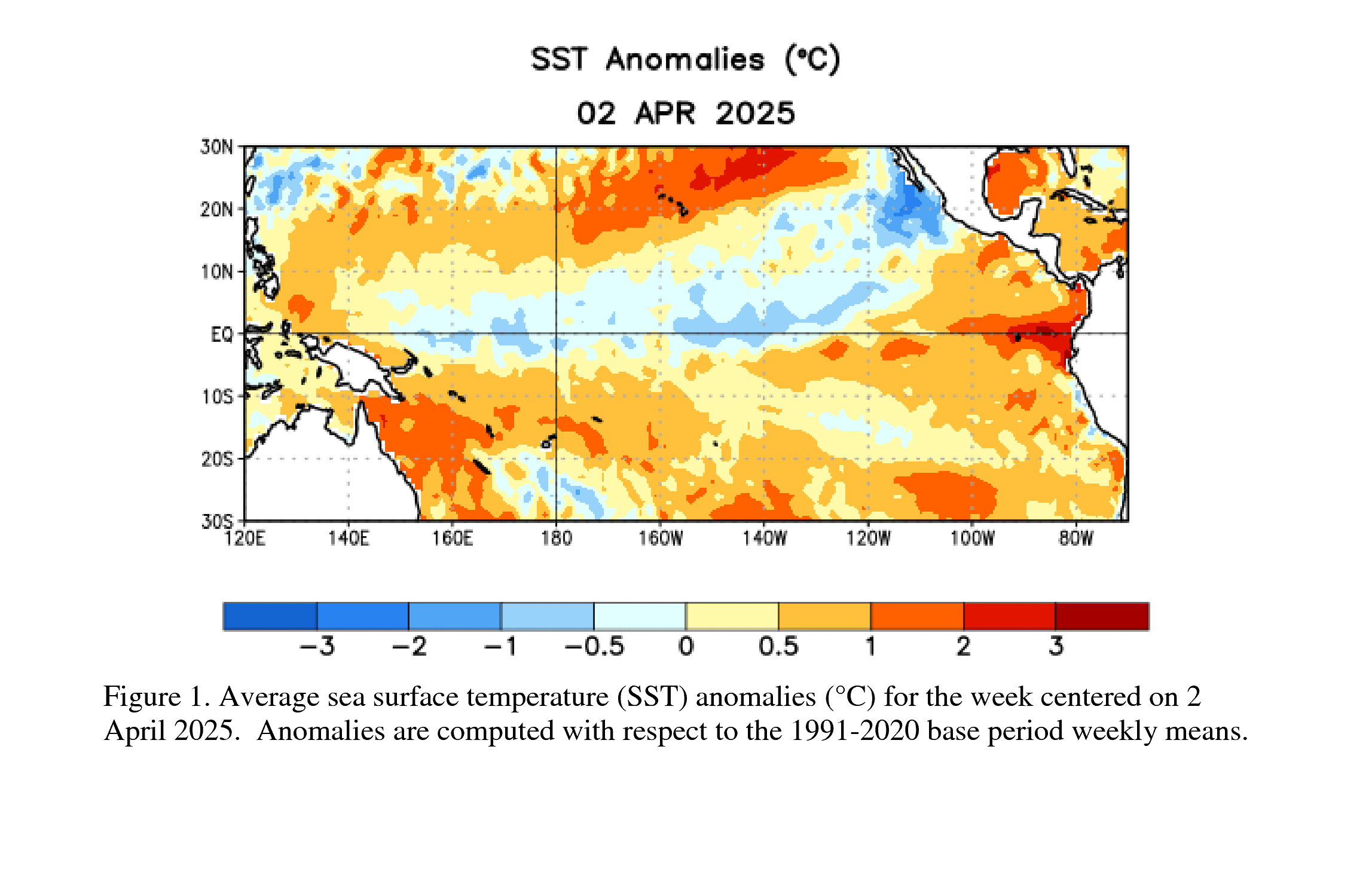
Seasonal hurricane outlooks are useful planning tools. They are not service-demand schedules. NOAA CPC, AOML, and Climate.gov can explain why El Nino often suppresses Atlantic hurricane development and why eastern or central Pacific conditions may behave differently. The National Hurricane Center and local NWS products matter once a storm exists.
The roofing business question is narrower: where can revenue, risk, and workload spike even if named-storm counts are lower?
| Basin-level signal | Contractor-level blind spot | Better planning question |
|---|---|---|
| Below-normal Atlantic activity | One landfall can still create weeks of demand | Which service areas are exposed to wind, rain, surge, trees, and access disruption? |
| Higher Atlantic shear | Rain and local wind impacts can still occur | Which customers have active leaks, older roofs, or vulnerable open jobs? |
| Fewer named storms | Slow-moving rain can drive leak calls without a dramatic wind story | Which roof types fail first under long-duration rain? |
| Seasonal uncertainty | Crews may relax too early | What readiness work is cheap now and expensive later? |
The Four Demand Lanes
Business owners should separate hurricane demand into four lanes.
Emergency lane: active water entry, tarping, temporary dry-in, unsafe access, and urgent customer communication. This lane depends on safety, materials, and route control more than on seasonal outlook language.
Inspection lane: customers who think they have storm damage, buyers/sellers who need records, property managers with tenant reports, and homeowners with prior leak history. This lane needs scripts and documentation discipline.
Repair lane: flashing, penetrations, tile underlayment, low-slope drainage, shingles, metal details, and prior repair failures that show up after rain or wind. This lane needs roof-type tagging.
Business lane: scheduling, overtime, fuel, disposal, supplier availability, subcontractor capacity, customer deposits, contract review, and follow-up ownership. This lane is where a quiet forecast can still hurt margins.
Capacity Rules For Owners
Use three thresholds instead of one storm-count assumption.
- Monitoring threshold: CPC, AOML, Climate.gov, and seasonal outlooks justify pre-season readiness and customer education.
- Readiness threshold: NHC outlooks, NWS products, local emergency information, or credible rain/wind risk justify schedule protection, material checks, and intake scripts.
- Response threshold: local impact, active leaks, safe access, customer evidence, and inspection findings justify field deployment.
Do not move directly from seasonal El Nino language to sales claims. That jump creates bad operations and risky marketing.
A Capacity Scorecard That Works Better Than Storm Counts
Give each market a weekly score from 0 to 3 in five categories.
| Category | 0 | 1 | 2 | 3 |
|---|---|---|---|---|
| Local hazard | No active signal | Seasonal monitoring | NHC/NWS/local watch item | Impact likely or underway |
| Roof stock | Mostly routine | Older roofs or known leak clusters | Vulnerable roof types concentrated | Many open/vulnerable jobs |
| Access | Normal routing | Some road/crew constraints | Surge, flood, tree, or power concerns | Access unsafe or blocked |
| Materials | Normal supply | Longer lead times | Key dry-in/repair material tight | Material shortage affects scheduling |
| Customer pressure | Normal call volume | More questions | Leak/inspection wave building | Emergency intake overloaded |
If the total score is 7 or higher, the owner should act like demand can spike even if the seasonal basin story sounds mild. That does not mean selling fear. It means protecting schedule margin, moving exposed work, assigning intake ownership, and tracking source-stamped customer files.
Owner Decisions That Should Not Wait For Landfall
Some decisions are cheap before a storm and expensive after the first leak wave.
- Decide which jobs can be paused without opening roof assemblies.
- Decide how many emergency calls the company can answer without degrading safety or documentation.
- Decide which service areas are too far to cover during fuel, access, or traffic disruption.
- Decide which profile or directory fields prove storm-response discipline: written scopes, safe photo intake, tarping process, roof-type experience, closeout records, and follow-up ownership.
- Decide which local pages deserve a state or city market brief because the demand pattern is genuinely different.
That last point matters for content strategy. A Houston-area owner, a Tampa owner, a Charleston owner, and a Phoenix owner do not need the same page. They need the same discipline applied to different hazards, roof stock, access constraints, and customer questions.
Local Market Examples
The basin-count mistake looks different by geography.
Florida can see lower basin odds and still face one Gulf or Atlantic landfall, inland rain, tree impacts, tile underlayment leaks, condo complexity, and insurance-language sensitivity. Texas can have coastal surge, inland rain, tree damage, heat-stressed materials, and long service routes. The Carolinas can have barrier islands, coastal plain flooding, inland rain corridors, and tree canopy. Gulf Coast markets can lose access through surge or flooding even when roof wind damage is uneven. Western markets may care less about Atlantic counts and more about eastern Pacific remnant moisture.
This is why local/state content matters. A useful city or state page should not repeat the same basin-count paragraph. It should name the local roof stock, hazard, access problem, demand lane, official source, and contractor response difference.
Customer And Claims Language
Use this sentence:
"Seasonal outlooks can help us prepare, but they do not prove what happened to your roof. We look at current local weather information, roof age, prior repairs, photos, safe inspection findings, and written scope assumptions."
Avoid:
- "El Nino means the season will be quiet."
- "A low basin forecast means no roof risk."
- "This storm should be covered."
- "The forecast proves damage."
- "Claims are coming, so book now."
NAIC and FTC sources belong in the background for claim-process and pressure boundaries. OSHA and Ready.gov sources belong in the safety and access lane. RoofPredict belongs in the records, routing, documentation, and follow-up lane.
What RoofPredict Should Track
- source timestamp and local hazard lane;
- roof age confidence;
- roof type and material;
- prior leak or repair history;
- open jobs vulnerable to rain or wind;
- active water-entry calls;
- route cluster and access status;
- inspection status;
- temporary mitigation status;
- estimate assumptions;
- follow-up owner and next action.
Those fields help owners see demand before it becomes chaos. They do not forecast storms, diagnose damage, approve claims, or replace qualified inspection and safety review.
Local Content And Directory Fit
This topic can support state, metro, and city pages when each page explains a real demand pattern. A Florida page can contrast lower seasonal activity with one Gulf landfall, tile underlayment demand, insurance-language caution, and inland rain. A Texas Gulf page can focus on coastal surge access, long service routes, tree damage, heat-aged materials, and disposal logistics. A Carolinas page can separate barrier islands, coastal plain flooding, inland rain corridors, tree canopy, and older shingle stock. A western page can explain why eastern Pacific remnants and monsoon overlap matter more than Atlantic basin counts.
Good fit for contractor directory CTA where profiles help readers compare storm-response process, roof-type experience, emergency communication, written scope quality, and service-area coverage. Good fit for state market brief CTA when local roof stock, weather exposure, access constraints, material logistics, or insurance pressure changes staffing. Good fit for The Roofline newsletter CTA when the angle is weekly market-readiness monitoring.
FAQ
Can El Nino reduce Atlantic hurricane activity and still leave roofers busy?
Yes. Basin activity is not the same as local demand. One landfall, slow rain event, access problem, or leak cluster can create significant roofing workload.
Should roofing owners reduce staffing because of a lower basin outlook?
Not by itself. Owners should use seasonal outlooks for monitoring, then use NHC/NWS/local sources, customer files, roof stock, and active conditions for readiness and response.
What demand matters most after a storm?
Emergency leaks, safe access, tarping capacity, inspection backlog, roof-type-specific repairs, customer communication, and documentation discipline.
Can RoofPredict predict which homes will have storm damage?
No. RoofPredict can organize records, routing, source notes, roof age, photos, and follow-up. It is not a weather forecaster, inspector, adjuster, insurer, engineer, or claim authority.
The Roofline by RoofPredict
Stay Ahead of Roofing Market Changes
Join The Roofline by RoofPredict for weekly roofing intelligence: material price signals, storm demand, insurance and regulatory updates, sales tactics, and local contractor opportunities.
Sources
- NOAA CPC ENSO Diagnostic Discussion — cpc.ncep.noaa.gov
- NOAA CPC ENSO Recent Evolution, Current Status and Predictions PDF — cpc.ncep.noaa.gov
- NOAA CPC 2026 Atlantic Hurricane Season Outlook — cpc.ncep.noaa.gov
- NOAA AOML: How El Nino Impacts Atlantic Hurricane Season — aoml.noaa.gov
- NOAA Climate.gov El Nino and La Nina FAQ — climate.gov
- NOAA Climate.gov: Impacts of El Nino and La Nina on Hurricane Season — climate.gov
- National Hurricane Center — nhc.noaa.gov
- NHC Tropical Cyclone Product Descriptions — nhc.noaa.gov
- NWS Hurricane Watches, Warnings, and Advisories — weather.gov
- Ready.gov Hurricanes — ready.gov
- Ready.gov Floods — ready.gov
- NAIC Natural Disasters — content.naic.org
- NAIC Navigating the Claims Process: Recover and Rebuild — content.naic.org
- FTC How To Avoid Scams After Weather Emergencies and Natural Disasters — consumer.ftc.gov
- OSHA Hurricane Preparedness and Response — osha.gov
- OSHA Fall Protection in Residential Construction — osha.gov
- RoofPredict — roofpredict.com
Related Articles
Monthly ENSO Briefing Template for Roofing Companies
Use one monthly ENSO briefing to turn official source updates into operations, safety, customer-language, route, and RoofPredict workflow decisions.
How Strong El Nino Talk Can Mislead Roofing Teams
Strong-event language can help planning, but it misleads teams when it turns into storm guarantees, route shortcuts, claim promises, or unsafe customer scripts.
The Difference Between El Nino Risk and Roof Damage Proof
Climate risk can justify readiness, but roof damage proof still needs local storm context, property-specific inspection records, and clear reviewer boundaries.