
What to Tell Homeowners Who Ask About a Super El Nino
On this page
Short Answer
Roofing teams should answer homeowner questions about a "Super El Nino" plainly, without selling fear. The safest answer is: NOAA/CPC was watching for El Nino development during this review, but a climate pattern does not prove damage at one roof. If the homeowner has an active leak, recent hail or wind concern, or visible issue from the ground, the company can help document what is visible when conditions are safe.
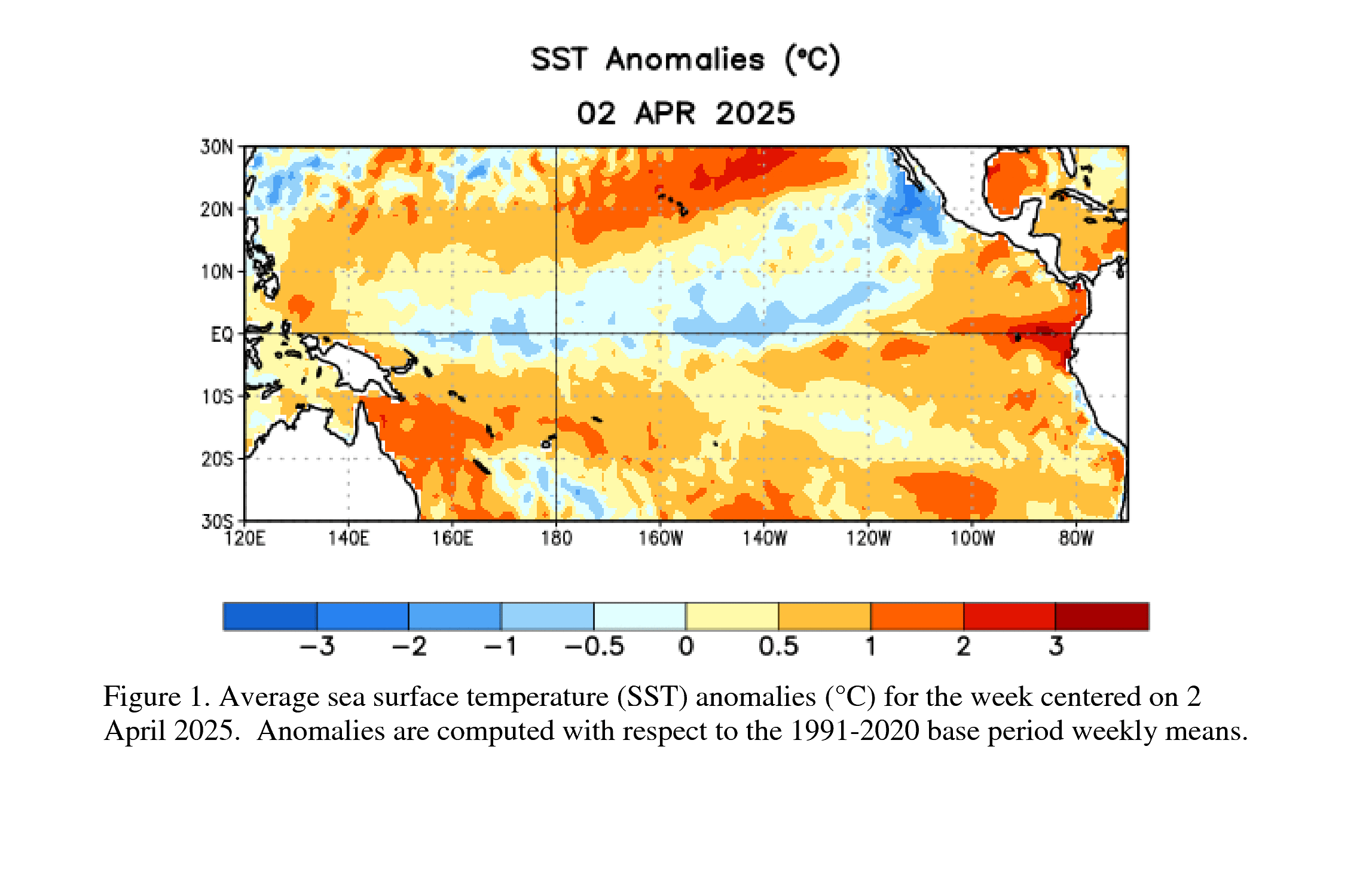
As of June 9, 2026, the latest CPC ENSO Diagnostic Discussion visible during review was dated May 14, 2026. It listed an El Nino Watch, described current ENSO-neutral conditions, said El Nino was likely to emerge soon, and said peak strength remained uncertain. That supports a careful customer answer. It does not support telling homeowners that a Super El Nino is confirmed, that their roof is at risk, or that insurance claims are coming.
The Answer Bank
Front-desk and sales teams need approved language before call volume rises. Use a short answer, then ask for records.
| Homeowner question | Safer answer | Do not say |
|---|---|---|
| "Is a Super El Nino coming?" | "NOAA/CPC has been monitoring possible El Nino development. We check the official source date before using stronger wording." | "Yes, it is confirmed and it will damage roofs." |
| "Does that mean my roof is in danger?" | "A climate pattern can affect seasonal odds, but it does not prove damage at one property." | "Your roof is probably at risk." |
| "Should I file a claim?" | "Coverage questions belong with your insurer and policy reviewer. We can document visible roof concerns if you request an inspection." | "You should file now." |
| "What should I do today?" | "Save dates, photos from the ground, prior roof records, and any active leak notes. Do not climb onto the roof." | "Go up and check shingles." |
| "Can you inspect before the next storm?" | "We can schedule when conditions and access are safe." | "We guarantee immediate inspection." |
The point is not to dodge the question. The point is to answer it without turning a climate headline into pressure.
The Three-Part CSR Script
Use this structure for calls, web chat, email replies, and sales follow-up.
1. Name The Source Limit
"El Nino is a climate pattern, and NOAA/CPC updates the official status. We do not treat it as proof that one roof has damage."
That sentence protects the customer and the company. It also gives the team a clean way to avoid repeating social-media or news headlines as if they were job evidence.
2. Ask For The Property Record
"Are you seeing active water entry, missing shingles from the ground, hail marks on soft metals or vehicles, interior staining, or a recent storm date you want documented?"
The question moves the conversation from weather hype to records. It also helps the team route the request. Active leak, visible exterior concern, prior open estimate, real estate deadline, warranty question, and insurance question should not all go to the same next step.
3. Set The Boundary
"We can document visible concerns when conditions are safe. We do not decide coverage, claim eligibility, warranty approval, or whether a climate pattern caused damage."
That boundary should be consistent across office staff, sales reps, ads, landing pages, text replies, and door hangers.
What To Record In RoofPredict
The conversation should leave a clean file, more than a scheduled appointment.
Useful fields:
- source date used by the team;
- customer question;
- active leak status;
- recent storm date mentioned by customer;
- ground-level photos received;
- prior roof age or repair record;
- safety/access status;
- insurance or warranty question flag;
- next follow-up owner;
- approved wording version.
Do not use a label such as "El Nino damage." Better labels are "customer asked about El Nino," "local evidence needed," "inspection requested," "active leak intake," "safety hold," or "insurance question routed."
Safety Language For Homeowners
Roofing companies should avoid language that pushes homeowners onto roofs or into unsafe areas. OSHA's roofing safety sources are employer-facing, but the customer-facing message should still be simple: take photos only from safe ground-level locations, avoid ladders, and wait for safe inspection conditions.
Use:
- "Please do not climb onto the roof for photos."
- "Interior water-entry photos, attic photos from safe access, and ground-level exterior photos can help."
- "If there is active water entry near electrical hazards, treat it as a safety issue first."
- "We schedule exterior inspection work when weather and access conditions are safe."
Avoid:
- "Check the roof before the next storm."
- "Look under shingles."
- "Walk the roof and send photos."
- "Hurry before the weather gets worse."
Insurance And Consumer-Protection Boundaries
Weather-emergency periods are when homeowners are most vulnerable to pressure. FTC weather-emergency guidance emphasizes caution around post-event repairs and contractor pressure. Roofing teams should respond to questions without claiming policy outcomes or creating urgency that sounds like a claim push.
Use:
- "We can provide documentation of visible conditions."
- "Your policy, insurer, and appropriate reviewers control coverage questions."
- "You should keep copies of contracts, photos, estimates, and communications."
- "Do not sign anything you do not understand."
Avoid:
- "This should be covered."
- "You qualify because of El Nino."
- "We can get the claim approved."
- "Sign now before your chance expires."
When To Escalate The Conversation
Not every El Nino question needs a sales appointment. Escalate when the homeowner reports:
- active water entry;
- visible exterior damage from the ground;
- recent hail, wind, or falling debris;
- interior staining or ceiling damage;
- prior repair that may have failed;
- real estate, insurance, or warranty deadline;
- safety issue such as downed lines, unstable access, or active storm conditions.
Hold or route the conversation when the question is only a climate headline, when the homeowner asks for coverage advice, when the site is unsafe, or when the company cannot support the requested service window.
Local And State Variants
City and state versions should not be empty homeowner pages. A local version needs a real reason: local winter rain pattern, coastal exposure, hail corridor, snow or ice timing, wildfire/wind overlap, roof material mix, housing age, local contractor rules, permit issues, post-disaster solicitation rules, insurance friction, supplier timing, directory coverage, or a recurring local customer question that changes the script.
If the local script is the same as the national script with a city name swapped in, keep it out of public release.
How RoofPredict Fits
RoofPredict fits as the conversation record and follow-up layer. It can help a team keep source dates, customer questions, records, safety holds, local storm notes, and next steps organized. It should not be described as a forecast source, roof inspector, insurer, adjuster, public adjuster, safety authority, lawyer, or replacement recommendation engine.
The product value is consistency: the CSR answer, sales follow-up, inspection notes, and customer record should all use the same source date and the same boundaries.
FAQ
Can a roofer answer homeowner questions about El Nino?
Yes. A roofer can explain that El Nino is a climate pattern and that official sources should be checked. The roofer should not diagnose roof damage from the climate pattern alone.
Should homeowners inspect their roof because of El Nino?
They should not climb onto roofs because of a forecast headline. If they have visible concerns, active leaks, or recent storm dates, they can gather safe ground-level records and request a professional inspection when conditions are safe.
Can a contractor mention insurance?
Only carefully. A contractor can document visible conditions and advise the homeowner to keep records. Coverage, claim eligibility, deductible, policy, and legal questions need the appropriate reviewer.
The Roofline by RoofPredict
Stay Ahead of Roofing Market Changes
Join The Roofline by RoofPredict for weekly roofing intelligence: material price signals, storm demand, insurance and regulatory updates, sales tactics, and local contractor opportunities.
Sources
- NOAA CPC ENSO Diagnostic Discussion — cpc.ncep.noaa.gov
- El Nino and La Nina Frequently Asked Questions — climate.gov
- How does El Nino influence winter precipitation over the United States? — climate.gov
- SPC Today's Storm Reports — spc.noaa.gov
- OSHA Fall Protection in Residential Construction — osha.gov
- How To Prepare for a Weather Emergency While Avoiding Scams — consumer.ftc.gov
- RoofPredict — roofpredict.com
Related Articles
Monthly ENSO Briefing Template for Roofing Companies
Use one monthly ENSO briefing to turn official source updates into operations, safety, customer-language, route, and RoofPredict workflow decisions.
How Strong El Nino Talk Can Mislead Roofing Teams
Strong-event language can help planning, but it misleads teams when it turns into storm guarantees, route shortcuts, claim promises, or unsafe customer scripts.
The Difference Between El Nino Risk and Roof Damage Proof
Climate risk can justify readiness, but roof damage proof still needs local storm context, property-specific inspection records, and clear reviewer boundaries.