
Super El Nino Hurricane Messaging For Roofing Companies
On this page
Short Answer
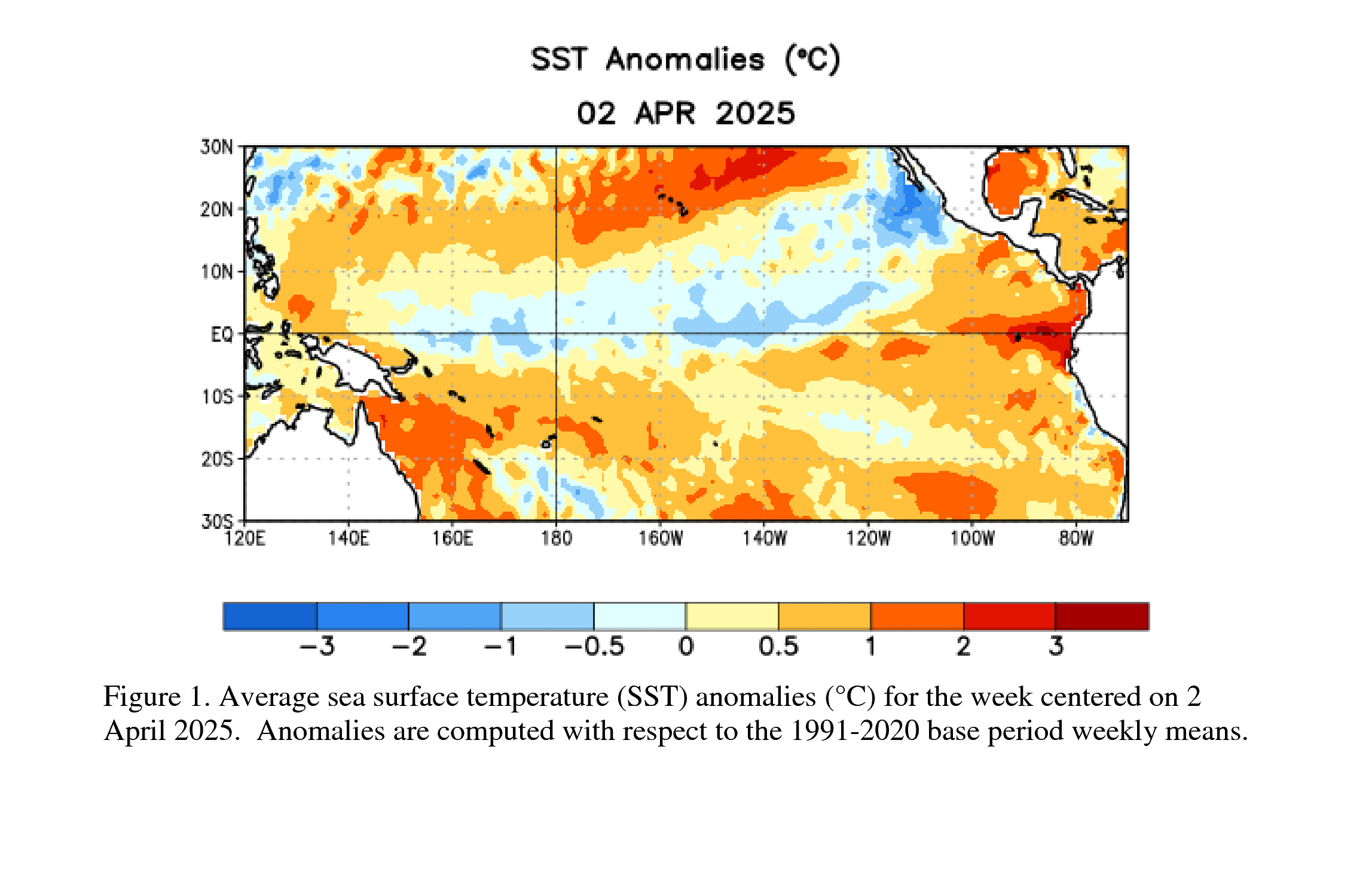
Roofing companies should treat "Super El Nino" as a high-risk messaging phrase, not a ready-made campaign slogan. It can be useful shorthand inside a planning room, but public copy needs current NOAA language, clear caveats, local weather boundaries, safety reminders, and roof-specific evidence rules.
The right communications goal is not to predict damage. It is to help customers understand readiness without panic: seasonal climate signals can affect hurricane conditions, but they do not prove what will happen to one home, one commercial roof, one claim, or one market. A strong roofing message says what the company can document, what public sources it watches, and where the customer should use official weather and emergency guidance.
The Messaging Problem
The phrase "Super El Nino" is sticky. That makes it useful for internal planning and risky for public marketing. Communications leads may want a headline that explains why the company is preparing for hurricane season, but a loud headline can imply more certainty than the sources allow.
NOAA CPC, AOML, and Climate.gov can support careful statements about ENSO, seasonal uncertainty, and how El Nino can influence Atlantic and eastern or central Pacific hurricane conditions. The National Hurricane Center and local NWS products become the right lane when a storm exists. FTC advertising guidance is the reminder that public claims should be truthful, not misleading, and backed by evidence.
The roofing company should not sound like a forecaster. It should sound like a disciplined contractor that knows how to separate weather context from roof records, safety, emergency intake, inspection notes, and follow-up.
Safe Public Copy
Use copy that gives customers a useful action without turning climate context into damage proof.
| Situation | Safer copy | Risky copy |
|---|---|---|
| Seasonal post | "A possible strong El Nino pattern is a reminder to review roof records, storm intake, and official hurricane sources." | "Super El Nino will bring roof damage." |
| Atlantic outlook | "El Nino can make Atlantic hurricane formation less favorable, but landfall, rain, and local wind risk still require current NHC/NWS monitoring." | "This will be a quiet season for coastal homeowners." |
| Customer email | "If you see active water entry, document it safely from the ground and call for guidance." | "Your roof is probably damaged because of El Nino." |
| Directory CTA | "Compare contractors by documented storm-response process, roof-type experience, written scope habits, and follow-up." | "Find the best storm roofer before claims close." |
| Social post | "We are preparing intake scripts, route planning, and safety checks for hurricane-season service demand." | "Claims are coming. Book now." |
This is the core editorial rule: public copy can mention preparedness, source monitoring, safety, documentation, and local risk awareness. It should not promise a storm, declare a calm season, imply claim approval, or diagnose roof damage from climate context.
A Three-Lane Messaging Framework
Every storm-season message should fit one of three lanes.
Lane 1: Seasonal context. Use CPC, Climate.gov, AOML, and seasonal outlooks. The message is readiness. The CTA is to organize roof records, know the company's storm intake process, and follow official sources.
Lane 2: Active storm information. Use NHC, NWS watches and warnings, emergency management, Ready.gov, and local public guidance. The message is safety and current conditions. The CTA is to avoid unsafe roof access, report active leaks, and follow official instructions.
Lane 3: Roof-specific follow-up. Use customer photos, roof age, prior repairs, inspection notes, material type, interior symptoms, and written scope assumptions. The message is documentation. The CTA is inspection scheduling or repair planning after conditions are safe.
Do not mix the lanes. A seasonal El Nino post should not claim a roof failed. An active NHC advisory should not become a replacement pitch. A roof-specific inspection note should not pretend to be an insurance decision.
Review Checklist Before Posting
Communications leads should require this checklist before publishing any hurricane-season post:
- Does the post use current NOAA/CPC/NHC/NWS language?
- Does it avoid saying a Super El Nino is officially confirmed unless an official source uses that current wording?
- Does it avoid landfall certainty, damage certainty, claim approval, warranty promises, and price-scare pressure?
- Does it tell homeowners to avoid roof climbing?
- Does it point to official weather or emergency sources when safety is involved?
- Does it separate seasonal context from local storm information and roof-specific evidence?
- Does it keep RoofPredict in the records, routing, documentation, and follow-up lane?
- Does any testimonial, review, or endorsement follow FTC review and endorsement guidance?
- Is the CTA appropriate for the geography, directory coverage, and service type?
If a post fails one item, it should go back to editing.
Local And State Messaging Rules
State and city hurricane messaging can rank, but it has to earn the page.
A Florida version should not copy a Texas version. Florida messaging may need coastal evacuation timing, condo and tile stock, older asphalt roofs, flood/rain separation, and Florida-specific contractor and insurance context if used. A Texas Gulf Coast version may need surge access, inland rain, wind, tree impact, heat-stressed roofs, disposal and fuel pressure, and county-level service-area routing. A Carolinas page may need barrier islands, coastal plain flooding, tree canopy, older neighborhoods, and inland rain corridors. Western-market messaging may need eastern Pacific storms, monsoon overlap, desert tile underlayment, low-slope drainage, and flash-flood access.
Each local page needs a local planning note. The note should name the hazard, roof stock, source, service workflow, and CTA fit. If the only unique detail is a city name, the page should stay unpublished.
Directory, Newsletter, And State Brief Fit
Messaging content can support the RoofPredict directory, but the CTA should be specific. A contractor directory callout fits when the reader needs to compare storm-response process, emergency communication, roof-type experience, written estimates, closeout records, and service-area coverage. A state market brief CTA fits when local weather, roof stock, insurance pressure, permitting, supplier capacity, or contractor rules change the playbook. The Roofline newsletter CTA fits seasonal monitoring, weekly storm-readiness notes, and communications playbooks.
Metadata fit:
- audience: contractor_owner, marketing_lead, sales_manager, operations_manager
- geo_level: national with state/city derivatives only after local dossier
- topic: hurricane_messaging, storm_demand, contractor_directory, state_market_brief, sales
- cta_fit: roofline_newsletter, contractor_directory, state_market_brief
RoofPredict's Role
RoofPredict should be described as the place to organize the operational record:
- roof age and material notes;
- service-area and route priority;
- storm-source timestamp;
- customer photos and intake notes;
- emergency mitigation status;
- inspection safety/access status;
- estimate assumptions;
- directory/profile information;
- follow-up owner and next action.
RoofPredict should not be described as a hurricane forecaster, damage detector, inspector, engineer, adjuster, insurer, warranty authority, or legal advisor.
FAQ
Can a roofing company use "Super El Nino" in public copy?
Only with care. Treat it as scenario language unless current official sources support stronger wording. Public copy should use current NOAA/CPC/NHC/NWS language and avoid turning a climate phrase into a damage or claim promise.
What should hurricane messaging tell homeowners to do?
Tell them to follow official weather and emergency sources, avoid roof climbing, document active leaks safely from the ground, keep records organized, and contact a contractor when conditions are safe.
Should a local hurricane page mention El Nino?
Only if it helps the local reader. The page still needs local roof stock, hazard exposure, service workflow, source boundaries, and directory or state-brief fit.
How should RoofPredict appear in the message?
Use RoofPredict as the record, route, documentation, and follow-up layer. Do not frame it as a weather source, damage diagnosis tool, claim authority, or safety agency.
The Roofline by RoofPredict
Stay Ahead of Roofing Market Changes
Join The Roofline by RoofPredict for weekly roofing intelligence: material price signals, storm demand, insurance and regulatory updates, sales tactics, and local contractor opportunities.
Sources
- NOAA CPC ENSO Diagnostic Discussion — cpc.ncep.noaa.gov
- NOAA CPC ENSO Recent Evolution, Current Status and Predictions PDF — cpc.ncep.noaa.gov
- NOAA CPC 2026 Atlantic Hurricane Season Outlook — cpc.ncep.noaa.gov
- NOAA AOML: How El Nino Impacts Atlantic Hurricane Season — aoml.noaa.gov
- NOAA Climate.gov El Nino and La Nina FAQ — climate.gov
- NOAA Climate.gov: Impacts of El Nino and La Nina on Hurricane Season — climate.gov
- National Hurricane Center — nhc.noaa.gov
- NHC Tropical Cyclone Product Descriptions — nhc.noaa.gov
- NWS Hurricane Watches, Warnings, and Advisories — weather.gov
- Ready.gov Hurricanes — ready.gov
- Ready.gov Floods — ready.gov
- NAIC Natural Disasters — content.naic.org
- NAIC Navigating the Claims Process: Recover and Rebuild — content.naic.org
- FTC Advertising and Marketing Basics — ftc.gov
- FTC Truth In Advertising — ftc.gov
- FTC How To Avoid Scams After Weather Emergencies and Natural Disasters — consumer.ftc.gov
- FTC Endorsements, Influencers, and Reviews — ftc.gov
- OSHA Hurricane Preparedness and Response — osha.gov
- OSHA Fall Protection in Residential Construction — osha.gov
- RoofPredict — roofpredict.com
Related Articles
Monthly ENSO Briefing Template for Roofing Companies
Use one monthly ENSO briefing to turn official source updates into operations, safety, customer-language, route, and RoofPredict workflow decisions.
How Strong El Nino Talk Can Mislead Roofing Teams
Strong-event language can help planning, but it misleads teams when it turns into storm guarantees, route shortcuts, claim promises, or unsafe customer scripts.
The Difference Between El Nino Risk and Roof Damage Proof
Climate risk can justify readiness, but roof damage proof still needs local storm context, property-specific inspection records, and clear reviewer boundaries.