
El Nino and Eastern Pacific Hurricanes: Roofing Implications for Western Markets
On this page
Short Answer
Western roofing companies should not treat El Nino as an abstract climate headline. In Southern California, Arizona, Nevada, New Mexico, inland California, Baja-adjacent service areas, and the Central Pacific, the practical question is whether eastern or central Pacific tropical activity can send rain, wind, humidity, traffic disruption, and access problems into markets that are not staffed like the Gulf Coast.
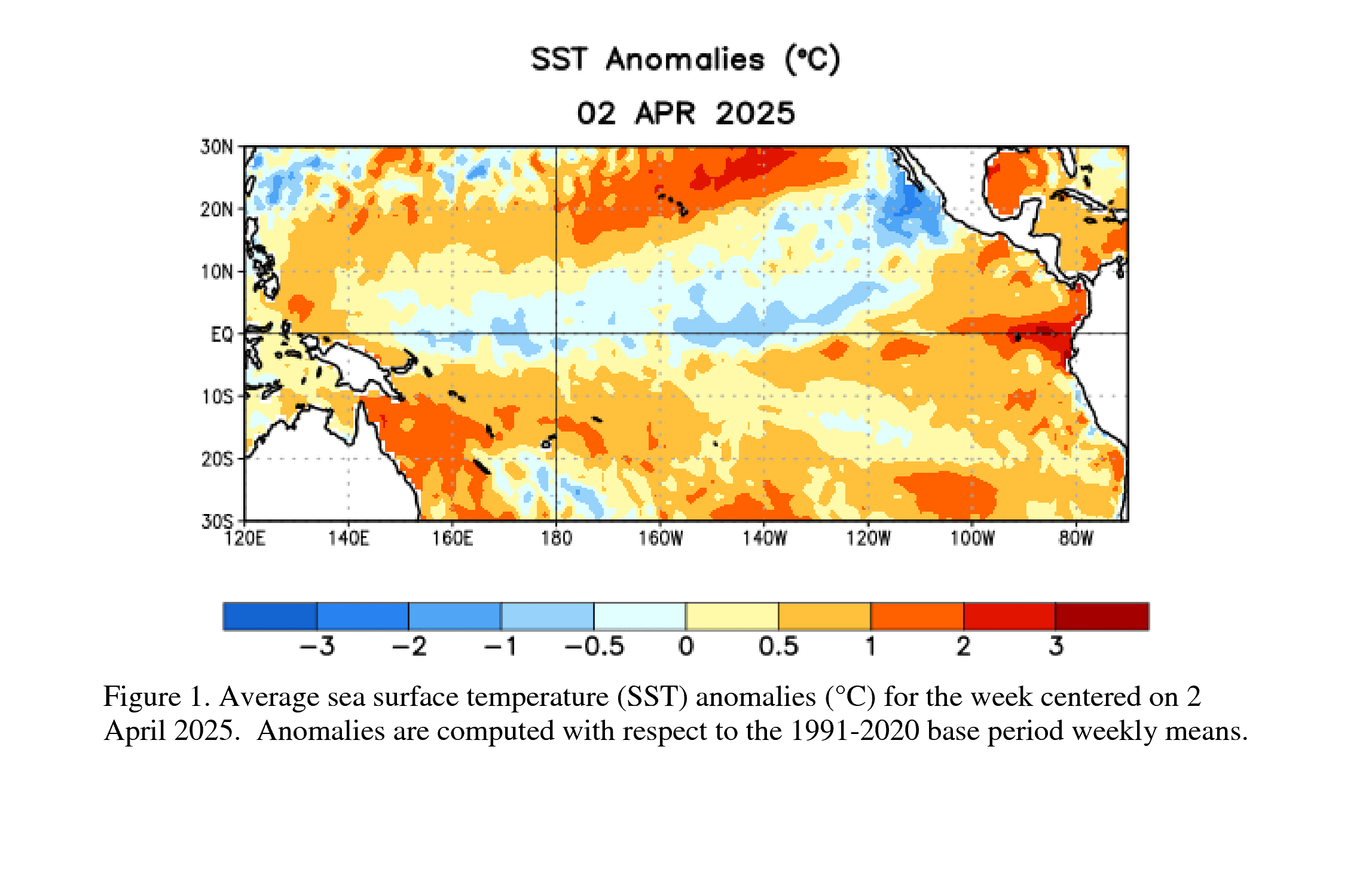
As of the latest source refresh for this package, NOAA's CPC ENSO discussion and status material support cautious planning language, not a claim that a named "Super El Nino" is confirmed or that any address will see roof damage. The useful contractor move is narrower: build a western storm-readiness file that separates seasonal climate context from NHC/NWS warnings, local rainfall, jobsite access, documented roof condition, customer communication, and post-event follow-up.
Why Eastern Pacific Storms Matter To Western Roofers
Eastern Pacific hurricanes usually do not create the same public routine for roofers that Gulf or Atlantic systems do. That is exactly why they can expose weak operations. A roofing company in Phoenix, Tucson, Las Vegas, San Diego, Riverside, Imperial County, Palm Springs, Albuquerque, Santa Fe, or Hawaii may have strong heat, tile, coating, low-slope, and wind-service habits, but still lack a tropical-remnant workflow.
NOAA's hurricane education material explains that El Nino tends to make the Atlantic less favorable for hurricanes while making the eastern and central Pacific more favorable. That does not create a landfall forecast. It does tell western contractors which basin deserves closer monitoring when seasonal ENSO language gets louder. The National Hurricane Center and its eastern Pacific tropical cyclone records are the sources to watch once a specific storm exists, while NOAA CPC's ENSO Diagnostic Discussion and ENSO status PDF explain the broader climate state.
For RoofPredict, the difference is operational. The product lane is not forecasting storms or telling a roofer which roof failed. It is organizing roof age, property records, storm notes, route priority, customer files, and follow-up history so a team can respond with evidence instead of memory.
The Western Roof Types That Change The Playbook
An eastern Pacific remnant does not hit every western roof the same way. The service plan should start with roof stock, not with the storm name.
| Market pattern | Roofing issue after remnant moisture | Field planning move |
|---|---|---|
| Desert tract housing with tile roofs | Broken tiles, aged underlayment, valleys, penetrations, and debris can show up as interior leak calls after sudden rain | Pre-sort calls by active water entry, roof age, prior repair history, and safe access |
| Low-slope commercial and multifamily roofs | Drains, scuppers, ponding areas, membrane seams, parapets, rooftop equipment, and maintenance gaps become urgent during heavy rain | Build a drain-and-access checklist before storms, not after tenants call |
| Inland growth corridors | Newer subdivisions can have repeatable roof systems, but fast growth can strain appointment capacity after a regional event | Group routes by subdivision, roof type, and likely material availability |
| Older downtown or postwar housing | Repairs may involve layered materials, older flashing details, patched decking, or undocumented prior work | Capture photos, prior invoices, permit records where available, and customer notes before promising a scope |
| Central Pacific and island markets | Wind, rain, salt exposure, shipping constraints, and access limits can collide quickly | Track inspection capacity, material lead time, and safety clearance as separate fields |
This is where local pages and state briefs can be valuable if they are built correctly. A Las Vegas page should not read like a San Diego page with the city name swapped. Las Vegas has desert heat, fast drainage, low-slope commercial stock, tile and underlayment aging, and flash-flood access issues. San Diego has coastal exposure, canyons, hillside access, tile neighborhoods, low-slope commercial roofs, and stormwater complications. Arizona markets need monsoon safety context from offices such as NWS Phoenix, NWS Tucson, and NWS Northern Arizona. Hawaii and other Central Pacific planning should follow the relevant NWS and NHC basin products, including the NWS Central Pacific hurricane outlook.
What To Watch Before A Specific Storm Exists
Before a storm has a track, the right work is preparation, not prediction.
Roofing owners and operations leads should maintain a seasonal board with four lanes:
- Climate context: CPC ENSO status, NOAA Climate.gov ENSO explanations, and hurricane-season context from Climate.gov.
- Basin monitoring: NHC tropical weather outlooks, named-storm products, and the NHC product descriptions that explain what each advisory means.
- Local hazards: NWS office pages, watches and warnings, flash-flood messaging, wind products, emergency-management updates, and road/access issues.
- Roofing operations: open leaks, vulnerable roof types, tarping capacity, crew safety, supplier lead times, customer notifications, and documentation requirements.
The board should have one plain rule: climate context can move a team into readiness, but only storm-specific and local sources should move the team into event response. That keeps a roofer from using ENSO as a claim explanation, a sales pressure line, or an address-level damage signal.
A 72-Hour Western Market Workflow
When an eastern Pacific system has a plausible path for remnant moisture or wind impacts, the work should become concrete.
72 to 48 hours out: assign one person to source monitoring. Save the NHC product, the local NWS page, and any local emergency-access notes in the storm file. Tag open jobs by roof type, active leak status, slope/access complexity, and customer sensitivity. Notify sales and service that climate language is no longer the message; local advisories and actual customer conditions are.
48 to 24 hours out: protect the schedule. Move non-urgent jobs that require exposed roof assemblies, long dry windows, steep access, crane work, or vulnerable staging. Confirm tarping material, moisture documentation, intake scripts, and call triage. Review OSHA hurricane and fall-protection guidance before anyone is sent into wind, rain, wet surfaces, electrical hazards, or unstable access conditions.
0 to 24 hours after impact: keep intake narrow and safe. Customer service should ask for active water entry, room affected, roof age if known, recent roof work, ground-level photos, and any immediate safety issue. Do not ask homeowners to climb roofs. Field teams should separate emergency mitigation notes from permanent repair recommendations.
2 to 7 days after impact: split follow-up into evidence files. One lane is urgent leak response. One lane is inspection scheduling. One lane is insurance or documentation support, with a clear boundary that the contractor is not the carrier, adjuster, attorney, or public agency. NAIC's natural disaster insurance guidance is useful background for consumer process questions, while FTC's weather emergency scam guidance is a reminder to keep contract, payment, and pressure language clean.
How To Talk About El Nino Without Overclaiming
The safest customer script is short:
"El Nino can influence seasonal storm patterns, but it does not prove what happened to your roof. We look at current local weather information, your roof's condition, photos, interior symptoms, prior repairs, and a safe inspection before we discuss next steps."
That script works because it keeps each source in its lane. CPC and Climate.gov help explain ENSO. NHC and NWS handle tropical and local weather products. Ready.gov's hurricane and flood resources support public preparedness. OSHA supports worker-safety planning. RoofPredict supports property, route, documentation, and follow-up organization.
Sales teams should avoid copy that says western homeowners are "due" for roof damage because El Nino favors eastern Pacific activity. They can say something more useful: western markets should prepare for remnant moisture, heavy rain, wind exposure, access disruption, and leak triage, especially where tile underlayment, low-slope drainage, older flashing, or prior repairs are already known concerns.
Local Page And Directory Opportunities
This topic supports local and state content, but only with real local work behind it.
A strong Arizona brief could map monsoon timing, desert tile underlayment issues, flat-roof drainage, subdivision growth, dust and debris, NWS Phoenix/Tucson/Northern Arizona safety resources, supplier timing, and post-rain leak triage. A Southern California brief could cover coastal and inland differences, canyon access, older tile neighborhoods, low-slope commercial roofs, hillside drainage, and stormwater-related scheduling. A Nevada brief could focus on flash-flood access, heat-aged materials, low-slope commercial demand, and service routing across spread-out metros. A Hawaii/Central Pacific page would need a separate source set for island exposure, shipping constraints, wind/rain readiness, salt environment, and local emergency guidance.
Directory CTAs should follow the same rule. Do not add a generic "find a roofer" box to every city article. Use the directory where contractor profiles can help a reader compare documented storm-response process, roof-type experience, emergency communication, written scope habits, closeout records, and service-area fit. Good fit for contractor directory CTA. Good fit for state market brief CTA. Good fit for The Roofline newsletter CTA when the article is attached to seasonal storm readiness or western market monitoring.
What RoofPredict Should Track
For western teams, the useful RoofPredict fields are practical:
- roof age confidence and known material type;
- tile, low-slope, coating, metal, shingle, or mixed-roof notes;
- prior leak and repair history;
- active water-entry calls;
- route cluster, subdivision, or commercial corridor;
- local advisory source and timestamp;
- photos and customer notes;
- inspection safety/access status;
- temporary mitigation versus permanent repair status;
- follow-up owner and next contact date.
Those fields help a roofer make a better decision after rain. They do not prove causation, claim coverage, code compliance, warranty approval, or contractor quality by themselves.
FAQ
Does El Nino mean western roofers should expect more hurricane-related work?
No single climate pattern guarantees local work. El Nino can make eastern and central Pacific hurricane conditions more favorable in broad terms, but roofing companies still need current NHC, NWS, local emergency, and jobsite information before changing event response.
Which western markets should pay attention to eastern Pacific remnants?
Southern California, Arizona, Nevada, New Mexico, inland California, Baja-adjacent service areas, and some Central Pacific markets can all have operational exposure through rain, wind, access disruption, and leak demand. The exact concern depends on local roof stock, terrain, drainage, storm track, and current advisories.
Can a roofer tell a customer El Nino caused roof damage?
No. ENSO is seasonal climate context. A roof-specific conclusion needs local weather records, safe inspection findings, photos, measurements, prior repair history, and the relevant insurance, warranty, or contract review process.
What is the best operational takeaway?
Build a western storm-readiness file before the first customer rush. Separate climate context, NHC/NWS products, local hazard information, safety guidance, customer intake, route priority, and roof-specific documentation.
The Roofline by RoofPredict
Stay Ahead of Roofing Market Changes
Join The Roofline by RoofPredict for weekly roofing intelligence: material price signals, storm demand, insurance and regulatory updates, sales tactics, and local contractor opportunities.
Sources
- NOAA CPC ENSO Diagnostic Discussion — cpc.ncep.noaa.gov
- NOAA CPC ENSO Recent Evolution, Current Status and Predictions PDF — cpc.ncep.noaa.gov
- NOAA AOML: How El Nino Impacts Atlantic Hurricane Season — aoml.noaa.gov
- NOAA Climate.gov El Nino and La Nina FAQ — climate.gov
- NOAA Climate.gov: Impacts of El Nino and La Nina on Hurricane Season — climate.gov
- National Hurricane Center — nhc.noaa.gov
- NHC Eastern Pacific Tropical Cyclone Reports — nhc.noaa.gov
- NHC Tropical Cyclone Product Descriptions — nhc.noaa.gov
- NWS Central Pacific 2026 Hurricane Season Outlook — weather.gov
- NWS Tucson Monsoon Safety — weather.gov
- NWS Phoenix Monsoon Safety — weather.gov
- NWS Northern Arizona Monsoon Information — weather.gov
- Ready.gov Hurricanes — ready.gov
- Ready.gov Floods — ready.gov
- NAIC Natural Disasters — content.naic.org
- FTC How To Avoid Scams After Weather Emergencies and Natural Disasters — consumer.ftc.gov
- OSHA Hurricane Preparedness and Response — osha.gov
- OSHA Fall Protection in Residential Construction — osha.gov
- RoofPredict — roofpredict.com
Related Articles
Monthly ENSO Briefing Template for Roofing Companies
Use one monthly ENSO briefing to turn official source updates into operations, safety, customer-language, route, and RoofPredict workflow decisions.
How Strong El Nino Talk Can Mislead Roofing Teams
Strong-event language can help planning, but it misleads teams when it turns into storm guarantees, route shortcuts, claim promises, or unsafe customer scripts.
The Difference Between El Nino Risk and Roof Damage Proof
Climate risk can justify readiness, but roof damage proof still needs local storm context, property-specific inspection records, and clear reviewer boundaries.