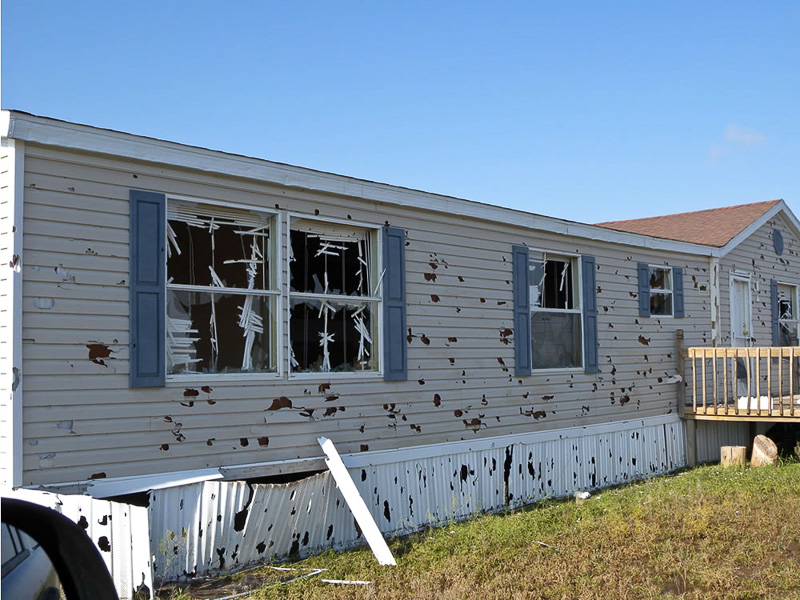
Roof Leak After a Storm: What to Do in the First 24 Hours

On this page
Short Answer
If your roof starts leaking after a storm, first move people and pets out of unsafe rooms. Avoid wet electrical areas, sagging ceilings, gas odor, downed lines, floodwater, broken glass, and unstable debris. Contain water only from dry, stable footing, document before cleanup changes the scene, and call the right emergency, utility, roofing, mitigation, property, or insurer/agent contact.
- Leave unsafe rooms; use a flashlight from a dry location.
- Do not climb onto the roof or use a ladder in rain, wind, darkness, or lightning.
- Do not touch wet light fixtures, switches, outlets, appliances, breaker panels, or wiring.
- Do not cut, poke, or stand under a bulging ceiling.
- Photograph from safe locations before buckets, cleanup, or contractors change the record.
Sources checked: June 9, 2026.
The first 24 hours by time block
| Time block | Main job | What to do | What to avoid |
|---|---|---|---|
| First 15 minutes | Protect people | Move people and pets out of the affected room. Use a flashlight. Stay clear of wet electrical devices, sagging ceilings, gas odor, floodwater, broken glass, and unstable debris. | Do not climb, touch wet electrical equipment, stand under a bulging ceiling, or enter a room that feels unsafe. |
| First 30 minutes | Contain water safely | Place buckets, bins, towels, or plastic sheeting where you can reach from dry, stable footing. Move dry belongings away from the drip path if safe. | Do not cut the ceiling, pull wet insulation, enter an attic after a storm leak, or use a ladder during storm conditions. |
| First hour | Document before cleanup | Take doorway-wide room photos, close photos, short videos, and notes with storm date, discovery time, active leak status, and unsafe areas. Save originals. | Do not clean everything first and photograph only the restored scene. |
| Hours 1-3 | Call the right people | Call emergency services, utility, electrician, roofer, mitigation company, landlord, HOA, property manager, or insurer/agent as needed. | Do not sign a broad permanent repair contract under storm pressure. |
| Hours 3-6 | Stabilize with qualified help | Ask a roofer or emergency repair company about temporary exterior protection if weather is still entering. Save scope, photos, and receipts. | Do not install roof tarps yourself or send an unqualified person onto a damaged roof. |
| Hours 6-24 | Build the record packet | Group photos, receipts, call notes, contractor messages, roof age records, policy notes, and follow-up tasks. Schedule inspection or mitigation follow-up. | Do not rely on memory for times, names, claim numbers, or instructions. |
The first 24 hours should produce two results: a safer home and a usable record. A perfect diagnosis can wait. A clear record cannot. Once cleanup starts, water moves, materials dry, buckets move, contractors arrive, and memories blur. The record you build in the first day helps the roofer understand the leak, helps a mitigation company understand wet areas, helps a landlord or HOA understand responsibility, and helps an insurer or warranty contact understand timing if those questions come up.
Use the steps below as a decision path, not repair instruction. If the task requires roof access, electrical contact, structural judgment, mold evaluation, material removal, or storm-debris removal, the safe answer is qualified help.
The first rule: do not chase the leak into danger
A roof leak rarely shows its full path. Water can enter at a roof opening, flashing joint, valley, vent, wall intersection, roof edge, skylight, chimney, branch impact, old repair, or displaced shingle, then travel through framing and insulation before it appears in a room. The stain you see is not always below the entry point.
That is why the first hour is not a diagnosis exercise. It is a safety and record exercise.
The National Weather Service hurricane-after guidance warns about downed wires, gas leaks, structural damage, unsafe buildings, generators, and using flashlights instead of candles. The NWS post-storm safety page adds caution around downed lines, gas hazards, electrical hazards, fire hazards, and contractor fraud. Those sources are not roofing manuals. They are the right starting point because storm leaks often happen while other hazards are still present.
Leave the area and call the proper emergency, utility, or qualified professional contact if you notice:
- downed lines, sagging lines, or a tree touching a line;
- water near an outlet, light fixture, breaker panel, appliance, extension cord, or wet electrical device;
- sparks, smoke, burning smell, heat, or buzzing near electrical equipment;
- gas odor or suspected gas leak;
- sagging ceiling, bowed wall, cracking ceiling, falling drywall, or shifting structure;
- floodwater inside or around the home;
- broken glass, exposed nails, falling debris, or unstable tree limbs;
- active lightning, high wind, or heavy rain that makes exterior access unsafe;
- generator use in or near an attached space, doorway, window, vent, or garage.
If the room is safe enough to enter, continue with the response sequence below. If it is not safe, write down why it was unsafe and wait for qualified help. A note such as "hallway fixture wet, room not entered" is better than a risky close-up photo.
The 60-second leak severity sort
If you need a faster decision than the full workflow, sort the situation into one of four levels. Start at the top. If any higher level fits, use that level even if a lower level also fits.
| Level | What you are seeing | First move | What to record |
|---|---|---|---|
| 4: immediate safety hazard | Gas odor, fire, smoke, sparking, downed line, water through electrical fixture, structural movement, active floodwater, collapse risk, or a room that cannot be entered safely | Leave the area and call emergency, utility, or qualified safety help | Why the area was avoided, who was called, ticket number if given |
| 3: active building damage | Active drip, spreading stain, branch impact, roof opening, wet insulation, bulging ceiling, or water reaching finished materials | Contain only from dry, stable footing; photograph; call roofer and possibly mitigation | Discovery time, active leak status, room photos, exterior safe photos, temporary-protection question |
| 2: controlled but unresolved leak | Drip has slowed or stopped, no obvious electrical or structural hazard, but ceiling/wall/flooring is wet | Keep protection in place, document, schedule roofer, monitor next rain | Stop time, rain/wind change, rooms affected, next-rain reminder |
| 1: old stain or uncertain source | Dry stain, old discoloration, no active storm water, no safety hazard | Photograph, check roof age/prior repairs, ask roofer whether inspection is needed | Date noticed, photo angle, room, prior leak history, recent weather |
Do not downgrade a situation because the room looks calm for a few minutes. Water can travel through framing, insulation, and wall cavities before it appears again. A level 3 event at 9 p.m. may look like level 2 at midnight because the rain stopped, not because the roof is fixed.
First 15 minutes: protect people
Move everyone away from the leak area if water is near electricity, if the ceiling is sagging, if the room smells like gas, if debris is still moving, or if the floor is slick. Treat water through a light fixture or near electrical equipment as a potential electrical hazard. Keep away from switches and fixtures, keep people out of the area, and contact emergency services, the utility, or a licensed electrician according to local guidance.
The CDC returning-home-after-flood guidance says never to use a wet electrical device and to be careful near damaged buildings. Even though that page is flood-focused, the wet-electrical-device and damaged-building principles fit storm roof leaks. Treat water and electricity as a stop sign.
Make a plain note:
- "Water through upstairs hallway light. Area closed off."
- "Ceiling sagging in guest bedroom. Door closed, no entry."
- "Garage water near outlet. No cleanup started."
- "Tree limb on roof, no exterior access during wind."
First 30 minutes: contain water from dry footing
Contain water only where you can stand and work safely. That may mean placing a bucket under an active drip, laying towels near the leak path, moving dry furniture or electronics away from water, putting plastic over belongings from inside the room, placing a trash bag under a bucket to protect flooring, or using a flashlight instead of candles.
Avoid ceiling surgery. A sagging ceiling can release water and debris suddenly. Cutting drywall, pulling insulation, or poking a ceiling may be appropriate in some mitigation contexts, but those are not homeowner instructions here. If water is pooling above a ceiling or the ceiling is bulging, move away and call qualified help.
Do not use plug-in fans, shop vacuums, or equipment around standing water or wet electrical areas unless a qualified professional has confirmed the area, circuit, and equipment are safe.
First hour: document before cleanup changes the scene
Ready.gov's citizen preparedness guide puts safety first after a disaster, tells people to wait for local authorities before returning home, and recommends pictures, videos, and accurate repair or cleaning-cost records. The point is not to create a dramatic photo set. The point is to preserve enough detail for a roofer, mitigation company, insurer, property manager, or future buyer to understand what happened and what was done.
Take doorway-wide photos, medium photos, close photos, short videos, containment photos, exterior ground photos, receipts, and unsafe-area notes if you can do so without entering a risky area. Do not delete imperfect originals. Later, a blurry wide photo may still prove timing, room location, or water path.
The four roles to keep separate
Storm leaks become confusing when every person is treated as if they do the same job. Keep the roles separate from the beginning.
| Role | What they can help with | What they should not be treated as |
|---|---|---|
| Emergency service, utility, or local authority | Life safety, downed lines, gas, fire, structural danger, unsafe entry | Roof estimator, claim adviser, mitigation contractor |
| Roofer or emergency roof contractor | Roof inspection, temporary exterior protection, roof repair estimate, roof photos | Electrician, mold inspector, insurer, warranty judge, structural engineer |
| Mitigation or restoration company | Water extraction, drying, moisture readings, material handling, drying logs | Roof-damage cause expert, coverage decision maker, permanent roof repair designer |
| Insurer, agent, landlord, HOA, or property manager | Policy, claim, access, approvals, vendor requirements, ownership responsibilities | Emergency responder, roofer, electrician, mitigation technician |
The same leak may require all four roles. The homeowner's job in the first day is to route each question to the right role and keep the records connected.
The first-day responsibility board
A storm leak can turn into six parallel conversations within an hour. One person texts the roofer. Someone else moves furniture. A landlord asks for photos. A mitigation company wants access. The insurer or agent asks for receipts. Meanwhile nobody writes down when the leak started. Use a simple responsibility board so the first day does not become a pile of half-finished tasks.
| Track | Owner | What they own | Done when |
|---|---|---|---|
| Safety | Adult on site or property manager | Unsafe rooms, electricity/gas/downed-line concerns, blocked areas, emergency or utility calls | Hazards are avoided, rooms are closed off, and emergency/utility instructions are logged |
| Water control | Adult on site or mitigation contact | Buckets, towels, safe movement of belongings, drying questions, moisture-response contact | Active water is contained safely or qualified help is called |
| Roof contact | Homeowner, manager, or authorized owner | Roofer call, temporary-protection question, roof-access notes, inspection appointment | Roofer has photos, access notes, and a clear urgency question |
| Records | One named person | Photos, videos, file names, receipts, call log, timestamps, next tasks | A 24-hour packet exists in one folder |
| Property authority | Owner, landlord, HOA, association, or manager | Permissions, vendor rules, access, insurance responsibilities, shared-roof questions | Required notices are sent and saved |
| Follow-up | Same person who owns records | Next-rain check, open tasks, estimates due, drying logs due, report due | Every open item has a date and owner |
For a single-family owner-occupied home, one person may own every track. For a rental, condo, or managed property, the tracks may belong to different people. The point is not bureaucracy. The point is to keep urgent work and records from splitting apart.
Use a one-screen version:
Safety owner:
Water-control owner:
Roofer contact:
Mitigation contact:
Property/HOA/landlord contact:
Record folder:
Next-rain check:
Open task due today:
This is especially useful when the leak happens at night. The next morning, everyone can see what was handled, what remains open, and which professional still needs information.
Room closure and sleeping decisions
Homeowners often ask whether they can stay in the room or sleep nearby after a storm leak. No written checklist can inspect the home, but a conservative routing rule still helps: when safety is uncertain, do not use the affected room until qualified help clears the hazard.
Leave the room closed off when any of these are present:
- water near a light fixture, outlet, appliance, breaker panel, extension cord, or wet electrical device;
- sagging, bulging, cracking, or actively dripping ceiling material;
- wet insulation visible from an attic hatch;
- odor that suggests gas, smoke, sewage, strong dampness, or unknown chemical exposure;
- falling drywall, plaster, roof debris, glass, nails, tree debris, or unstable contents;
- active storm conditions that could restart or worsen the leak;
- mitigation equipment, plastic containment, or drying work that should not be disturbed;
- instructions from emergency services, utility, mitigation, landlord, HOA, or a contractor to avoid the area.
If the affected room is a bedroom, move sleeping arrangements away from the leak path and any room below a visibly sagging ceiling. If the leak is in a child's room, nursery, older adult's room, or room used by someone with respiratory, mobility, or medical concerns, be more conservative. Document the move:
Guest bedroom closed at 10:05 p.m. because ceiling stain was wet and spreading near light fixture. Family slept downstairs. No one entered room overnight.
That note helps later because it explains why there are no close photos from inside the room and why temporary lodging, room relocation, or access limits may appear in the record. It also keeps the decision grounded in safety rather than guesswork.
Overnight Leak Watch Plan
Many storm leaks happen after normal business hours. The first-night goal is not to solve the roof. It is to keep people away from hazards, limit interior damage from safe footing, preserve the evidence, and create a clear handoff for morning calls.
Use a simple overnight watch board:
| Overnight field | What to record |
|---|---|
| Room status | Open, closed, avoided, or waiting for qualified clearance |
| Active water | Dripping, slow drip, stain damp, stain dry, or unknown |
| Electrical concern | Light fixture, outlet, appliance, breaker, extension cord, or none visible from safe location |
| Ceiling condition | Flat, stained, bubbling, sagging, cracked, dripping, or falling material |
| Safe containment | Bucket, towel, moved belongings, closed door, or no safe containment |
| Professional contact | Emergency service, utility, roofer, mitigation, landlord, HOA, insurer/agent, or none reached yet |
| Next check time | Morning, after next rain, after utility review, after roofer call, or after mitigation call |
Do not set an alarm to repeatedly enter an unsafe room. If the room is closed because of electrical, ceiling, odor, debris, or structural concerns, the next check may need to be from the doorway or by a qualified person. If the room is safe enough for a doorway photo and bucket check, keep the check short and on dry footing.
An overnight note can be practical:
11:20 p.m. update: upstairs hallway closed because drip is near light fixture. Bucket placed from dry floor before room was closed. Family sleeping downstairs. Utility/electrician question open for morning. Roofer message sent with photos.
That note is better than a dramatic paragraph. It shows what was unsafe, what was done, who was contacted, and what remains open.
Morning Recheck Before The First Calls
Before calling everyone the next morning, do one safe recheck. Do not reopen a room that was closed for electrical, structural, odor, debris, or local-authority reasons unless qualified help says it is safe.
If safe, update:
- whether the drip stopped or restarted;
- whether the stain grew overnight;
- whether the ceiling changed shape;
- whether the floor, carpet, furniture, or stored items are wet;
- whether the bucket overflowed;
- whether any exterior debris moved;
- whether the forecast shows more rain before the roofer can arrive;
- whether any message came from a tenant, neighbor, HOA, landlord, utility, roofer, mitigation company, or insurer/agent.
Then send a short morning update:
Morning update: leak began 8:40 p.m. during storm, slowed by 10:15 p.m., hallway stayed closed overnight, stain appears larger this morning from doorway photo, no attic entry, more rain forecast this afternoon. Need roofer triage and possible mitigation guidance.
The morning recheck keeps the first 24 hours coherent. Without it, the record jumps from panic to appointment without showing whether the condition stabilized, worsened, or stayed unknown.
If the leak stops before help arrives
A stopped leak is not the same as a solved leak. Storm leaks can pause when rain shifts, wind changes direction, or water drains out of an attic path. The roof opening, flashing issue, or wet material may still exist.
Do this if the leak stops:
- keep buckets or protection in place until the next safe check;
- photograph the dry or drying area with the same angle as the active leak photo;
- mark the time the drip slowed or stopped;
- write down whether rain stopped, wind shifted, or the storm moved away;
- check the same room after the next rain if safe;
- keep the roofer appointment unless a qualified person tells you it is unnecessary;
- do not paint, patch, or discard wet materials before the condition is documented.
A useful note looks like this:
Leak in upstairs hallway started around 8:40 p.m. during wind-driven rain. Drip slowed by 10:15 p.m. after rain eased. Bucket stayed in place overnight. No attic entry because fixture area was wet.
That note gives the roofer timing, weather relationship, and safety limits.
Room-by-room documentation
If more than one room is affected, do not create one messy photo pile. Make a room record.
| Room or area | What to capture | Why it matters |
|---|---|---|
| Room with active drip | Wide room photo, close drip photo, bucket/containment photo, time discovered | Shows the active water location and response |
| Room below or next to leak | Ceiling/wall/floor photos, odor or dampness notes | Water can travel beyond the obvious room |
| Attic access area | Hatch or doorway photo only from a normal access point; no-entry reason if unsafe | Shows access limits without turning the article into attic-entry instruction |
| Exterior below roof area | Ground photo of roof plane, gutter, debris, wall, or tree impact | Helps connect interior room to exterior roof area |
| Contents or belongings | Before-moving photo, item list, receipts if replaced or cleaned | Helps later recordkeeping |
| Unsafe area | Doorway photo from safe distance or written no-entry note | Explains missing close-up photos |
Name each group clearly:
Room 1 - upstairs hallway leak
Room 2 - guest bedroom ceiling stain
Exterior - rear roof plane from driveway
Unsafe - attic access not entered
This structure makes the packet easier for a roofer, mitigation company, property manager, or insurer to read.
Build A No-Diagnosis Water Path Map
A storm leak record should show where water appeared without pretending the homeowner knows the source. Water can travel along framing, drywall, insulation, ducts, wiring paths, pipes, roof penetrations, walls, and ceiling cavities before it shows up in a room. The useful first-day record is a map of observed locations, not a cause conclusion.
Make a simple water path map from safe places only:
| Map Field | What To Write | Example |
|---|---|---|
| First visible water | Room, wall, ceiling, fixture, floor, or doorway where water first appeared. | "Upstairs hallway, ceiling edge near light fixture." |
| Time first noticed | Date and time, plus whether rain or wind was active. | "May 29, 8:40 p.m., heavy rain still active." |
| Direction of spread | Stain edge, drip path, floor trail, adjacent wall, room below, or no visible spread. | "Stain expanded toward hallway closet by 9:30 p.m." |
| Safe exterior context | Ground-level roof plane, gutter, tree, wall, chimney side, or blocked view. | "Rear roof plane visible from driveway; no close view without ladder." |
| Access limits | Attic not entered, room closed, wet electrical area avoided, debris not moved. | "Attic hatch not opened because fixture area was wet." |
| Unknowns | What the map does not prove. | "Source not confirmed; plumbing/HVAC/roof path not ruled out." |
Use labels instead of arrows that imply certainty. Write "water seen here," "stain grew here," "room below checked," "exterior view limited," and "source unknown." Avoid writing "leak started at chimney" unless a qualified reviewer has confirmed it. A cautious map is more useful than a confident guess.
A clean map can be one page:
Water path map:
First visible water: upstairs hallway ceiling near light fixture.
First noticed: May 29, 8:40 p.m., during heavy rain.
Spread: stain widened toward hallway closet by 9:30 p.m.; no active drip at 10:15 p.m.
Rooms checked: hallway, guest bedroom, closet below, attic hatch area from doorway only.
Exterior context: rear roof plane photo from driveway; branch visible near gutter.
Access limits: no attic entry, no ladder, no roof access, fixture area avoided.
Unknowns: source not confirmed; roofer/electrician/mitigation review still needed.
This map helps the roofer ask better questions. It also helps a mitigation company understand which rooms were affected, helps a landlord or property manager see why a room was closed, and helps the household remember what changed overnight. If the next rain changes the pattern, update the map rather than replacing it. The first version still matters because it shows what was known before the scene changed.
The Photo Order That Saves Time
Most leak photo sets fail because they are either too close or too scattered. A close-up of a brown ceiling stain does not show which room it is in. A wide room photo does not show whether the stain is spreading. Use a fixed order so another person can understand the event without standing in the house.
| Order | Photo | How to take it safely | What it answers |
|---|---|---|---|
| 1 | Doorway-wide room photo | Stand outside or at the safest entry point | Which room, which wall, which fixture, and whether the room was avoided |
| 2 | Leak-area medium photo | Stay on dry footing; do not stand under bulging material | Where water appeared and what surface is affected |
| 3 | Close detail | Zoom from a safe distance if needed | Drip, stain edge, cracking, blistering paint, wet floor, or damaged item |
| 4 | Containment photo | Photograph bucket, towels, plastic, moved furniture, or closed door | What you did before help arrived |
| 5 | Adjacent-room check | Photograph room below, nearby wall, closet, or attic hatch from a normal access point only | Whether water may have traveled |
| 6 | Exterior context | Ground, window, doorway, or driveway view only | Roof plane, gutter line, tree limb, missing material, or access limit |
| 7 | Receipt or message screenshot | Save the original file and date | What was bought, who was contacted, and when |
| 8 | Follow-up same angle | Reuse the first photo angle after the leak slows or the next rain passes | Whether the condition changed |
Do not edit photos before saving originals. If you need to circle a stain or add a note for a roofer, keep the marked-up copy separate from the original. That simple habit prevents a later argument over whether the first photo was changed.
Use labels that will make sense later:
2026-05-29-9pm-hallway-light-leak-wide2026-05-29-master-bedroom-ceiling-stain-close2026-05-29-bucket-under-drip-before-cleanup2026-05-29-back-roof-tree-limb-ground-photo2026-05-29-attic-not-entered-wet-electrical-concern
What not to throw away immediately
Cleanup can destroy useful records. Safety and moisture control come first, but save evidence when it is reasonable and safe.
Keep or photograph:
- fallen shingles, ridge caps, flashing pieces, vent caps, fasteners, or roof debris found on the ground;
- wet ceiling pieces only if a professional removes them and says they can be safely retained or photographed;
- packaging, invoices, and labels for emergency materials;
- mitigation equipment paperwork;
- written instructions from contractors or insurer/agent;
- receipts for buckets, plastic, towels, tarps installed by professionals, water extraction, drying equipment, or temporary lodging if relevant;
- text messages and emails from vendors.
Do not keep unsafe, contaminated, sharp, moldy, or electrically hazardous material just for the record. A photo and professional note may be enough.
Who to call first
The right first call depends on the hazard and who owns the repair decision.
| Situation | Call first | Why |
|---|---|---|
| Fire, smoke, sparking, gas odor, collapse, trapped person, or immediate danger | 911 or local emergency services | Life safety comes before roof repair. |
| Downed line, line near tree/debris, outdoor electrical hazard | Utility company or emergency services | Downed lines and objects touching lines can be deadly. |
| Water through light fixture, near panel, outlet, appliance, or wet device | Emergency services, utility, or licensed electrician according to local guidance | Wet electrical systems need qualified evaluation. |
| Active roof opening, branch impact, missing material, or weather still entering | Qualified roofer or emergency roof contractor | Roof-level protection requires safety equipment and roof judgment. |
| Wet drywall, flooring, insulation, or contents | Water mitigation/restoration company or contractor | Moisture control may require equipment, containment, and safe material handling. |
| Rental, condo, HOA, townhouse, or managed property | Landlord, property manager, HOA, or association contact | They may control access, vendors, insurance, and approval. |
| Potential insurance claim, claim number, deductible, temporary repair question | Insurer or agent | The policy process and documentation requirements are separate from roof inspection. |
| Contractor pressure, unclear payment terms, or large emergency contract | Consumer protection office, insurer, mortgage servicer if relevant, or trusted advisor | Disaster repair pressure can lead to bad contracts. |
Write down every call:
- date and time;
- name and organization;
- phone number or ticket number;
- what they told you;
- next step;
- whether photos or receipts were requested.
The first day moves quickly. Notes prevent confusion.
Call routing examples
Use the table below when the first call is not obvious. These are routing examples, not universal rules. Local emergency practices, property rules, and policy requirements can change the order.
| Example | First call | Second call | Why |
|---|---|---|---|
| Water dripping from a ceiling light | Emergency services, utility, or licensed electrician according to local guidance | Roofer after the electrical hazard is routed | Wet electrical equipment is the first hazard; the roof source still needs follow-up |
| Branch on roof and no line visible | Qualified roofer or emergency roof contractor | Mitigation if interior materials are wet | Roof access and debris movement should be handled by qualified help |
| Branch on roof and line involved | Utility or emergency services | Roofer only after the line hazard is cleared | Electrical clearance comes before roof work |
| Leak in a condo top-floor unit | HOA, association, or property manager emergency line | Roofer/mitigation/insurer according to association process | The resident may not control roof access or vendor selection |
| Tenant reports ceiling drip | Landlord or property manager emergency contact | Roofer, mitigation, or insurer as property owner/manager decides | The tenant should document safely, but ownership controls repairs |
| Slow drip, no safety hazard, no visible roof debris | Roofer | Mitigation if materials are wet or odor develops | Roof source and moisture response may both matter |
| Leak stopped, stain remains | Roofer for inspection | Insurer/agent only if the owner chooses or policy requires | A stopped leak still needs source and moisture follow-up |
| Contractor asks for full payment tonight | Trusted adviser, insurer/agent, consumer office, or mortgage servicer if relevant | Alternate contractor for written scope | Pressure and unclear terms need review before permanent repair commitment |
The goal is not to delay urgent work. The goal is to keep urgent work in the correct lane.
Rental, condo, HOA, and managed property issues
If you rent, live in a condo, belong to an HOA, or have a property manager, the first 24 hours need an extra communication record. You may not control the roof, vendor selection, insurance process, or access permissions.
Do these things:
- notify the landlord, property manager, HOA, condo association, or maintenance contact as required;
- use the required emergency number if one exists;
- save the time, person, phone number, email, portal ticket, and response;
- send safe photos and a short summary;
- ask who is responsible for roof access, mitigation, temporary protection, and interior repairs;
- ask whether they require specific vendors;
- keep your own copy of everything you send.
Short notice example:
Storm leak reported 2026-05-29 at 9:20 p.m. Water is dripping from upstairs hallway ceiling near light fixture. Area is closed off because of wet electrical concern. Photos attached. Please advise emergency vendor, roof access process, and next steps.
This is not legal advice. It is basic record discipline. Ownership and responsibility can be complicated, but a clear notice helps everyone move faster.
Temporary protection without unsafe DIY
Temporary protection may be necessary if weather is still entering. That does not mean you should climb onto a roof or ask an unqualified person to tarp it.
The OSHA roof-tarping safety sheet describes fall hazards, electrical hazards, damaged-roof hazards, ladders, falling objects, wind, rain, and the instruction not to install a tarp during storm, wind, or rain conditions. OSHA writes for worker safety, not homeowner DIY. For homeowners, the message is even simpler: roof tarping is not a casual first-day task.
Ask the roofer or emergency contractor:
- Is temporary exterior protection needed before full inspection?
- Who will perform it?
- What access and weather conditions are required?
- What photos will be taken before and after?
- What exactly will the temporary work cover?
- How will it be invoiced?
- What receipt and written scope will be provided?
- What follow-up inspection is needed after temporary protection?
Temporary work should not become a vague permanent repair. Keep the temporary-protection record separate from the final repair decision.
What a temporary-protection record should say
If temporary exterior protection is installed, ask for a written note. It can be short.
Useful fields:
- date and time;
- weather and access conditions;
- who performed the work;
- what area was protected;
- what materials were used;
- whether debris was moved;
- photos before and after;
- what was not inspected;
- whether permanent repair is still needed;
- how long the temporary protection is expected to remain in place;
- what weather or safety conditions require follow-up.
Weak note:
Tarp installed.
Better note:
Installed temporary roof covering over rear-slope branch-impact area above upstairs hallway. Work performed after rain stopped and access was safe. No attic inspection performed. Permanent roof inspection and repair estimate still required. Photos attached.
The better note prevents temporary work from being mistaken for the final answer.
Moisture And Cleanup Boundaries
Water inside a home can become a moisture problem even after the roof is protected. The EPA mold and moisture guide explains that controlling moisture is key to controlling mold. FloodSmart's documentation guidance notes that mold can start forming within 24 to 48 hours after flooding and emphasizes receipts, samples, photos, and records.
Use those sources carefully. They do not decide insurance coverage, and they do not diagnose your leak. They support the practical point that wet materials should not be ignored.
If wet drywall, insulation, carpet, flooring, cabinets, or belongings are involved, ask a mitigation or restoration professional:
- What areas are wet?
- What moisture readings were taken?
- What materials can dry in place?
- What materials need removal?
- What safety or containment steps apply?
- What photos will be provided?
- What equipment is being placed and for how long?
- What documentation will be available for the roofer, insurer, landlord, HOA, or buyer?
Save equipment invoices, drying logs, moisture readings, photos, and final notes.
What a mitigation record should say
If a mitigation or restoration company responds, ask for records that another professional can understand later.
Useful mitigation records include:
- moisture readings by room and material;
- areas inspected;
- areas not inspected;
- equipment placed;
- start and stop dates for drying equipment;
- materials removed;
- photos before removal;
- disposal or sample notes when applicable;
- daily monitoring notes if equipment remains;
- final dry standard or completion note if provided;
- invoice and payment terms.
The roofer may need this information too. If wet insulation or drywall is below a suspected roof leak, roof repair and interior drying are connected even though different professionals handle them.
Contractor pressure and first-day contracts
Storms attract legitimate emergency help and high-pressure sales at the same time. The CFPB contractor guidance recommends written estimates, contractor research, credentials, permits, warranties, payment terms, receipts, and records after disasters. The FTC weather-emergency scam guidance warns against high-pressure tactics, paying everything upfront, and signing over insurance checks.
The first-day rule:
Stabilization can be urgent. Permanent repair commitments still deserve written scope, credentials, payment clarity, and time to understand who is doing what.
Ask:
- Is this emergency stabilization, inspection, mitigation, or permanent repair?
- What is included today?
- What is not included today?
- What happens if more damage is found?
- What are the payment terms?
- What permits, licenses, registrations, insurance, or credentials apply?
- What warranty or workmanship document applies?
- What receipts and photos will I receive?
- Does this document assign any insurance benefit, claim control, or payment right?
If the document is confusing, pause. Emergency does not make unclear paperwork safer.
Red flags in first-day repair conversations
Slow down when you hear any of these:
- "You must sign tonight or we cannot help."
- "We will handle the claim; do not call your insurer."
- "No written estimate is needed because this is an emergency."
- "Pay the full amount now before we inspect."
- "All houses in this neighborhood need full replacement."
- "You do not need photos."
- "The tarp is the repair."
- "This is definitely covered" before the insurer has evaluated anything.
- "We can remove wet material now and figure out paperwork later" without photos, scope, or receipts.
These statements do not prove someone is dishonest. They are reasons to ask for written scope, credentials, payment terms, and time to understand the document.
Insurance records without turning this into claim advice
No general roof-leak page tells you whether to file a claim. That depends on your policy, deductible, damage, cause, timing, state rules, and situation.
The NAIC disaster claims guidance supports documenting losses, making temporary repairs after documentation, keeping receipts, reporting claims promptly under policy deadlines, and watching for repair fraud. Use that for record organization, not as a promise of coverage.
Keep three folders separate:
| Folder | What goes in it |
|---|---|
| Leak response folder | Photos, videos, discovery time, storm date, containment notes, unsafe-area notes. |
| Roofer and mitigation folder | Inspection photos, temporary protection scope, estimates, invoices, moisture readings, drying logs, repair recommendations. |
| Insurance folder | Policy, deductible notes, claim number, adjuster communications, submitted photos, insurer letters, receipts requested by insurer. |
The same photo may appear in all three folders, but the purpose is different. A roofer looks at the roof. A mitigation company handles water-damage response. An insurer reviews a claim under policy terms.
What not to say too early
The first day is a bad time to lock in claims that require inspection, policy review, or moisture readings. Precise language protects the record.
| Avoid saying | Safer wording |
|---|---|
| "The storm destroyed my roof." | "Water appeared after the storm; roof source not confirmed yet." |
| "This is definitely covered." | "I am documenting the loss and will ask the insurer or agent what the policy process requires." |
| "The roofer said insurance will pay." | "The roofer provided observations and an estimate; coverage is an insurer decision." |
| "The tarp fixed it." | "Temporary exterior protection was installed; permanent inspection and moisture follow-up remain open." |
| "There is mold." | "Wet material or odor is present; mitigation or qualified evaluation is needed." |
| "The ceiling is safe." | "No qualified person has cleared the ceiling; room use is limited until reviewed." |
| "The leak is gone." | "The active drip stopped at this time; next-rain check and roof follow-up remain open." |
This is not about weakening the record. It is about making the record accurate enough that the roofer, mitigation company, property manager, insurer, or future buyer can trust it.
The next 72 hours
The first-day workflow focuses on the first day, but a storm leak does not end at hour 24. Use the next two days to close loops.
| Timeframe | Follow-up task |
|---|---|
| 24-48 hours | Confirm roofer inspection time, mitigation follow-up, landlord/HOA response, insurer/agent instructions if contacted, and whether temporary protection is still secure. |
| 24-48 hours | Recheck affected rooms after rain or wind if safe. Photograph any change from the same angle. |
| 24-72 hours | Collect written estimates, photos, invoices, moisture readings, drying logs, and temporary-protection notes. |
| 24-72 hours | Separate emergency stabilization from permanent repair decisions. |
| 48-72 hours | Build a summary: what happened, who responded, what remains open, and what deadlines or appointments exist. |
Open-task list:
Roofer inspection photos due
Mitigation drying log due
Insurer/agent document request due
Landlord/HOA response due
Temporary protection follow-up after next rain
Permanent repair estimate due
Interior repair decision pending moisture result
This keeps the event from becoming a pile of texts and invoices.
The next-rain check
The next rain is often the first real test after temporary protection, drying, or inspection. Do not wait until the next storm to remember what to watch.
Before the next rain, write down:
- which rooms had water;
- where buckets or towels were placed;
- whether temporary protection was installed;
- what the roofer said to monitor;
- whether mitigation equipment is still present;
- who to call if water returns.
After the next rain, check only safe areas. Take photos from the same angle as the first-day photos. Note whether the stain grew, whether dripping restarted, whether odor appeared, or whether the room stayed dry. Send that update to the relevant roofer, mitigation contact, landlord, HOA, or insurer/agent if they asked for follow-up. A dry next rain is good evidence, but it does not automatically close the roof, moisture, or repair file unless the responsible professional says the open items are resolved and documented in writing. Keep the follow-up note with the original first-day packet so the record stays connected for later review and future repairs or inspections too.
What to ask the roofer
The roofer call needs a specific packet:
- address;
- storm date if known;
- discovery time;
- active leak status;
- interior photos;
- exterior safe photos;
- roof age if known;
- branch/debris notes;
- access limitations;
- emergency or utility calls already made;
- mitigation or drying steps already started.
Ask the roofer:
- Can this be inspected safely today, or does weather/access make it unsafe?
- What temporary protection is recommended, if any?
- What photos will you take from roof level?
- Will you separate visible observations from repair recommendations?
- Will you note areas that could not be inspected?
- Will you provide a written report, estimate, or invoice?
- If you find storm damage, what documentation will you provide without promising insurance coverage?
- If you find maintenance or age-related issues, how will those be separated from urgent leak response?
- What follow-up is needed after the roof dries or after temporary protection is installed?
Good answers reduce confusion later.
What a good roofer handoff looks like
A strong roofer handoff does not ask the roofer to read every text thread. It gives the roofer a concise packet and a clear decision request.
Send:
- the safe photo set;
- the room names and leak locations;
- the discovery time and whether water is still active;
- the storm timing you know, without overstating cause;
- any branch, debris, gutter, skylight, chimney, vent, valley, or roof-edge observation from the ground;
- room-closure or electrical concerns;
- mitigation work already started;
- temporary-protection questions;
- property access limits;
- roof age or prior repair records if known.
Ask for three outputs:
- Observations: what the roofer saw, what could not be inspected, and what photos support it.
- Stabilization: whether temporary protection is needed and what it covers.
- Next decision: inspection follow-up, repair estimate, moisture coordination, or monitoring after next rain.
This prevents a vague "came out and looked" visit. For roofing teams using RoofPredict, the property workflow can keep roof age, storm context, visit notes, photos, and follow-up tasks together. Homeowners should still keep their own packet unless the contractor has invited them into a shared record workflow.
For Roofers: Run Storm-Leak Intake Like A Triage Board
During storm weeks, leak calls can arrive faster than crews can inspect. A useful roofing operation does not turn every call into the same script. It separates safety hazards, active water, access limits, temporary-protection questions, mitigation overlap, property-authority issues, and next-weather timing.
Use the first-day packet as an intake triage board:
| Roofing Team Role | What To Capture | What To Avoid |
|---|---|---|
| CSR or dispatcher | Active water, unsafe room, wet electrical concern, sagging ceiling, branch/debris, roof opening, next rain, access limits, property authority, and who is on site | Diagnosing leak source or promising arrival priority without risk context |
| Service manager | Same-day emergency protection question, same-week inspection, mitigation overlap, second-trade need, and route density | Treating a stopped drip as closed before qualified inspection or next-rain check |
| Field rep | Interior leak room, exterior safe-view photos, roof age, prior repairs, storm timing, access notes, and what was not inspected | Starting with replacement language before documenting observations and exclusions |
| Production or repair lead | Temporary-protection scope, permanent repair scope, materials, weather window, safety limits, and before/after photos | Letting temporary work become undocumented permanent work |
| Office follow-up | Report due date, estimate due date, mitigation handoff, next-rain check, open items, and owner/property-manager updates | Assuming the roofer, mitigation company, manager, and homeowner all heard the same thing |
| Directory/profile proof | Process claims: emergency boundaries, safe intake, photo records, written temporary scope, closeout notes, and follow-up ownership | Outcome claims: leak source guaranteed, claim covered, permanent repair proven, or emergency response promised everywhere |
This turns a chaotic leak call into an auditable workflow. A sales manager can review whether the team captured the right urgency facts. A dispatcher can see why one property moved ahead of another. A repair lead can distinguish temporary protection from permanent scope. A directory profile can show process quality without claiming that every roof leak is diagnosed, covered, or repairable from the first phone call.
RoofPredict's strongest fit is keeping the storm-leak record connected after the first panic passes. The property can hold the roof age, storm date, photos, visit notes, report link, estimate, temporary-protection note, next-rain check, and follow-up owner. Human review still decides safety, dispatch priority, repair scope, mitigation, claim documentation, warranty questions, and closeout.
Local Storm-Leak Triage For City And State Pages
A first-day leak workflow should change by market. The safety rules stay conservative everywhere, but the intake questions, routing pressure, and follow-up record can be different in a coastal hurricane market, a hail-heavy plains market, a freeze-thaw market, a wooded subdivision market, a dense rowhouse market, or a condo-heavy urban market.
For a city or state storm-leak page to stand alone, it needs more than the local name in the title. It should explain the storm pattern, roof stock, access reality, emergency capacity, property-authority issue, and documentation friction that change the first 24 hours.
Use this local triage table before creating a city or state version:
| Local factor | Why it changes the first day | Roofer workflow implication |
|---|---|---|
| Storm pattern | Hurricane bands, hail cells, wind-driven rain, snow melt, ice dams, falling limbs, and monsoon bursts create different leak timing and access limits | Ask for storm start time, wind direction if known, rain restart forecast, and whether exterior access is still unsafe |
| Housing and roof stock | Older asphalt neighborhoods, tile subdivisions, slate or historic districts, low-slope additions, multifamily buildings, and mobile-home communities have different leak clues | Separate roof areas and material assumptions before assigning the call to repair, inspection, emergency protection, or a specialty crew |
| Access and topology | Steep lots, alleys, tight urban roofs, tree cover, coastal exposure, snow, gated communities, and high-rise or condo access can slow safe inspection | Capture parking, gate, ladder/access limits, roof type, property manager contact, and safe exterior-photo angles in the first message |
| Emergency capacity | Large storm weeks can overload roofers, mitigation companies, electricians, tree services, and property managers | Use a triage board so active water, wet electrical risk, sagging ceilings, branch impact, and next-rain timing are visible before routine calls |
| Insurance and property process | Some markets have more storm-claim friction, HOA rules, landlord approvals, condo associations, or carrier document requests | Keep the page to records and questions; do not tell readers whether to file, whether coverage applies, or what a carrier should accept |
| Material and supplier timing | Temporary protection, matching materials, specialty tile, slate repair, metal accessories, underlayment, and labor windows may be tight after a regional event | Save written temporary scope, photos, receipts, excluded areas, and permanent follow-up date so first-day work does not become vague |
| Directory fit | Local readers need roofers who can handle the market's dominant leak scenarios and documentation needs | Directory notes should emphasize capability, availability, material experience, emergency boundaries, photo discipline, and follow-up ownership |
A useful local page might say that a wooded inland suburb needs branch-impact notes, valley debris photos, gutter overflow context, and next-rain checks. A coastal market may need wind-driven rain, salt-exposed metal details, hurricane bands, utility issues, and wide exterior photos from safe ground. A northern market may need ice-dam history, attic ventilation notes, freeze-thaw timing, and room-closure decisions when ceiling material sags. A dense city page may need landlord, condo, access, alley, roof-deck, and property-manager routing.
That specificity makes the page worth publishing. It also helps roofing teams route work without overpromising. The local page should not say "we can stop every leak today" or "storm leaks here are usually caused by one thing." It should say which facts a roofer needs first and why those facts matter in that market.
Financing and economic pressure can appear, but only as context. A homeowner may delay work because deductibles, emergency cash flow, rates, or material costs are stressful. A roofing company may have limited crew capacity after a regional storm. Those realities affect scheduling, documentation, and communication. They do not change the safety rule, prove the leak source, decide coverage, or determine whether a temporary repair is enough.
The best city/state storm-leak pages should leave a roofer with a better intake script and a reader with a safer first-day record. They should be specific about local storm behavior, local building stock, local access constraints, and local documentation needs while still routing hazards to emergency services, utilities, licensed trades, mitigation professionals, property authorities, insurers, agents, and roofers as appropriate.
What to send in the first message
When you text or email the roofer, landlord, HOA, mitigation company, or insurer, keep the first message short and structured. Long emotional messages are hard to triage during a storm event.
Use this format:
Storm leak first notice: 2026-05-29, about 9:10 p.m.
Location: upstairs hallway ceiling near light fixture.
Active water: yes, slow drip into bucket.
Safety issue: fixture area is wet, room closed off, no switch touched.
Exterior issue visible: unknown; no roof access attempted.
Photos attached: wide room, close drip, bucket, exterior rear roof from driveway.
Help needed: safe inspection, temporary protection if needed, and written next steps.
If you are contacting a landlord, HOA, or property manager, add the unit number, emergency ticket number if one exists, and access instructions. If you are contacting an insurer or agent, add the policyholder name and, if time and safety allow, ask what documentation they want. Do not delay emergency stabilization needed to protect people or prevent further damage. If you are contacting mitigation, add which materials appear wet and whether electrical or ceiling-sag concerns limit access.
This format reduces back-and-forth. It also creates a timestamped record before the scene changes.
Recipient-Specific Update Matrix
The first-day packet should keep one set of facts, but each recipient needs a different slice of those facts. A roofer needs roof access, interior leak location, weather timing, and temporary-protection questions. A mitigation company needs rooms, wet materials, access limits, and whether water is still active. A landlord, HOA, or property manager needs notice, permission, access, and vendor responsibility. An insurer or agent may need documentation and receipts if the owner opens a claim or policy process. Household members need room closure, sleeping, and next-check instructions.
Do not rewrite the event five different ways. Keep the same discovery time, room names, hazard notes, photos, and open questions. Then send the relevant version.
| Recipient | Send first | Ask for | Do not ask them to decide |
|---|---|---|---|
| Roofer or emergency roof contractor | Address, storm timing, room affected, active leak status, interior photos, exterior safe photos, roof age if known, access limits, branch/debris notes, temporary-protection question | Safe inspection timing, roof photos, observations, temporary-protection scope, repair or follow-up estimate, areas not inspected | Electrical safety, mold clearance, coverage, landlord authority, or whether wet interior material can dry in place |
| Mitigation or restoration company | Rooms affected, materials that appear wet, active water status, electrical/ceiling concerns, roofer timing if known, safe photos, access limits | Moisture review, drying plan, equipment log, material-removal notes, photos before removal, final documentation | Roof source, roof repair scope, coverage, or whether the roof is permanently fixed |
| Landlord, HOA, condo association, or property manager | Unit/address, time noticed, room affected, safety concern, photos, whether emergency services/utility/roofer/mitigation were contacted, access needs | Required vendor process, roof access authority, notice requirements, approval path, emergency contact, shared-roof responsibility | Coverage, exact cause, roof diagnosis, or permanent repair commitment without the correct authority |
| Insurer or agent, if contacted | Policyholder name, date/time, event summary, safe photos, temporary-protection receipts, mitigation receipts, roofer notes, claim number if one exists | Document request list, claim or notice process, receipt handling, temporary-repair documentation expectations | Coverage conclusion from a roofer, claim strategy from a contractor, or repair approval outside policy process |
| Household members, tenant, or on-site contact | Unsafe rooms, closed doors, bucket locations, rooms not to enter, who has been called, next check time, where photos/receipts are saved | Stay out of closed areas, send new observations, preserve receipts, report changes after rain | Roof access, electrical clearance, ceiling safety, or contractor authorization unless they own that role |
Here is a compact update for a roofer:
Roofer update: storm leak began around 9:10 p.m. in upstairs hallway near ceiling light. Slow drip into bucket, room closed because fixture area is wet. No roof or attic access attempted. Photos include wide hallway, close drip, bucket, and rear roof from driveway. Need safe inspection timing, temporary-protection decision, photos of roof findings, and written next step.
Here is the same event for mitigation:
Mitigation update: water entered upstairs hallway ceiling near light fixture during storm. Area closed due to wet electrical concern. Slow drip into bucket last night; current water status unknown until safe recheck. Need guidance on whether ceiling, floor, adjacent room, or insulation areas require moisture review after electrical/access safety is addressed.
Here is the same event for a property manager or HOA:
Property notice: storm leak reported at upstairs hallway ceiling near light fixture at about 9:10 p.m. Room is closed due to wet electrical concern. Photos attached from safe locations. Please confirm emergency vendor process, roof access authorization, mitigation authorization, and whether any association or owner approval is required before temporary exterior protection or interior drying work.
Here is a cautious insurer or agent note if the owner chooses to contact them:
Documentation question: storm leak was discovered at about 9:10 p.m. in upstairs hallway. Photos, receipts, roofer messages, and mitigation notes are being saved. Please confirm what documentation you want for temporary protection, mitigation, receipts, photos, and any claim or notice process. Coverage and cause have not been determined.
These messages keep the facts stable while routing each decision to the right party. They also reduce a common first-day problem: the roofer receives insurance questions, the mitigation company receives roof-source questions, the property manager receives only a close-up stain photo, and the household has no written instruction about which room is closed.
Save every outgoing message and every response in the packet. If a recipient gives verbal instructions, write a call note with the time, name, organization, and next step. If a later message changes the instruction, save both. The timeline matters because the first day often includes temporary decisions made before the full inspection is possible.
Build A First-Day Decision Timeline
A roof leak timeline is different from a photo folder. The photo folder shows what the scene looked like. The timeline shows what changed, who made each decision, what was avoided for safety, and which questions stayed open. That matters because the first 24 hours can move quickly: water starts, a room closes, a bucket is placed, a roofer is called, mitigation is contacted, a landlord asks for notice, and the forecast changes before anyone has inspected the roof.
Write the timeline in plain language. Do not use it to diagnose the source. Use it to preserve the sequence.
| Time | What changed | Safe action taken | Who was contacted | Evidence saved | Open question |
|---|---|---|---|---|---|
| Discovery | Where water appeared, active drip, stain, sound, odor, ceiling change, or branch/debris context | People moved, room closed, bucket placed from dry footing, wet electrical area avoided | Household, landlord, roofer, utility, emergency, or none yet | First photos and first note | Is the room safe to enter? |
| First safety check | Electrical concern, sagging ceiling, debris, floodwater, gas smell, or blocked access | Area avoided, door closed, emergency/utility/electrician contacted if needed | Emergency, utility, electrician, property owner, or manager | Hazard note and contact time | Who clears access? |
| Water-control step | Bucket, towel, plastic bin, furniture moved, or floor protected from dry footing | Interior containment only; no roof access | Household or property contact | Photo of containment and affected area | Is water still active? |
| First message | Short event summary sent to roofer or property contact | Facts shared without source claim | Roofer, landlord, HOA, manager, or mitigation | Sent message and attachments | What is the visit or access plan? |
| Photo update | Same-angle photos taken after water slowed, worsened, or moved | Safe photos only | Roofer or mitigation if useful | Before/after file names | Did the pattern change with rain? |
| Temporary-protection decision | Qualified person says temporary exterior protection is or is not needed | Scope and safety limits recorded | Roofer, emergency contractor, property authority | Estimate, note, photo, or work order | What is temporary and what remains unresolved? |
| Mitigation or drying step | Wet material review, equipment placed, material moved, or drying declined | Interior access limits followed | Mitigation, property authority, insurer/agent if contacted | Equipment log, photos, receipt | What was wet and what was left in place? |
| Insurance or agent contact | Owner asks documentation or notice questions | Coverage conclusions avoided | Insurer or agent | Claim number if one exists, document request list | What receipts/photos/notes are needed? |
| Morning recheck | Drip stopped, worsened, moved, ceiling changed, or room still closed | One safe recheck from dry footing | Roofer, mitigation, property contact | Same-angle photos and morning note | What needs inspection first? |
Use labels when the timeline is incomplete:
| Label | Meaning |
|---|---|
| Source unknown | The homeowner knows where water appeared inside, but the roof entry point has not been confirmed |
| Access limited | A room, attic, roof, or exterior area was not entered because it was unsafe, dark, wet, restricted, or not authorized |
| Professional pending | A qualified roofer, electrician, mitigation company, property manager, or insurer/agent has been contacted but has not responded |
| Temporary only | A temporary measure was done or requested, but permanent repair scope is unresolved |
| Documentation pending | Receipts, photos, work notes, or claim/notice instructions are still missing |
Here is a filled example:
9:10 p.m. - Water noticed near upstairs hallway light fixture. Slow drip into bucket. Room closed; no switch touched. Source unknown.
9:18 p.m. - Wide room photo, close drip photo, bucket photo, and hallway-door photo saved.
9:24 p.m. - Roofer message sent with address, room, active drip, wet fixture concern, and no roof/attic access attempted.
9:31 p.m. - Household note sent: hallway closed, use downstairs bathroom, next check at 11 p.m. only if dry footing is safe.
11:05 p.m. - Drip slower. Same-angle photo saved. Ceiling not touched. Open question: whether mitigation review is needed.
7:20 a.m. - Morning recheck from doorway. Drip stopped, stain larger, room still closed. Update sent to roofer with forecast and access note.
The timeline should not make the file look more certain than it is. If nobody knows the roof source, write "source unknown." If a room was not entered, write why. If the roofer has not inspected, do not turn a hallway stain into a roof-scope conclusion. If an insurer or agent has not responded, do not write coverage language into the timeline.
For RoofPredict, this timeline becomes a practical record object: event time, room, hazard, photo set, contact, response, open question, and next check. It can travel with the property record after the storm without turning the software into an emergency dispatcher, roof inspector, mitigation company, electrician, or insurance adviser.
The 24-hour packet
Before the first day ends, build a packet that another person can understand without hearing the whole story.
Include:
- Event summary: storm date, discovery time, room affected, active leak status.
- Safety summary: hazards found, rooms avoided, emergency/utility calls.
- Photo set: wide room, close leak, exterior safe photos, containment photos, receipts.
- Call log: emergency, utility, roofer, mitigation, landlord, HOA, insurer, agent.
- Work log: temporary protection, drying equipment, water removal, material moved.
- Money log: receipts, deposits, invoices, estimates, payment terms.
- Document log: policy notes, warranty records, roof age records, prior repairs.
- Next tasks: inspection appointment, mitigation follow-up, insurer request, landlord/HOA response, repair estimate due date.
This packet is useful even if the leak turns out to be minor. It is essential if the leak becomes a larger repair, claim, sale disclosure question, warranty question, or repeat problem.
The morning-after handoff note
The first night is usually noisy: buckets move, rain slows, a contractor calls back, a property manager asks for photos, and someone remembers a prior repair. By the next morning, the problem is often not lack of effort. It is that the roofer, mitigation company, landlord, HOA, insurer, or second homeowner cannot quickly tell what is known, what is uncertain, and what still needs a decision.
Write one morning-after handoff note. Keep it factual, short, and separate from opinions about cause or coverage. The note should let a professional understand the current status without reading every text thread.
Use this format:
Storm leak handoff note
Prepared:
Property:
Primary contact:

Current status:
Unsafe areas:
Rooms affected:
Active water now:
When water was first noticed:
When water slowed or stopped:
What changed overnight:

Emergency/utility/electrical calls:
Roofer contact:
Mitigation contact:
Landlord/HOA/property manager contact:
Insurer/agent contact, if any:

Temporary work performed:
Photos saved:
Receipts saved:
Records still missing:
Next appointment:
Next-rain check:
Open decisions:
A good note sounds plain:
Prepared 2026-05-30 at 8:15 a.m. Water was first noticed in the upstairs hallway around 9:10 p.m. on 2026-05-29 during wind-driven rain. Water was near the ceiling light, so the room was closed off and no switch was touched. Drip slowed around 10:45 p.m. after rain eased. Bucket stayed in place overnight. No roof access and no attic entry were attempted. Roofer has wide room photos, close drip photos, bucket photo, and rear roof ground photo. Open items: electrical safety question, roof inspection, whether temporary exterior protection is needed, and whether mitigation should check ceiling/floor moisture.
That paragraph does three useful things. It tells the roofer where to start. It explains why close electrical or attic photos are missing. It separates observed facts from decisions that still need qualified review.
The open-items board
After the handoff note, make a small board for unfinished items. This is where many storm-leak records fail. The first person thinks the roofer will handle moisture. The roofer thinks mitigation was called. The property manager thinks the owner has photos. The owner thinks the insurer or agent already has receipts. A board prevents those assumptions from drifting.
| Open item | Owner | Due or trigger | Proof to save |
|---|---|---|---|
| Electrical hazard question | Homeowner, utility, emergency service, or licensed electrician | Before room use if water touched or neared electrical equipment | Call note, work order, written clearance, or reason room remains closed |
| Roof inspection | Roofer or emergency roof contractor | As soon as access and weather are safe | Inspection photos, written observations, areas not inspected |
| Temporary exterior protection | Roofer or qualified emergency contractor | If weather is still entering or roof opening is suspected | Scope, before/after photos, invoice, limits of work |
| Moisture check | Mitigation/restoration company or qualified contractor | If drywall, insulation, flooring, cabinets, or contents are wet | Readings, room list, equipment log, material-removal note |
| Property authority notice | Owner, landlord, HOA, condo association, or manager | Immediately for shared roof, rental, condo, or managed property | Email, portal ticket, emergency number, response |
| Insurer or agent documentation | Policyholder or property owner | If a claim is opened or policy process requires notice | Claim number, document requests, submitted photos, receipts |
| Next-rain check | Person keeping the packet | First safe check after rain returns | Same-angle photos, status note, who received update |
Keep the board boring. It is not a diary and it is not a repair argument. It is a control sheet: who owns the next move, when it is due, and what written record proves it happened.
When the first-day file is not ready
Do not pretend the packet is complete when material facts are missing. A partial file is normal after a storm leak. Label the gaps so another person does not mistake silence for an answer.
Common gaps:
- roof age unknown;
- prior repair records missing;
- no roof-level photos yet because weather or access was unsafe;
- no attic check because of wet electrical concern, damaged access, or uncertainty about safe footing;
- mitigation company not yet scheduled;
- property manager or HOA has not answered;
- temporary protection was discussed but not yet installed;
- insurer or agent has not provided document instructions;
- next rain has not occurred.
Use a gap label:
Record gap: no roof-level photos yet. Reason: storm conditions and darkness made roof access unsafe. Roofer inspection scheduled for 2026-05-30 if weather allows.
This protects the file from two weak stories: that nothing was done, or that more was known than the homeowner could safely know. It also gives a contractor, manager, or insurer/agent a direct list of missing records to close.
The first-day closeout test
Before you end the first 24 hours, ask four questions:
- Can every unsafe room, fixture, ceiling, or exterior hazard be identified by someone who was not there?
- Can a roofer tell which roof area to inspect first without guessing from a close-up ceiling stain alone?
- Can a mitigation or restoration company tell which rooms and materials may need moisture review?
- Can the owner, landlord, HOA, insurer, or agent see what was done, what was avoided for safety, and what receipts or invoices already exist?
If the answer is no, add one photo, note, call log entry, or gap label. Do not chase perfect paperwork while water is still entering or hazards remain. Do the smallest safe record step that prevents the next person from starting over.
Six first-day scenarios
Scenario 1: Water through a light fixture
This is not a roof-photo problem first. It is a potential electrical hazard. Stay away from the fixture and switch. Use a flashlight from a dry location. Keep people and pets out of the room. Contact emergency services, the utility, or a licensed electrician according to local guidance. Photograph only from a safe distance.
Record:
- room name;
- time discovered;
- whether water is active;
- whether lights flickered or breakers tripped;
- whether the room was closed off;
- who was called.
The roofer can still be needed, but the first routing question is electrical safety.
Scenario 2: A branch punctures or hits the roof
Do not move the branch. Do not climb to see what is under it. If a line is involved, treat it as an emergency/utility issue first. If the area is safe from the ground, photograph the branch, roof area, gutters, siding, and ground debris from a distance.
Ask qualified help:
- who removes the branch safely;
- whether temporary roof protection is needed;
- what hidden damage was found after debris removal;
- what photos were taken before and after removal.
The record should show both the impact and the access limits.
Scenario 3: The leak stops overnight
Keep the appointment. A stopped leak can still mean wet insulation, a roof opening, or a flashing problem. Photograph the area after it stops and label the time. Keep the bucket or containment in place until you know whether the next rain restarts the leak. Avoid painting or patching the stain until the source and moisture issue are understood.
Ask the roofer whether the leak path could be wind-driven, whether a specific roof feature lines up with the room, and what should be checked after the next rain.
Scenario 4: A tenant reports the leak
The owner or manager needs records quickly, but the tenant still needs safety boundaries. The tenant should report the leak, avoid unsafe rooms, photograph from safe locations, and keep receipts for immediate protective steps if applicable. The owner or manager should clarify vendor access, emergency contact, insurance responsibilities, and repair authorization.
Keep communications written when possible:
Tenant reported active drip in upstairs hallway at 9:20 p.m. after storm. Tenant says water is near ceiling light and room is closed off. Emergency maintenance notified. Photos requested from safe doorway only.
Scenario 5: A roofer installs temporary protection
Temporary protection is not the final roof diagnosis. Ask for photos before installation, photos after installation, the covered area, materials used, weather/access conditions, and whether permanent repair is still required. Save the invoice separately from the permanent repair estimate.
After the next rain, safely check whether interior dripping stopped. If it did not stop, record the timing and call back. If it did stop, still finish the permanent inspection and moisture follow-up.
Scenario 6: A mitigation company starts drying
Drying equipment can make the home feel like the situation is under control, but the roof source still needs closure. Ask for moisture readings, equipment placement, room list, material removal notes, daily logs, and final completion notes. Share the roof inspection date with the mitigation company and share relevant mitigation notes with the roofer.
The two tracks should meet: roof water-entry control and interior moisture control.
Where RoofPredict fits
RoofPredict is contractor-facing roofing workflow software. For roofing teams using it, the property record can keep roof age, storm context, visit notes, roof photos, report links, and follow-up tasks connected to the job.
That organization matters because emergency leaks scatter information. A roofer may text roof photos. A homeowner may send interior photos from one phone and exterior photos from another. A property manager may ask for a written summary. A contractor using RoofPredict can keep the roof-side workflow organized while the homeowner keeps a separate first-day packet for personal, property, or insurance records.
RoofPredict does not dispatch emergency services, verify safety, inspect roofs, diagnose leak source, select contractors, file claims, decide coverage, estimate repair scope, or interpret warranties.
What this page does not decide
This page is intentionally narrow. It helps with first-day safety, documentation, routing, and records. It does not decide:
- whether the home is safe to occupy;
- whether electricity, gas, structure, or ceiling material is safe;
- where the roof leak started;
- whether wet material can dry in place;
- whether a contractor is licensed, insured, bonded, or permitted for your location;
- whether a repair is temporary or permanent unless the contractor states that in writing;
- whether to file an insurance claim;
- whether a loss is covered, excluded, depreciated, reimbursable, or subject to deductible rules;
- whether warranty, HOA, landlord, condo, or local-code obligations apply.
Those decisions belong to emergency responders, utilities, licensed trades, roofers, mitigation professionals, property authorities, insurers, agents, attorneys, or local officials as the situation requires. The homeowner's first-day job is to keep people away from hazards, preserve the record, and route each decision to the right party.
First-day checklist
- People and pets are out of unsafe rooms.
- Immediate danger checks are complete before cleanup or non-urgent repair calls.
- Wet electrical devices, downed lines, gas odor, sagging ceilings, floodwater, unstable debris, and active storm conditions were avoided.
- Water is contained from safe locations only.
- Dry belongings were moved away from the leak path if safe.
- Wide room photos, close leak photos, short videos, and notes are saved.
- Attic photos, if any, were taken only from a hatch or doorway at a normal access point; no one entered the attic, stepped on ceiling framing, moved insulation, or touched wiring after the storm leak.
- Exterior photos were taken only from the ground, a window, or another safe vantage point.
- Receipts, estimates, invoices, material samples, contractor photos, and mitigation records are saved.
- Emergency, utility, roofer, mitigation, landlord, HOA, property manager, insurer, or agent calls are logged.
- A morning-after handoff note lists current status, unsafe areas, open decisions, record gaps, and next appointments.
- Temporary protection was handled by qualified help if roof access was involved.
- No broad permanent repair contract was signed under pressure.
- The homeowner packet and contractor workflow each have clear next tasks.
FAQ
Should I climb on the roof to stop the leak?
No. A wet or storm-damaged roof can create fall, electrical, and structural hazards. Use safe interior containment and call qualified help for roof-level temporary protection.
Should I call insurance before the roofer?
It depends on the hazard and your policy process. If there is active danger, call emergency, utility, or repair help first. If you choose to report a loss, contact your insurer or agent soon, ask how they want temporary repairs documented, and save receipts.
What if water is coming through a light fixture?
Treat water through a light fixture or near electrical equipment as a potential electrical hazard. Stay away from switches and fixtures, keep people out of the area, use a flashlight from a dry location, and contact emergency services, the utility, or a licensed electrician according to local guidance.
Can I make temporary repairs before an adjuster sees the roof?
Temporary repairs may be necessary to prevent further damage, but document first when safe, keep receipts, and ask your insurer or agent what they need. Do not climb onto the roof yourself.
How fast can mold become a concern?
FloodSmart notes mold can start forming within 24 to 48 hours after flooding, and EPA emphasizes moisture control. For a roof leak, treat wet materials as time-sensitive and get qualified drying or mitigation help when needed.
What should I send the roofer before the visit?
Send the address, discovery time, active leak status, interior photos, exterior safe photos, roof age if known, access limitations, and any emergency, utility, landlord, HOA, mitigation, or insurer notes already created.
Should I draw a water path map for a storm leak?
Yes, if it can be done safely. Map where water first appeared, when it changed, which rooms were checked, what exterior context was visible from the ground, and what areas were not entered. Keep the map observational and write "source unknown" until a qualified reviewer confirms the path.
Who should receive the first storm-leak update?
Send the facts to the party responsible for the next decision. A roofer needs inspection and temporary-protection details, mitigation needs wet-room and material details, a landlord or HOA needs notice and access details, an insurer or agent needs documentation questions if contacted, and household members need room-closure and safety instructions.
Should I keep a timeline of the first 24 hours?
Yes. A timeline should record discovery time, safety concerns, rooms closed, safe containment steps, photos taken, calls or messages sent, responses received, temporary-protection decisions, mitigation or drying steps, insurance or agent documentation questions if contacted, and the morning recheck. Use labels like "source unknown," "access limited," and "professional pending" when the facts are not confirmed.
Can RoofPredict help with a storm leak?
For roofing teams using RoofPredict, the property workflow can organize roof age, storm context, contractor photos, visit notes, reports, and follow-up tasks. It does not inspect the roof, diagnose the leak, dispatch emergency help, or decide insurance coverage. Homeowners should keep their own first-day packet unless a contractor has provided a shared workflow.
Should I sleep in a room with a storm leak?
Do not sleep in an affected room if water is near electrical fixtures or devices, the ceiling is sagging or cracking, debris is unstable, odors are present, or a qualified person has not cleared the area. Close off the room, document why, and use a safer space until the hazard is reviewed.
What should I do if my roof starts leaking during a storm?
Move people and pets away from unsafe rooms, avoid wet electrical areas and sagging ceilings, contain water only from safe footing, photograph from safe locations before cleanup changes the scene, and call emergency, utility, electrical, roofing, mitigation, property, or insurer/agent contacts based on the hazard.
What if the roof leak stopped before the roofer arrives?
Keep the roofer appointment unless a qualified person tells you it is unnecessary. A stopped drip can still mean wet materials or an unresolved roof opening. Record the time the leak slowed, keep containment in place if safe, take same-angle follow-up photos, and check the area after the next rain.
What should I do if the roof leak happens at night?
Keep people out of unsafe rooms, avoid wet electrical areas and sagging ceilings, contain water only from dry footing, send a short message to the right professional, and make an overnight watch board. The goal is safety, limited interior protection, and a clean morning handoff, not roof diagnosis.
Should I keep checking the room overnight?
Only if the room can be checked safely from dry footing and without standing under damaged ceiling material. If electrical hazards, sagging, odors, debris, or instructions to avoid the room are present, close the room and wait for qualified help.
What should I do the morning after a storm leak?
Make one safe recheck, update whether the drip stopped or worsened, photograph the same angles if safe, note any new stain or ceiling change, check the forecast, and send the roofer or mitigation contact a short morning update with open questions.
The Roofline by RoofPredict
Stay Ahead of Roofing Market Changes
Join The Roofline by RoofPredict for weekly roofing intelligence: material price signals, storm demand, insurance and regulatory updates, sales tactics, and local contractor opportunities.
Sources
- Safety After a Hurricane — weather.gov
- Safety After the Storm — weather.gov
- Returning Home After a Flood — cdc.gov
- Are You Ready? An In-Depth Guide to Citizen Preparedness — ready.gov
- Document Damage — floodsmart.gov
- Navigating the Claims Process to Recover and Rebuild — content.naic.org
- Installing Blue Roof Tarps — osha.gov
- How can I find and work with contractors to rebuild after a disaster? — consumerfinance.gov
- How to avoid scams after weather emergencies and natural disasters — consumer.ftc.gov
- A Brief Guide to Mold, Moisture and Your Home — epa.gov
- RoofPredict — roofpredict.com