
El Nino Versus Local Storm Reports for Roofing Leads
On this page
Short Answer
El Nino can help a roofing company decide which markets deserve closer monitoring, but it should never be used by itself to target homes for storm-damage outreach. For roofing leads, the hierarchy is simple: climate outlook first, local storm report second, property-specific evidence third, contact-channel review before outreach.
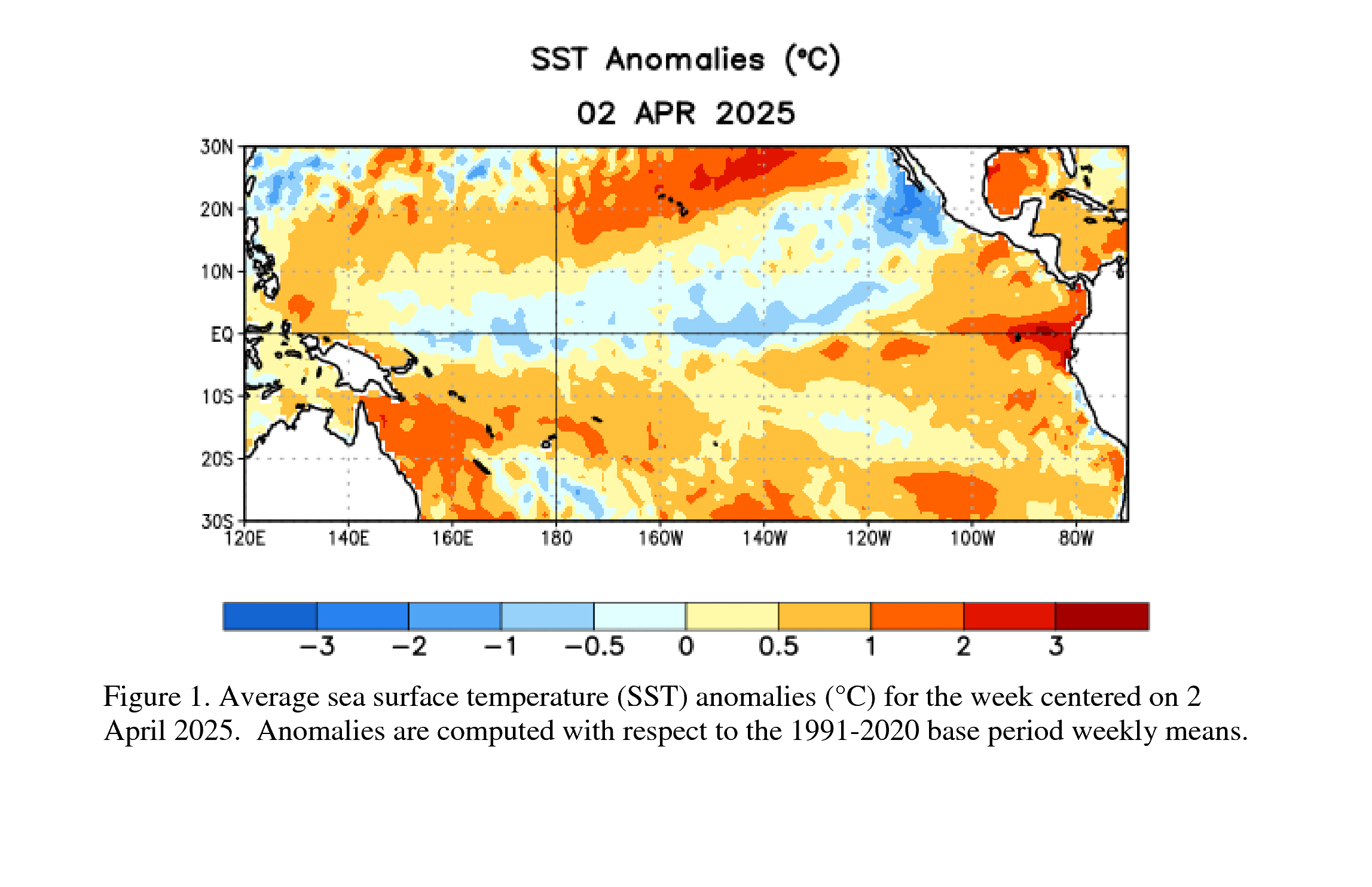
As of June 9, 2026, the latest CPC ENSO Diagnostic Discussion visible during review was dated May 14, 2026. It listed an El Nino Watch, described current ENSO-neutral conditions, said El Nino was likely to emerge soon, and said peak strength remained uncertain. That source can support monitoring and planning. It cannot prove hail, wind, water entry, roof damage, claim eligibility, or replacement need at an address.
Local storm reports narrow the question, but even those are not the whole answer. SPC same-day storm reports are useful for fresh triage, but SPC labels all reports preliminary. NCEI Storm Events records are part of the official NOAA Storm Data publication, but the database can lag recent events. A roofing company needs both the weather record and the job record before it treats a property as anything more than a follow-up candidate.
The Four Evidence Lanes
Lead teams should keep climate signals, storm reports, property evidence, and contact permission in separate lanes.
| Lane | What it can do | What it cannot do |
|---|---|---|
| ENSO or seasonal outlook | Flag a market for monitoring and planning. | Prove a storm happened locally or that one roof was damaged. |
| Preliminary storm reports | Help a team identify recent hail, wind, or tornado report areas for triage. | Serve as final official proof or replace inspection records. |
| Official storm archive | Support later market review, file documentation, and source history. | Guarantee every event is included immediately or prove damage at a property. |
| Property-specific file | Connect dates, photos, notes, roof age, inspection findings, and customer records. | Override safety, legal, insurance, warranty, or contact-channel rules. |
When those lanes are mixed, roofing marketing gets risky fast. A climate headline turns into a neighborhood claim. A preliminary hail report becomes a promise that a roof qualifies. A route list becomes a contact campaign without channel review. The better workflow keeps each source label visible.
How Climate Signals Should Enter Lead Planning
Use El Nino and CPC outlooks as a market-watch input. The right internal note sounds like this:
"CPC has an El Nino Watch in effect. Peak strength remains uncertain. We will monitor local storm reports and prepare intake fields for roof age, prior leaks, recent weather dates, ground-level photos, and customer notes."
That is enough. It gives the team a planning reason without telling the sales team that damage exists.
Climate signals can support:
- staffing scenarios;
- storm-response calendar review;
- intake form updates;
- market monitoring;
- customer education;
- supplier and scheduling scenarios;
- state or city brief planning when local evidence exists.
Climate signals should not support:
- "homes in this area were hit" language;
- door-knocking routes based only on a forecast;
- automated call, text, or email campaigns without contact review;
- claim, coverage, deductible, or replacement language;
- lead scores that imply roof damage without property evidence.
How Preliminary Storm Reports Should Be Used
SPC same-day storm reports are useful because they can show fresh hail, wind, and tornado reports by date. They are also explicitly preliminary. That means they are a triage input, not a final proof package.
For roofing operations, preliminary reports can answer:
- Did any hail, wind, or tornado reports appear near a service market?
- Is there a reason to watch customer calls, leak reports, or prior open opportunities?
- Should dispatch prepare for inspection requests after local weather clears?
- Should the team create a source-dated internal note before any public copy changes?
Preliminary reports should not answer:
- Which exact homes have damage?
- Which homeowners should be contacted by phone, text, email, or door knock?
- Whether a roof qualifies for repair, replacement, warranty, or insurance work?
- Whether a contractor can safely inspect immediately?
That difference matters. A preliminary report can start an internal review; it should not finish a sales conclusion.
How Official Storm Data Changes The File
NCEI Storm Events records are used to create NOAA's official Storm Data publication. They are valuable for later file review because they document significant weather events such as tornadoes, hail, thunderstorm wind, floods, winter storms, high wind, hurricanes, extreme cold, heat, and other events. But archived storm data has timing and completeness limits. One NWS storm-report explainer notes that Storm Data and Storm Events records may be available 90 to 120 days after an event, and that unlisted events may simply not have been reported to the NWS.
That means the archive belongs in the file, not in a rush script.
Use official storm archives for:
- market retrospectives;
- state or metro storm history;
- source-backed internal training;
- claim-file date context where appropriate reviewers allow it;
- route-list quality checks after the event window matures.
Do not use the archive to say every unlisted address had no storm, every listed county had roof damage, or every property in a report radius deserves a sales contact.
The Lead Scoring Rule
Roofing lead scoring should treat weather as one signal among several. A stronger lead might combine:
- recent local hail or wind report;
- older roof age estimate;
- prior leak or repair record;
- material type or low-slope exposure;
- neighborhood age or subdivision build period;
- customer opt-in or existing relationship;
- service capacity and safe inspection window.
Even then, the score should not say "damaged roof." It should say something like "review eligible," "local evidence needed," "customer record needed," "contact-channel hold," or "inspection request received."
For RoofPredict, useful fields include:
- climate signal status;
- preliminary storm report date;
- official archive status;
- local evidence required;
- roof age confidence;
- contact permission status;
- route review owner;
- safety hold;
- claim-language hold;
- next follow-up date.
The system should help the team slow down where the evidence is thin.
Contact-Channel Gates
Lead generation fails the quality test if source logic is careful but outreach is sloppy. Before a route list becomes a call, text, email, door hanger, ad, or mailer, run a contact-channel gate.
| Channel | Gate before use |
|---|---|
| CAN-SPAM and internal opt-out handling review. | |
| Phone or prerecorded call | Telemarketing, Do Not Call, consent, and state/local review. |
| SMS | Consent, carrier, TCPA/telemarketing, and opt-out review. |
| Door knock | Solicitation, badge, permit, HOA, disaster order, and safety review. |
| Door hanger or mailer | Advertising, local placement, mailbox, and consumer-protection review. |
| Paid ad | Platform policy, disaster/weather claim, landing-page match, and source-date review. |
This is why climate headlines should never become automatic prospecting. The weather source is only one gate. Contact permission, consumer-protection language, and local rules are separate gates.
Customer Language That Stays Safe
Use wording like:
- "We are monitoring local storm reports and can document visible concerns if you request an inspection."
- "A climate outlook does not prove damage at one property."
- "If you saw hail, wind, or water entry, save the date, photos from the ground, prior roof records, and interior notes."
- "Coverage and claim questions belong with the policyholder, insurer, and appropriate reviewers."
Avoid wording like:
- "El Nino means your area has roof damage."
- "This storm report means you qualify."
- "Your neighborhood should file claims."
- "Homes in this radius need inspections."
- "RoofPredict identified damaged roofs."
The safer language still supports business development. It just makes the next step evidence-based and customer-controlled.
Local And State Pages Need More Than A Storm Map
City and state pages can rank and can be valuable, but a local page about El Nino, storm reports, and roofing leads needs a real local reason to exist.
Before publishing a local version, confirm:
- local storm exposure and relevant report sources;
- roof age, housing era, and material mix;
- topography, tree cover, coastal/inland, hail corridor, wildfire, snow, or drainage differences;
- permit or inspection context where relevant;
- contractor registration, solicitation, or consumer-protection rules;
- insurance or financing friction where sourced and reviewed;
- supplier, labor, fuel, or material timing pressure;
- directory coverage and the specific workflow the directory helps solve.
If the only local fact is a city name next to a CPC outlook, the page should not publish.
Source Boundaries
| Source | Good use | Do not use it for |
|---|---|---|
| CPC ENSO Diagnostic Discussion | Current ENSO status, watch language, source date, and uncertainty. | Local storm prediction, address-level roof risk, confirmed Super El Nino claim. |
| SPC storm reports | Fresh triage for preliminary hail, wind, and tornado reports. | Final official proof, roof damage proof, contact permission. |
| NCEI Storm Events | Official archive and Storm Data publication context. | Real-time storm proof or complete immediate event list. |
| NSSL hail basics | Hail formation, hail swaths, size context, and damage potential. | Property-specific roof diagnosis or claim approval. |
| NWS storm-report explanation | Timing and source limits for Storm Data and Storm Events records. | Legal, insurance, or property-level conclusion. |
| FTC contact sources | Email and telemarketing caution. | Complete legal clearance or state/local solicitation approval. |
| RoofPredict | Source labels, workflow fields, route review, and follow-up. | Weather authority, damage detector, insurer, adjuster, or legal advisor. |
FAQ
Can roofers use El Nino to build lead lists?
Only as a broad monitoring signal. A lead list should require local storm evidence, property-specific indicators, contact-channel review, safety review, and customer-controlled next steps.
Are SPC storm reports enough to knock doors?
No. SPC reports are useful triage inputs, and current-day reports are preliminary. Door knocking also needs local solicitation review, safety review, customer-language review, and a clear reason beyond a climate headline.
Is NCEI Storm Events better than SPC same-day reports?
It is better for official historical context, but it can lag recent events. Use SPC for fresh triage, NCEI/Storm Data for later source-backed review, and property files for job-level decisions.
The Roofline by RoofPredict
Stay Ahead of Roofing Market Changes
Join The Roofline by RoofPredict for weekly roofing intelligence: material price signals, storm demand, insurance and regulatory updates, sales tactics, and local contractor opportunities.
Sources
- NOAA CPC ENSO Diagnostic Discussion — cpc.ncep.noaa.gov
- SPC Today's Storm Reports — spc.noaa.gov
- NCEI Storm Events Database — ncei.noaa.gov
- NOAA NSSL Severe Weather 101: Hail Basics — nssl.noaa.gov
- NWS Storm Report Records — weather.gov
- CAN-SPAM Act: A Compliance Guide for Business — ftc.gov
- Complying with the Telemarketing Sales Rule — ftc.gov
- RoofPredict — roofpredict.com
Related Articles
Monthly ENSO Briefing Template for Roofing Companies
Use one monthly ENSO briefing to turn official source updates into operations, safety, customer-language, route, and RoofPredict workflow decisions.
How Strong El Nino Talk Can Mislead Roofing Teams
Strong-event language can help planning, but it misleads teams when it turns into storm guarantees, route shortcuts, claim promises, or unsafe customer scripts.
The Difference Between El Nino Risk and Roof Damage Proof
Climate risk can justify readiness, but roof damage proof still needs local storm context, property-specific inspection records, and clear reviewer boundaries.